

Levelized Cost of Energy (LCOE): How to Calculate It
By Chandra Asri Group Editorial Team
27-04-2026
With time, energy demand continues to rise. Many technologies are constantly being developed, leading to increasingly widespread energy use. However, energy is not “free.” There are costs in the continuous use of energy.
These costs can be calculated using the Levelized Cost of Energy (LCOE). This metric is commonly applied in industry and power plants. This article discusses how to calculate LCOE and the factors that influence it. Let’s read the following explanation comprehensively.
What Is Levelized Cost of Energy (LCOE)?
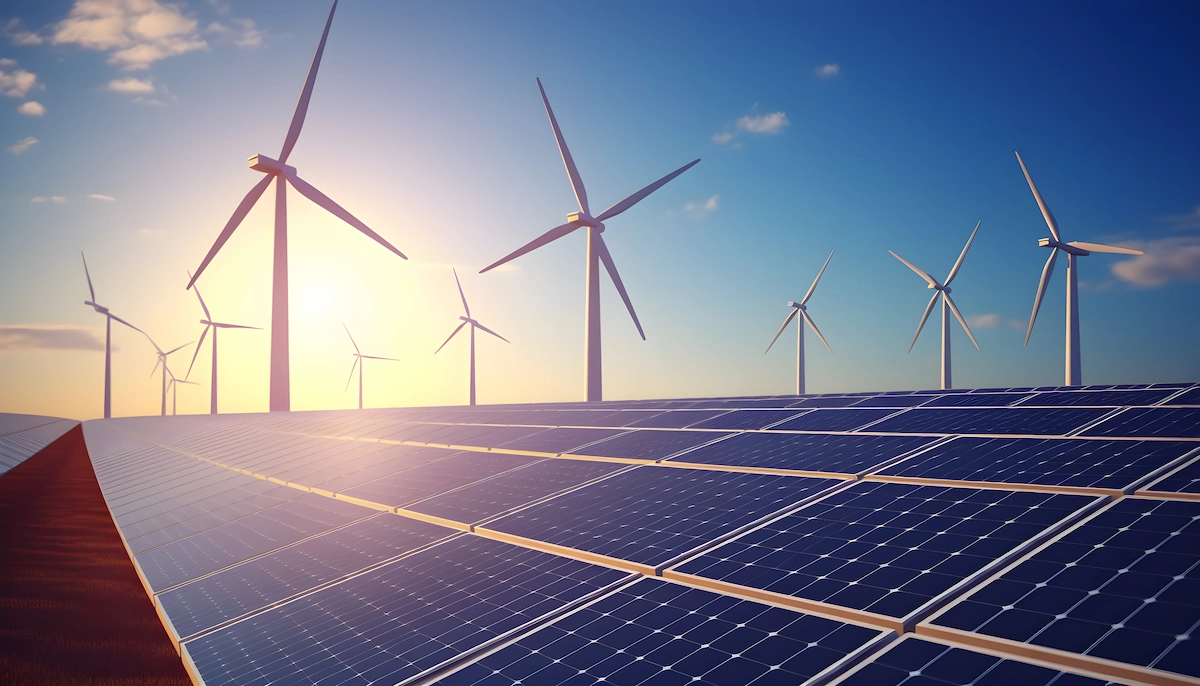
The Levelized Cost of Energy (LCOE) is a formula for calculating the average cost of electricity generated by an asset over its operational period. One of the purposes of LCOE is to account for the operational costs of an energy asset over its lifecycle, including fuel, maintenance, and capital expenses.
LCOE calculations are typically used for power plants to determine a project’s competitiveness and feasibility. Simply put, LCOE helps estimate the costs a power plant must incur to reach its break-even point (BEP) over its operational period.
Furthermore, LCOE also serves to compare the costs of various energy sources and evaluate the most efficient options. This is certainly important for stakeholders in making investment decisions within the industry. LCOE calculation results can also serve as a reference for improving operational efficiency or for developing new energy projects.
Why Is the Levelized Cost of Energy Important?
The Levelized Cost of Energy (LCOE) helps developers, companies, and investors assess the performance of energy projects. Additionally, the LCOE is also used to determine the transition from fossil fuels to more environmentally friendly renewable energy.
It is important to note that energy demand continues to rise over time. Data from the International Energy Agency indicates that by 2024, global energy demand will increase by 2.2%. Electricity demand will also rise by 4.3% compared to 2023.
This increase in demand is partly driven by the rise in extreme temperatures that year, making it the hottest on record. That is why the use of renewable energy, such as solar power plants and other power generation facilities, must continue to be promoted.
As previously explained, LCOE compares different energy sources and projects to determine the most competitive option. Consequently, developers can evaluate the capital, fuel, capacity, and risks involved in various power generation technologies, such as solar, nuclear, gas, coal, and wind.
The use of LCOE to calculate the average cost of power plants or other energy assets is widespread, but caution is warranted, as the results may not fully reflect the project’s value. This is because LCOE does not account for location-specific reliability.
Read also: 12 Types of Power Plants for Alternative & Renewable Energy
How to Calculate the Levelized Cost of Energy

The Levelized Cost of Energy (LCOE) formula is the total lifetime cost of an energy asset divided by the total energy generated over its lifespan. First, you need to calculate the net present value (NPV) of the energy asset’s total operating costs.
Then, divide that value by the total energy generated over its life cycle. Total operational costs may include initial investment, operating and maintenance, and fuel costs (if any). The unit of LCOE is the price per unit of electricity.
Levelized Cost of Energy = NPV of total costs over the energy asset’s lifecycle / NPV of total energy generated over the energy asset’s lifecycle
For example, a Solar Power Plant (SPP) is constructed over the course of one year at a cost of IDR 25 billion. Annually, this SPP incurs Rp5 billion in operation and maintenance costs, with a growth rate of approximately 2% per year.
This SPP is expected to operate for 15 years and has no fuel costs. Each year, the SPP is projected to generate 3 million kWh of energy. Additionally, the project has an 8% discount rate.
Based on this data, the total cost NPV is IDR 56,030,569, while the total energy generated NPV is 17,352 kWh. Using the formula above, the LCOE of the solar power plant is IDR 3,228.97/kWh.
Factors Affecting the Levelized Cost of Energy Calculation
The result of the Levelized Cost of Energy (LCOE) calculation is determined by several factors, including:
1. Operation and Maintenance (O&M) Costs
O&M costs are used to maintain equipment. The amount depends on the power plant size, technology, and area. Typically, O&M costs for renewable energy power plants are lower than those for fossil fuel plants due to fuel price fluctuations. The higher the O&M costs, the higher the LCOE.
2. Initial Investment Costs
These costs cover all expenditures for constructing energy assets. The higher the costs, the greater their contribution to the energy efficiency value.
3. Analysis Period
The analysis period can be the expected lifespan of an energy asset. Referring back to the example above, the analysis period for that solar power plant is 15 years.
4. Capital Costs
These costs may include interest paid on loans, costs from stock sales, and bond issuance. Capital costs are the expenses incurred to secure project financing.
5. Capacity Factor
The capacity factor is derived from comparing the energy produced by an energy asset over a specific time period with the energy the unit would produce if operating at full capacity during that period.
6. Fuel Costs
These costs are calculated only for units that require fuel, such as coal-fired or uranium-fueled nuclear power plants.
7. Discount Rate
The discount rate is the interest rate used to calculate the present value of future cash flows. In LCOE analysis, the discount rate influences the attractiveness of various types of power plants.
Read also: Captive Power Plant: Definition, Types, and Benefits
Chandra Asri Group’s Reliable Industrial Power Plant
Levelized Cost of Energy (LCOE) is a key metric that companies must consider when determining the most efficient energy assets. A low LCOE indicates that the costs incurred for a project are sufficiently efficient. One way to reduce LCOE is by utilizing renewable energy sources.
In this regard, the Chandra Asri Group, through Krakatau Chandra Energi (KCE), provides renewable energy solutions in the form of solar power plants. As #YourGrowthPartner, KCE offers four solar power plant mechanisms, namely Solar On-Grid, Solar On-Grid with Battery Backup System, Solar Off-Grid, and Solar Hybrid.
KCE has ventured into a new business by constructing a 102 kWp rooftop solar power plant pilot project in 2020. In 2025, KCE successfully expanded its solar power plants to a total capacity of 11 MWp.
So, entrust your company’s renewable energy power generation needs to us. Consult your energy needs with Chandra Asri Group and Krakatau Chandra Energi!
Read also: 7 Examples of Electrical Energy and How to Generate It
.png&w=3840&q=75)