
.webp&w=3840&q=75)
Get to Know Decarbonization: Aim, Benefit, and Example
By Chandra Asri Group Editorial Team
17-03-2026
Have you ever heard about decarbonization? Amid worsening global warming, its role is significant. Decarbonization is a process of reducing carbon emissions in the atmosphere.
This article discusses the importance of decarbonization and the strategic efforts to achieve it. So, read the complete information below.
What Is Decarbonization?
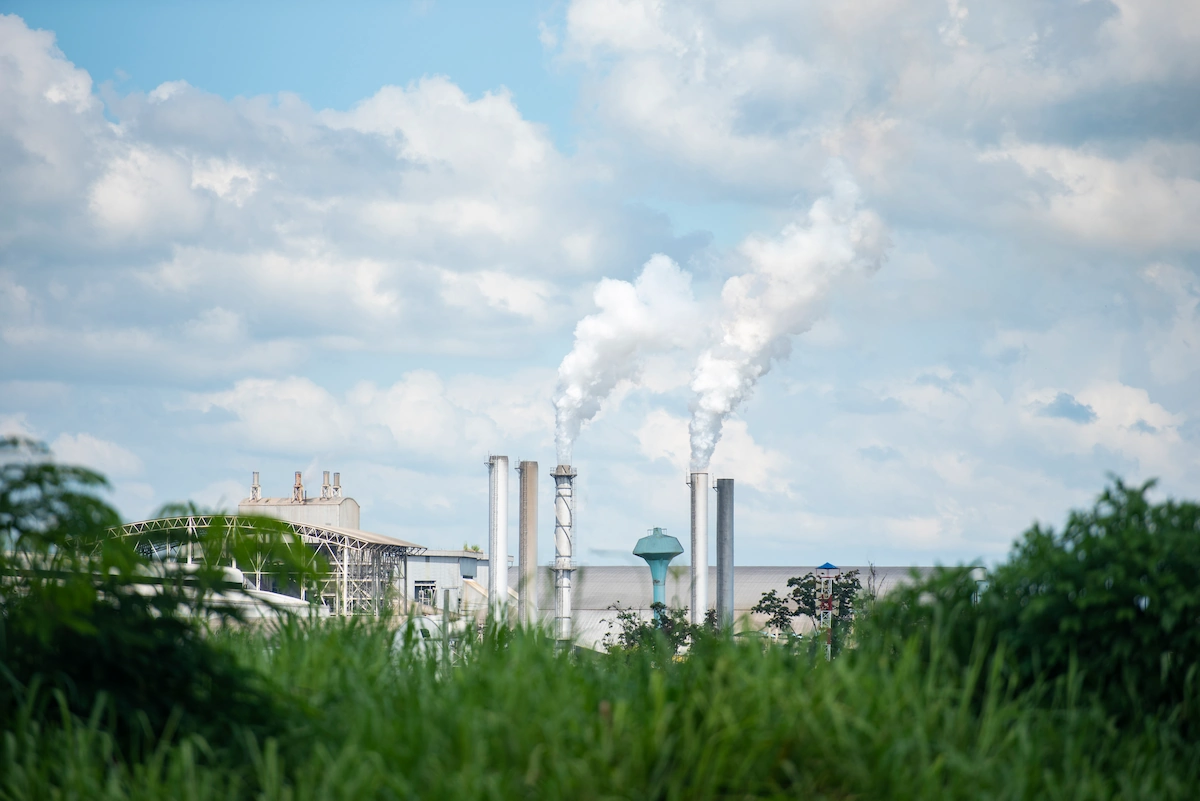
Decarbonization is a process of reducing or removing carbon dioxide and greenhouse gas emissions from the atmosphere significantly. This process contains two elements: lowering carbon emissions released to the atmosphere and actively eliminating them.
The decarbonization program is now widely implemented by global nations thanks to the Paris Agreement, an act adopted in 2015 targeting limiting global warming to 1.5 degrees Celsius from pre-industrial levels. This program is also carried out as a strategy to achieve net-zero emissions by 2050.
Then, how threatening is the carbon emission condition on Earth? The International Energy Agency reported that energy-related carbon emissions increased 0.8% in 2024. This figure contributed to the elevation of carbon dioxide concentration in the atmosphere to about 422.5 ppm.
This record-breaking year of 2024 has also impacted global temperatures, which rose more than 1.5 degrees Celsius above pre-industrial levels. In fact, it was the “warmest” year on record across all continents (except Antarctica and Australia). Global temperatures continued to rise each month, making it the latest record-breaking warmest year since 2023.
That is why decarbonization must be implemented as the first step in reducing carbon emissions in the atmosphere. If global warming continues, its impacts could endanger living organisms, such as extreme weather, ecosystem damage, and food security threats.
Read also: What Is Clean Energy? Benefits, Types, and Examples
Why Is Decarbonization Important?

Decarbonization aims to decrease and eliminate greenhouse gas emissions emitted to the atmosphere from human activities, such as manufacturing processes, energy production, and transportation. Along with that, decarbonization also has several crucial roles, such as:
1. Increasing Energy Efficiency
As previously mentioned, total carbon emissions from energy production continue to rise. Therefore, decarbonization is one of the efforts being made to reduce them.
You can start by improving energy efficiency. Energy efficiency is the practice of using less energy to achieve the same or better results. An example of energy efficiency is using energy-efficient devices.
2. Reducing Dependence on Non-Renewable Energy
One of the main contributors to carbon emissions is fossil fuels, which can be depleted at any time. Their combustion also produces carbon emissions.
To address this, you can switch to renewable energy as part of a decarbonization effort. Renewable energy, such as solar and wind power, is considered more environmentally friendly because it produces almost no carbon emissions.
An example of renewable energy utilization is the solar panels from the Chandra Asri Group. As #YourGrowthPartner, the Chandra Asri Group provides energy solutions through our subsidiary, Krakatau Chandra Energi (KCE).
KCE operated a solar power plant with a capacity of up to 2,200 kWp by December 2024. We offer four types of solar panel installations: Solar On-Grid, Off-Grid, On-Grid with Battery Backup, and Hybrid.
3. Developing Sustainable Infrastructure
Decarbonization also drives the development of sustainable infrastructure. It can serve as a bridge between conventional infrastructure and more environmentally friendly practices. An example of sustainable infrastructure is a green building.
The concept of green building has begun to be adopted in Indonesia. For instance, the Chandra Asri Group constructed the OPE Admin Building at the Ciwandan Plant in Cilegon, incorporating a green building concept that prioritizes water and energy efficiency, as well as the embodied carbon in the materials used.
Read also: Why Should We Save Energy? 4 Reasons You Must Know
Examples of Decarbonization

There are many strategic ways to actualize decarbonization, including:
1. Enhancing Operational Efficiency
This industrial decarbonization strategy is essential for reducing energy waste and evaluating current operational processes. This allows you to identify processes that can be more resource-efficient and produce lower carbon emissions.
As technology continues to advance, you can explore green technologies. One example is eco-friendly electric vehicles. Because they do not use fossil fuels, these vehicles are far more sustainable and can help improve efficiency.
2. Using Renewable Energy
One real step you can take toward decarbonization is switching from non-renewable to renewable energy. Even if it is a slow process, you can gradually shift to cleaner energy sources. On a corporate scale, you can utilize rooftop solar power systems. On a larger scale, you can utilize hydroelectric and wind power plants.
3. Reforestation
Reforestation can help you reduce carbon emissions in the atmosphere. It brings back the lost functions of the forest due to illegal logging. Here, you replant trees to make them capture carbon dioxide through photosynthesis.
4. Waste Management
Decarbonization focuses not only on removing carbon dioxide from operational processes but also on waste production. Regarding this, you can implement recycling programs and use eco-friendly materials in your manufacturing and packaging processes.
5. Wetland Restoration
Did you know? Mangroves can absorb and store carbon. The emissions will be stored underground to become blue carbon. That is why it is crucial to restore the ecological functions of wetlands to ensure optimal emission removal.
6. Carbon Capture and Storage (CCS)
Currently, green technology is getting more advanced, including for reducing or removing carbon emissions. One of which is carbon capture and storage (CCS). It captures carbon dioxide emissions from industrial processes and stores them underground or recycles them into fuels.
Chandra Asri Group’s Strategy in Reducing Carbon Emissions
Decarbonization is a concept that all stakeholders must understand to support the process of removing carbon emissions from the atmosphere. In addition to decarbonization, other efforts must also be made to ensure that business operations remain sustainable.
Regarding efforts to reduce carbon emissions, Chandra Asri Group, a leading chemical, energy, and infrastructure solutions company in Southeast Asia, has implemented several programs, including:
- Implementing energy efficiency programs to reduce fuel consumption.
- Minimizing hydrocarbon combustion.
- Using low-NOx burners.
- Utilizing emission control technology in the combustion process.
- Monitoring NOx levels with a continuous emission monitoring system.
- Using enclosed flare technology to burn hydrocarbons.
- Using electrostatic precipitators to control particulate emissions.
That concludes the information about decarbonization. It is the initial step to lower the worsening global warming and climate change impacts as time goes by.
So, let’s make a real contribution to a greener Earth!
Read also: New Renewable Energy: Definition, Indicators, and Examples
.png&w=3840&q=75)