
Green Technology: Its Benefits & Roles for the Environment
By Chandra Asri Group Editorial Team
03-12-2025
As the world evolves, more solutions to global warming are being developed, including green technologies that minimize adverse impacts on humans and the environment.
Interestingly, today’s green technology is no longer limited to solar panels and electric vehicles. Then, what are the other innovations to pay attention to? Find out more about it in the following article.
What Is Green Technology?

Green technology is a type of technology designed to support the efficient use of natural resources while reducing negative impacts on the environment and humans. This technology is also referred to as sustainable technology or clean technology.
Green technology, or environmentally friendly technology, combines technology with science to create environmentally friendly products and services. One of its goals is to repair existing damage and support regeneration.
Furthermore, this technology also aims to reduce carbon emissions, protect natural resources, and introduce more sustainable alternatives.
Statista noted that carbon emissions from industrial processes and the combustion of coal, petroleum, and natural gas have continued to rise since 1940. In 2025, annual carbon emissions are predicted to reach 38.11 billion metric tons.
Therefore, efforts to reduce carbon emissions, including the implementation of green technologies, must continue to be supported to mitigate the impacts of global warming and climate change.
Moreover, the principle of green technology is to meet current needs without compromising the needs of future generations. Not only that, humans need to limit environmental impact by any means possible, one of which is green technology.
Green technology considers every stage of the process, from the initial step to the end of the product lifecycle, and ensures that the cycle does not harm the environment or human health.
Read also: 7 Eco-Friendly Products & Their Benefits for the Environment.
Benefits of Green Technology
As explained earlier, green technology is important for reducing the impact of global warming and climate change. In addition, this environmentally friendly technology also has the following benefits:
1. Improving Human Health Quality
Water and air pollution are threats to human health. With green technologies, carbon emissions and water pollution can be reduced, thereby improving human health.
2. Providing Economic Benefits
The development of green technologies may create job opportunities, particularly in sustainable technology, renewable energy, and environmental consulting.
Furthermore, the implementation of green technology, such as renewable energy, can reduce long-term costs. This is because renewable energy can naturally replenish itself and will continue to be available, for example, solar and wind energy.
Thus, its use is more cost-effective than fossil fuels, which are nonrenewable and may eventually be depleted.
3. Reducing Environmental Impact
One of the main goals of green technology is to minimize environmental impacts associated with manufacturing processes and daily activities. As a result, you can help mitigate the effects of climate change.
4. Enhancing Company Reputation
The implementation of green technology can also enhance a company's reputation. You can invest in eco-friendly and sustainable operational practices. This can attract investors and customers who are interested in environmental issues.
The History of Green Technology
The history of technology can be considered to have begun with the Great Depression, a global economic crisis that occurred from 1929 to 1939.
During this period, the United States enacted the Soil Conservation Act of 1935 to address the Dust Bowl disaster, a severe dust storm caused by poor agricultural practices and the misuse of heavy machinery.
This regulation helps prevent reservoir damage, control floods, protect public health, reduce unemployment, and maintain river navigation.
The concept of environmental protection was further solidified by the Environmental Protection Agency (EPA) in 1970, as the public became increasingly aware of ecological issues following World War II (1939–1945).
Subsequently, the evolution and innovation of green technology gained momentum in the early 1990s due to scientists' concerns about the impacts of coal-fired factories.
Since then, many groups have initiated environmental awareness campaigns, and regulations have been enacted to support sustainable development. Today, public awareness of environmental issues continues to grow, thereby increasing demand for green technologies.
Read also: Green Energy: Examples and Differences from Renewable Energy
Examples of Green Technology

Many models of green technology have been developed to reduce the negative impacts of climate change, including:
1. Sustainable Waste Management
Waste is a key issue in discussions of pollution. However, many waste management technologies have been developed, including advanced recycling facilities that convert waste into raw materials for production or energy resources.
Read also: 9 Plastic Waste Processing Solutions, Effective and Safe!
2. Renewable Energy
Renewable energy has now become one of the alternative energy sources whose use is being actively promoted. This is because renewable energy produces little to no carbon emissions.
One of the renewable energy sources that is commonly used by corporations and households is solar panels. Solar panels use sunlight to generate electricity. You can also install them on building rooftops or in large areas dedicated to solar panels.
Regarding solar panels, Chandra Asri Group, a prominent company in chemical, energy, and infrastructure solutions in Southeast Asia, has increased its solar panel capacity by 82.29%.
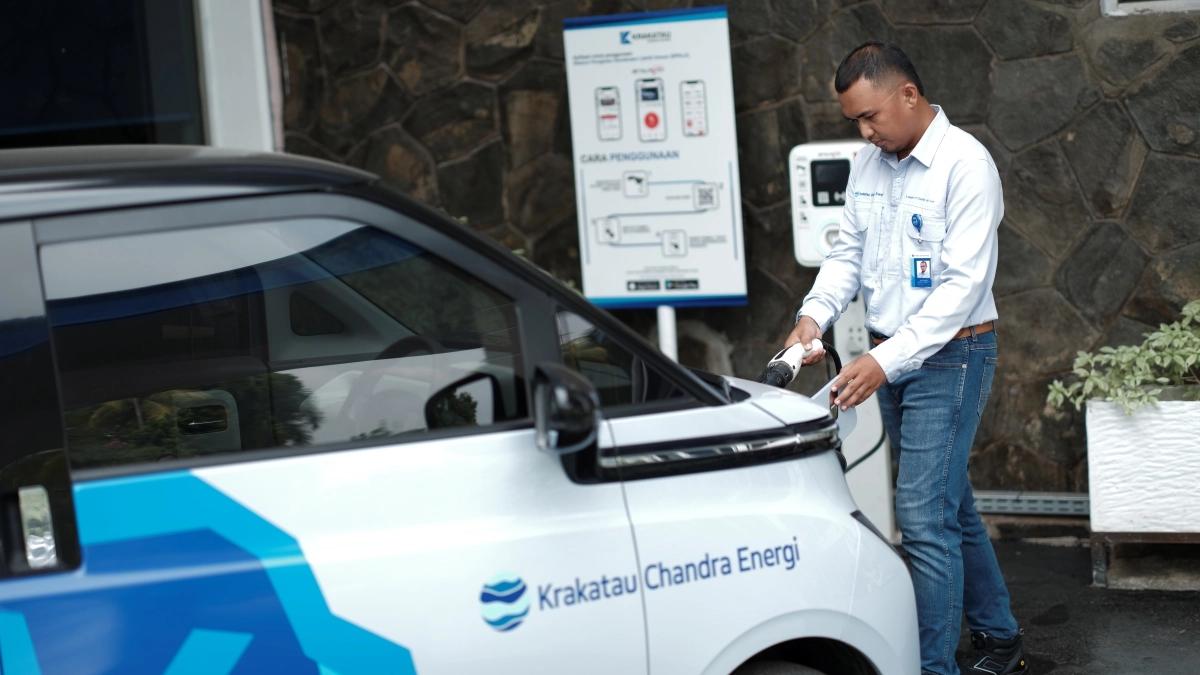
Additionally, Chandra Asri Group subsidiary, Krakatau Chandra Energi, provides solar panel installations using on-grid, off-grid, and hybrid methods.
3. Carbon Capture and Storage
Carbon Capture and Storage (CCS) is a technology that directly captures carbon dioxide (CO2) from the atmosphere for reuse or long-term storage. As a result, carbon dioxide levels in the atmosphere can be reduced, or even eliminated.
4. Green Building
A green building is a construction concept aimed at reducing environmental impacts from the construction process through its use. For example, green buildings employ solar panels, eco-friendly materials, and technologies that can help reduce energy consumption.
In Indonesia, the Chandra Asri Group became one of the companies that has implemented green building practices. Our Admin Building OPE Building has been certified for green building operations, design efficiency, and material use efficiency.
5. Electric Vehicles
Electric vehicles are a common example of green technology. It has even become a preferred mode of transportation in Indonesia.
Many cars, taxis, and buses are powered by rechargeable batteries, which helps reduce carbon emissions from the burning process of fossil fuels. Integrating electric vehicles with solar panels can also become a low-emission technology combination.
Chandra Asri Group also implements the electric vehicle concept in its operations. We have two units of electric buses for the transportation fleet and 61 units of electric forklifts.
This concludes the discussion of green technology, one of the initiatives to mitigate the negative impacts of carbon emissions and global warming.
With massive technological advancements, environmental conservation will be more easily implemented. So, there is no excuse for not preserving the environment.
Read also: New Renewable Energy (NEE): Definition and Its Indicators
.png&w=3840&q=75)