
19-05-2026
An Overview of Vietnam's Renewable Energy Transitions
Many countries, such as Vietnam, have made efforts to innovate in renewable energy to address climate change. In fact, Vietnam’s renewable energy transformation is among the fastest in Southeast Asia.
This article discusses the development of renewable energy in Vietnam. For further information, read this article until the end.
How Is Vietnam’s Renewable Energy Development?
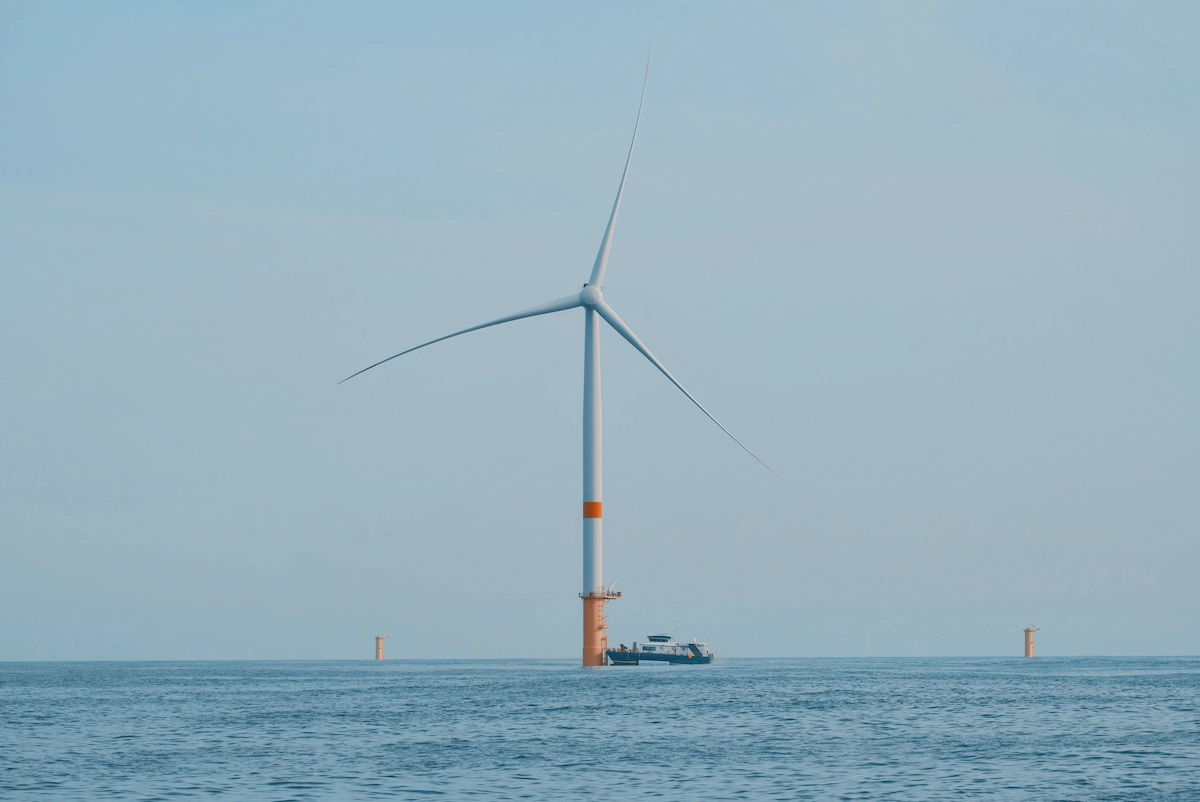
Vietnam is one of the fastest countries in Southeast Asia in developing renewable energy. According to the Institute for Energy Economics and Financial Analysis, Vietnam succeeded in increasing the solar and wind capacity from virtually 0 to more than 21,000 megawatts between 2018 and 2023.
Vietnam had become the largest solar power producer in Southeast Asia by 2023, demonstrating that the energy transition could be swift.
The renewable energy usage in the country increased in a span of 22 years (2000-2022). The International Energy Agency shared that the trend improved 33% within those years.
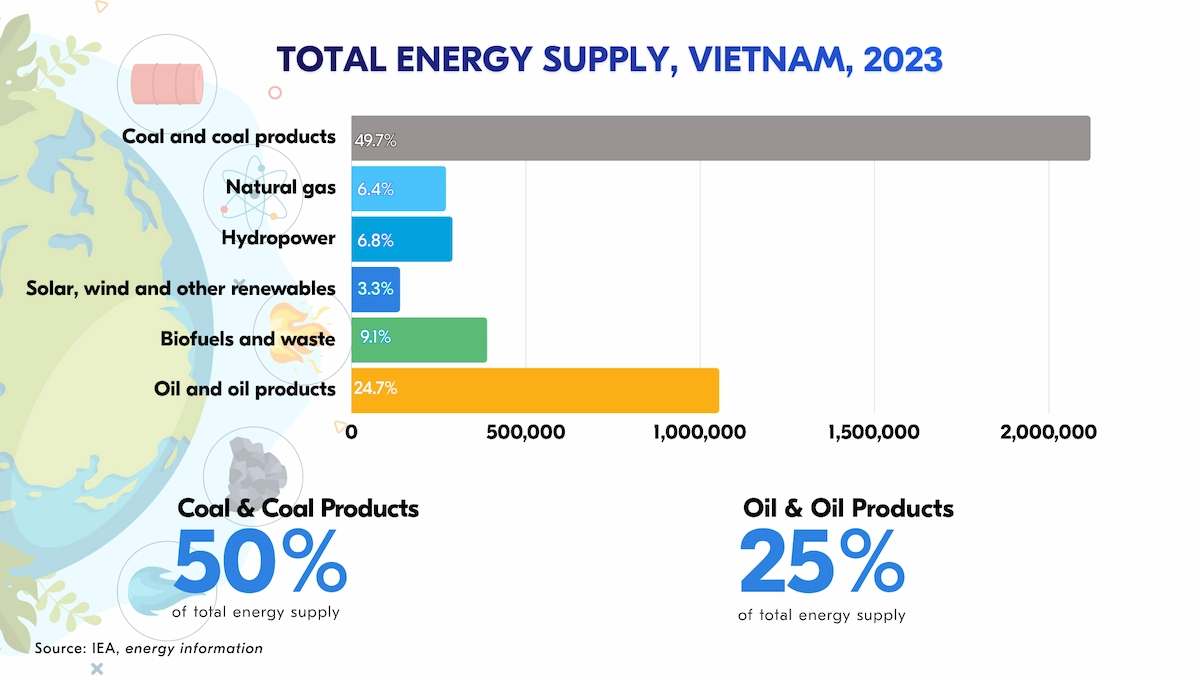
Clean energy also has a portion in Vietnam’s total energy supply. In 2023, hydropower supplied 290,141 TJ of energy, while solar, wind, and other renewables supplied 139,707 TJ. During this year, coal and coal products still dominated the energy supply, having 50% of the total supply.
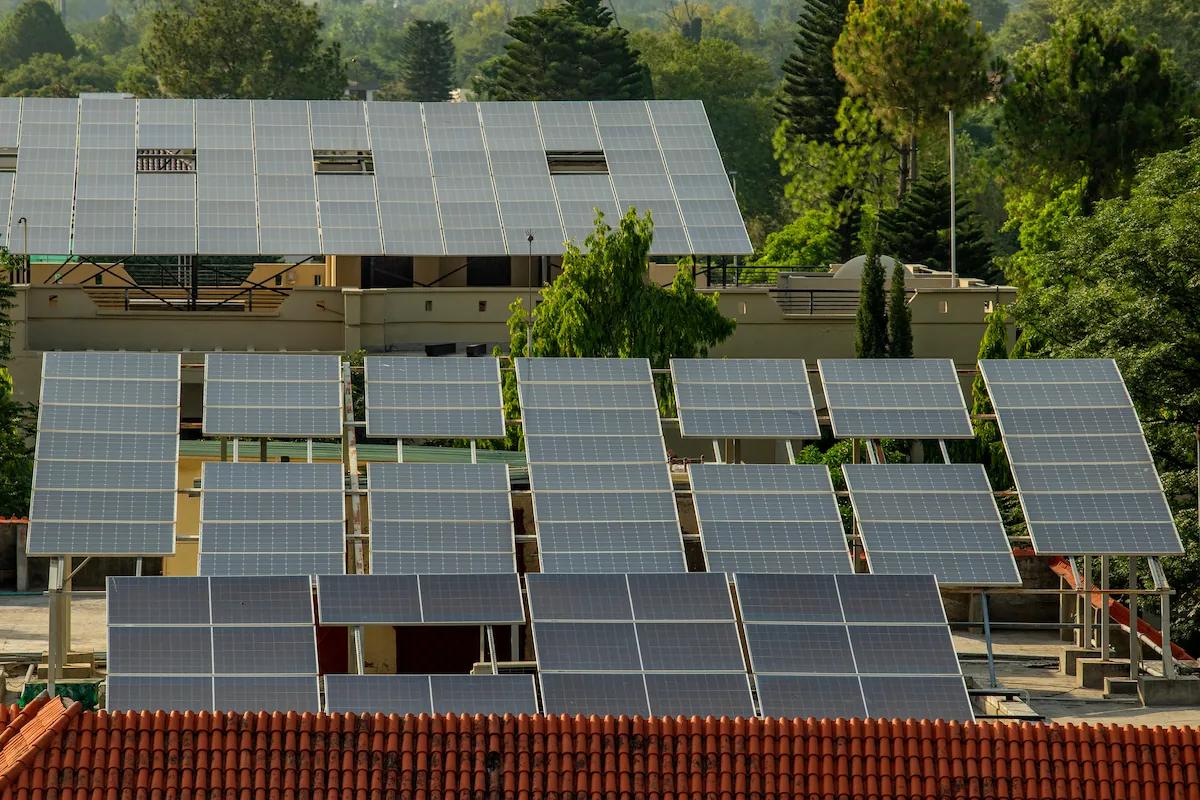
Despite having a portion less than the fossil fuels, Vietnam’s renewable energy still sees a bright future. By 2030, Vietnam will encourage the use of rooftop solar power for 50% of office buildings and 50% of houses for on-site consumption.
Then, how big is the potential for renewables to grow in the nation? Vietnam has a prospect of developing solar PV, onshore wind, hydropower, and biomass energy.
Wind energy development is supported by Vietnam's geographical features. The Asia-Pacific Economic Cooperation (APEC) report showed that 39% of areas in Vietnam had wind speeds over 21.6 km/h, and 8.6% of the economy’s land area was suitable for large wind farms.
Despite that, the International Energy Agency reported that the renewable electricity generation was still dominated by hydropower (67.5%) and solar PV (22.8%) in 2023, with wind energy having a portion of 9.7%.
Seeing these projections and potential, Vietnam can leverage many resources to grow a clean energy ecosystem and control emissions.
Read also: A Guide to Solar Energy in Singapore: Why Does It Matter?
Vietnam’s Commitment to Shifting to Renewable Energy
To achieve the goal of clean energy transformation, the government approved Vietnam’s Eighth National Power Development Plan (PDP VIII) in May 2023. This plan highlights an ambitious plan for 2030 and a vision for 2050. Several points outlined in PDP VIII are as follows:
- Prioritizing renewable energy development: PDP VIII projects the development to reach 30.9–39.2% by 2030 and 67.5–71.5% by 2050.
- Gradually independent from coal-fired power: The capacity of coal-fired power is expected to peak in 2030 and then gradually decline to zero between 2030 and 2050. In comparison to the updated PDP VII, an additional 13,220 MW of coal-fired power is suggested to be removed.
- Enabling the grid project for connecting renewable projects: To support the nation's shift to a more sustainable energy mix, the plan emphasizes the importance of transmission grid projects that enable onshore wind, biomass, and waste-to-energy sources.
- Establishing an interregional renewable energy industry and service centers: By 2030, Vietnam will establish renewable energy hubs for developing the value chain, research and development, and education.
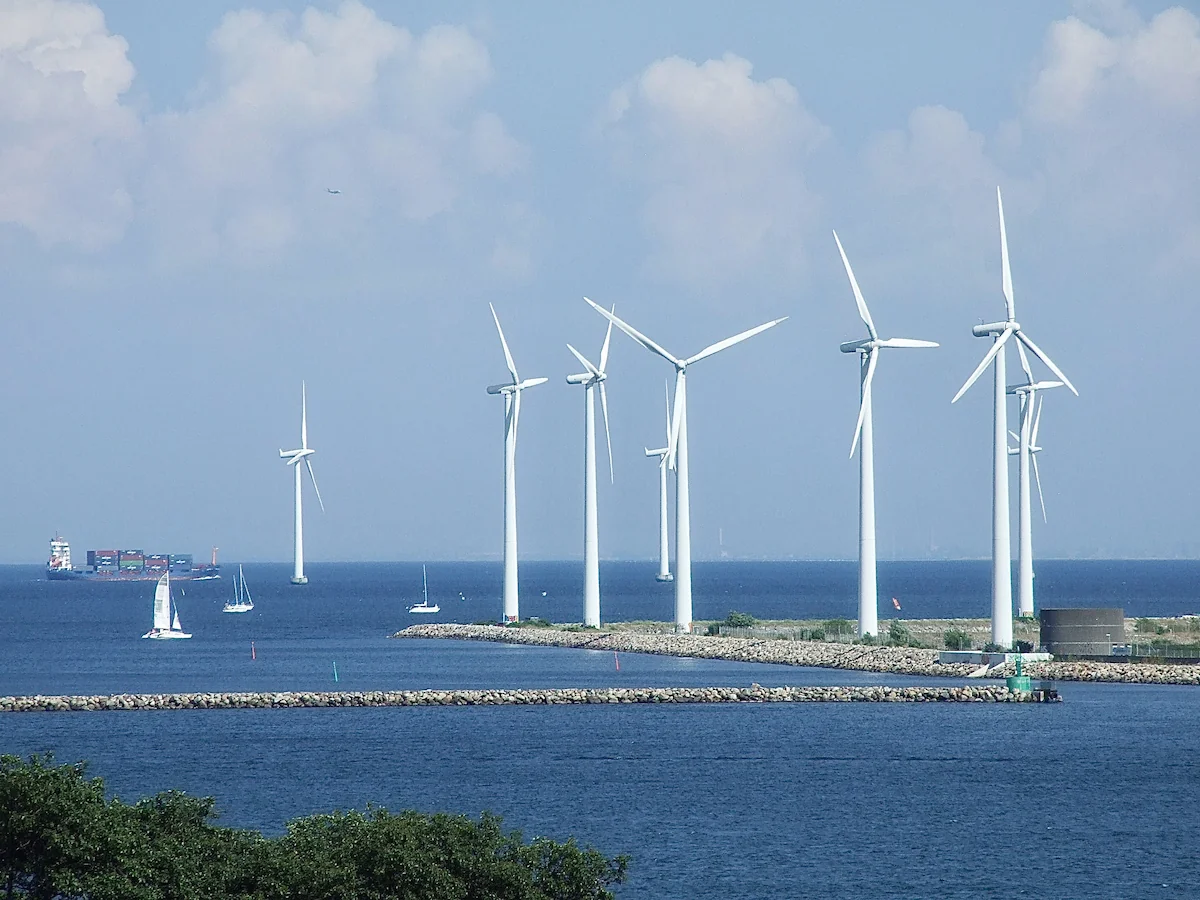
The Vietnamese government also revised the PDP VIII in April 2025. The updated PDP VIII elevates renewable energy ambitions, increasing onshore and nearshore wind capacity from the original 21,880 MW target to a range of 26,066-38,029 MW by 2030 and enhancing offshore wind capacity from 6,000 MW to 17,032 MW.
Aside from that, targets for battery storage capacity increased significantly from 300 MW to 10,000–16,300 MW.
This revised plan also reintroduces nuclear power, which is targeted to operate from 2030 to 2050. The updated PDP VIII calls for investments of up to USD 523 billion by 2050 and USD 134.7 billion by 2030.
Read also: Floating Power Plants: A Renewable Energy Innovation
How Is the Renewable Energy Growth in Southeast Asia?
The renewable energy growth in Southeast Asia (SEA) is among the fastest in the world, since the demand escalates 3–4% every year. Recently, the installed renewable capacity in the region reached 35% and is projected to triple by 2030.
The most installed renewable energy is solar energy, with Vietnam, Thailand, and Malaysia as the leading countries, thanks to their rooftop and utility-scale solar panel projects.
In addition, Indonesia and the Philippines develop huge offshore and onshore wind farms, while Laos and Myanmar export their hydropower to neighboring countries.
Then, what is the potential of renewables in Southeast Asia? Here are some of the opportunities:
- Abundant sunlight, which is ideal for solar energy.
- Growing demand for clean energy to achieve the ESG commitments.
- The development of energy innovations.
- Supportive policies from the SEA government.
- Cross-border energy trade.
Yet, the potential also features several obstacles we must overcome, such as:
- Unpredictable energy tariffs in some SEA regions.
- Regulatory complexity.
- Inadequate grid infrastructure.
- Permission and land acquisition issues.
- Intense market competition.
Chandra Asri Group, Southeast Asia's Prominent Energy Solution
The escalating calls for investment create substantial opportunities for Southeast Asian energy companies. Regarding renewable energy, Chandra Asri Group, together with Krakatau Chandra Energi (KCE) as #YourGrowthPartner, provides reliable solar panel solutions.
In 2020, KCE developed a 102 kWp rooftop solar power plant pilot project to start our journey in the renewable energy sector. Since then, this commitment has advanced, and by 2025, the total managed solar capacity will have grown to 11 MWp.
As a prominent chemical, infrastructure, and energy solution company, we provide four solar panel mechanisms:
- Solar on-grid system: Integrating solar panels with the power grid to directly transmit energy to the grid without a backup battery.
- Solar off-grid system: Operating solar panels autonomously without connecting to the grid, using a battery to store energy.
- Solar on-grid with battery backup system: Combining solar panels with a battery as backup power during power-supply disruptions.
- Solar hybrid system: Integrating solar panels with other energy sources to create a single stable power generation system.
With our reliable and high-quality service, we are ready to supply renewable energy to your company. Entrust your energy needs to Chandra Asri Group and Krakatau Chandra Energi!
Read also: Solar Power Plant: Definition, Benefits, and Example