
Floating Power Plants: A Renewable Energy Innovation
By Chandra Asri Group Editorial Team
26-02-2026
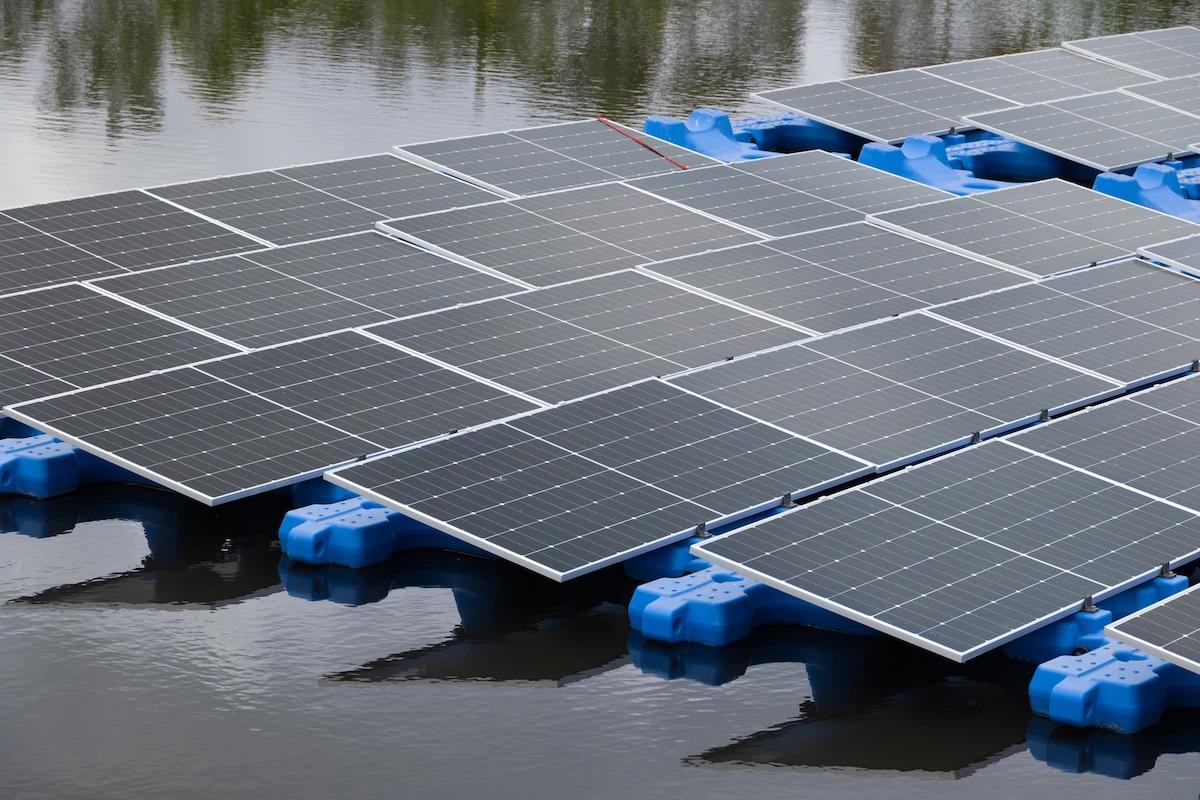
Nowadays, renewable energy technology is developing to meet market needs. Land limitations are no longer an obstacle with the advent of floating solar panels. This type of solar panel can be installed above the water surface, such as on a pond or reservoir, so it does not require a large area of land.
Do you want to know more about this breakthrough in solar power? Read this article to the end!
What Is a Floating Power Plant?
A floatovoltaic or floating power plant is a solar panel designed to float on the surface of water. It works by simply sending energy from the panels to a transmission tower via underwater cables.
This type of solar power plant was first developed in 2007 in Japan with a small-scale capacity of around 20 MW, and only for research purposes. Then, in 2015, a larger floating solar power plant was built in the country, and it began to encourage other countries to build floating solar panel facilities.
So, why is the floating power plant a reliable breakthrough? This power plant has solar panels that can be installed on ponds, reservoirs, or lakes. As a result, the land can be conserved for more pressing purposes, such as water catchment protection, agriculture, and habitat for flora and fauna.
Read also: Power Plants: Definition, Types, and Examples in Indonesia
How Floating Solar Panels Work
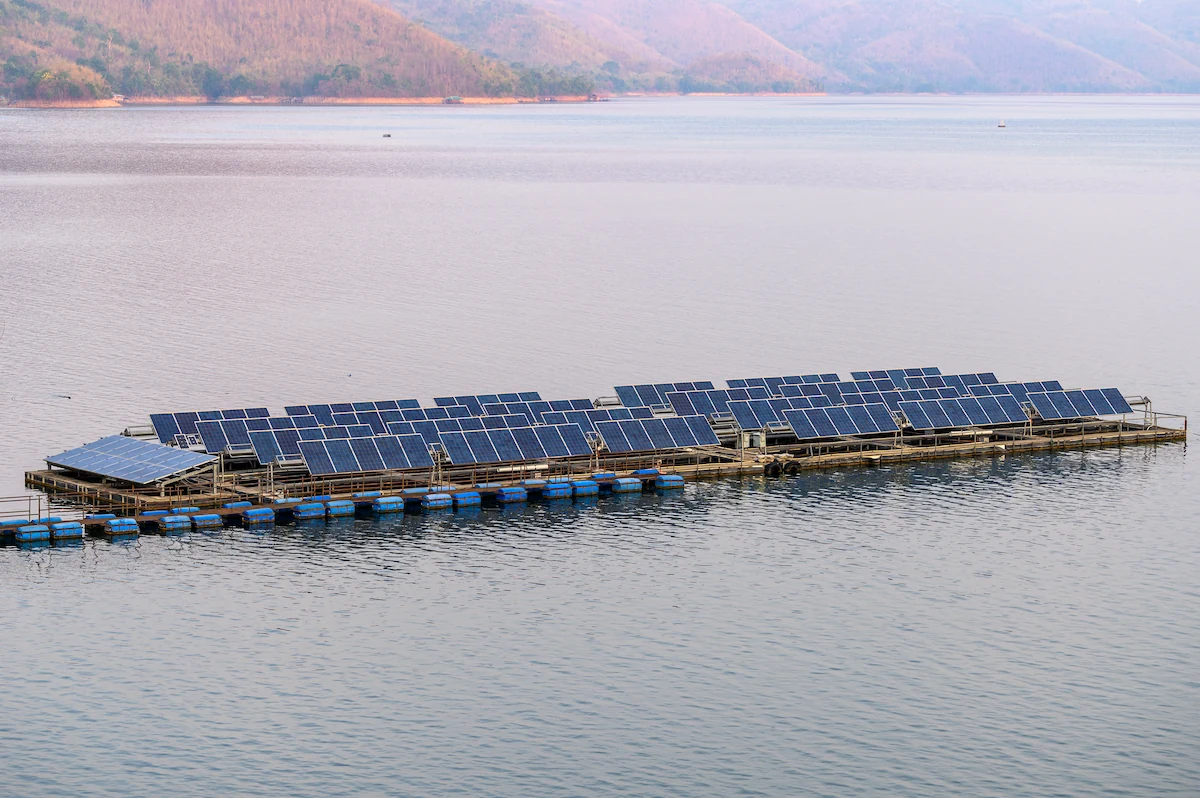
Floating solar panels are equipped with special floats that keep them afloat, buffering the units from extreme weather and protecting the cables connected to the transmission tower.
Floating solar farms consist of a cluster of solar panels mounted on a waterproof platform (typically made of HDPE plastic). Generally, these solar panels are installed in man-made water sources, such as reservoirs, to prevent them from being tossed around by waves. Additionally, they are mostly installed in freshwater to prevent rusting from saltwater.
This work involves absorbing sunlight particles using solar PV cells. Then, electrons will move through the semiconductor, producing direct current (DC) electricity.
This flow will be converted to alternating current (AC) using an inverter to produce electricity for offices and residences.
Advantages of Floating Solar Panels
The presence of floating power plants, especially those powered by solar, marks a new chapter in the development of renewable energy. This type of solar panel has several advantages, including:
1. Preserves Land
Floating solar panels are suitable for densely populated areas with limited land, special agricultural areas, urban areas, and conservation land. This is because they require less land than land-based solar panels.
That is why floating solar panels are particularly well-suited for development in Indonesia, given our many lakes, reservoirs, and other bodies of water.
2. Reduces Water Evaporation
Floating solar power plants are suitable for areas prone to drought because this renewable energy technology can reduce water evaporation and protect natural lakes, which dry up quickly during the summer. The reservoirs where floating solar power plants are placed can also be used for irrigation.
Furthermore, solar panels arrayed above the surface of water bodies may also reduce algae growth, which can potentially damage aquatic ecosystems.
3. Increases Energy Efficiency
Floating solar panels benefit from cooling from the water beneath them, making them more energy-efficient than land-based solar plants, where temperatures rise quickly due to the sun's heat.
4. Utilizes Abandoned Areas
These solar panels can be installed on abandoned or unused infrastructure areas, such as waterlogged former mining areas. As a result, the country can maximize the use of the infrastructure and prevent further degradation.
Read also: 12 Types of Power Plants for Alternative & Renewable Energy
Challenges in Developing Floating Solar Power Plants
Floating solar panels may be a breath of fresh air for the world's energy supply. However, companies must consider the drawbacks of floating solar farms to mitigate future risks. Here are some of the challenges in developing floating solar power plants:
1. Vulnerable to Weather
Floating solar farms would likely have a buoyant structure to keep them stable. However, large waves, strong winds, and severe earthquakes can damage floating solar plant infrastructure.
2. High Initial and Maintenance Costs
The solar panel components are specifically designed to attach to the bottom of the lake and allow the panel to float, making the installation more stable. This is what drives up the cost. The National Renewable Energy Laboratory states that the cost of floating solar power plants is 25% higher than that of land-based solar power plants.
3. Requires a Special Water Body
This solar power plant cannot be installed in just any water body. These solar panels require a calm water surface to prevent the structure from being easily damaged by water movement.
Examples of Floating Solar Power Plants in Indonesia
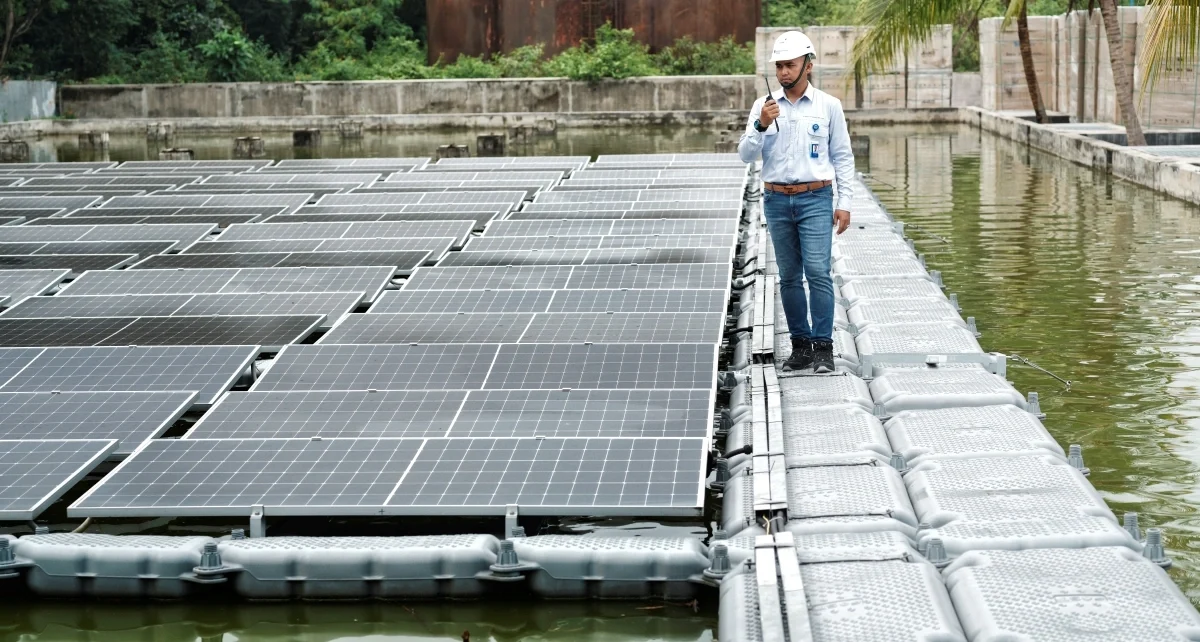
Indonesia has already begun developing floating solar panels, including the Cirata Floating Solar Panel at the Cirata Dam in West Java. It has an installed capacity of 192 MWp and is the largest in Southeast Asia.
To support the fulfillment of the Domestic Content Level (TKDN), Chandra Asri Group, as an energy solutions company, also provides raw materials for the Cirata floating solar power plant.
The Cirata Floating Solar Power Plant project is one of Indonesia's efforts to increase the portion of new renewable energy and achieve net-zero emissions.
In addition to supporting Cirata PLTS by supplying floaters, Chandra Asri Group, as #YourGrowthPartner, also develops floating solar power plants through its subsidiary, Krakatau Chandra Energi (KCE, formerly Krakatau Daya Listrik).
KCE has three solar panel installation mechanisms, namely off-grid, on-grid, and hybrid. KCE also develops rooftop, ground-mounted, and floating photovoltaic installations.
These installations reflect Krakatau Chandra Energi and Chandra Asri Group's commitment to developing sustainable, renewable energy sources.
That concludes the information you can learn about floating power plants. This type of solar panel is an innovation for countries with large water territories, such as Indonesia, and for areas with limited land, such as urban areas.
If your company needs solar panel installation to support energy supply, be sure to trust Chandra Asri Group and Krakatau Chandra Energi!
Read also: What Is the Impact of Using Eco-Friendly Renewable Energy?
.png&w=3840&q=75)