
Renewable Energy in Singapore: Potential and Development
By Chandra Asri Group Editorial Team
19-02-2026
Recently, many countries have made efforts to tackle climate change, including Singapore. Singapore might have limited natural resources and land, but renewable energy there has great growth.
This article discusses the development of renewable energy in Singapore. So, read the complete information below!
An Overview of Energy Consumption in Singapore
Singapore is located at the southern tip of the Malay Peninsula with an area of 735.7 km². Having a population of about 6 million, this metropolitan country has high energy and electricity consumption.
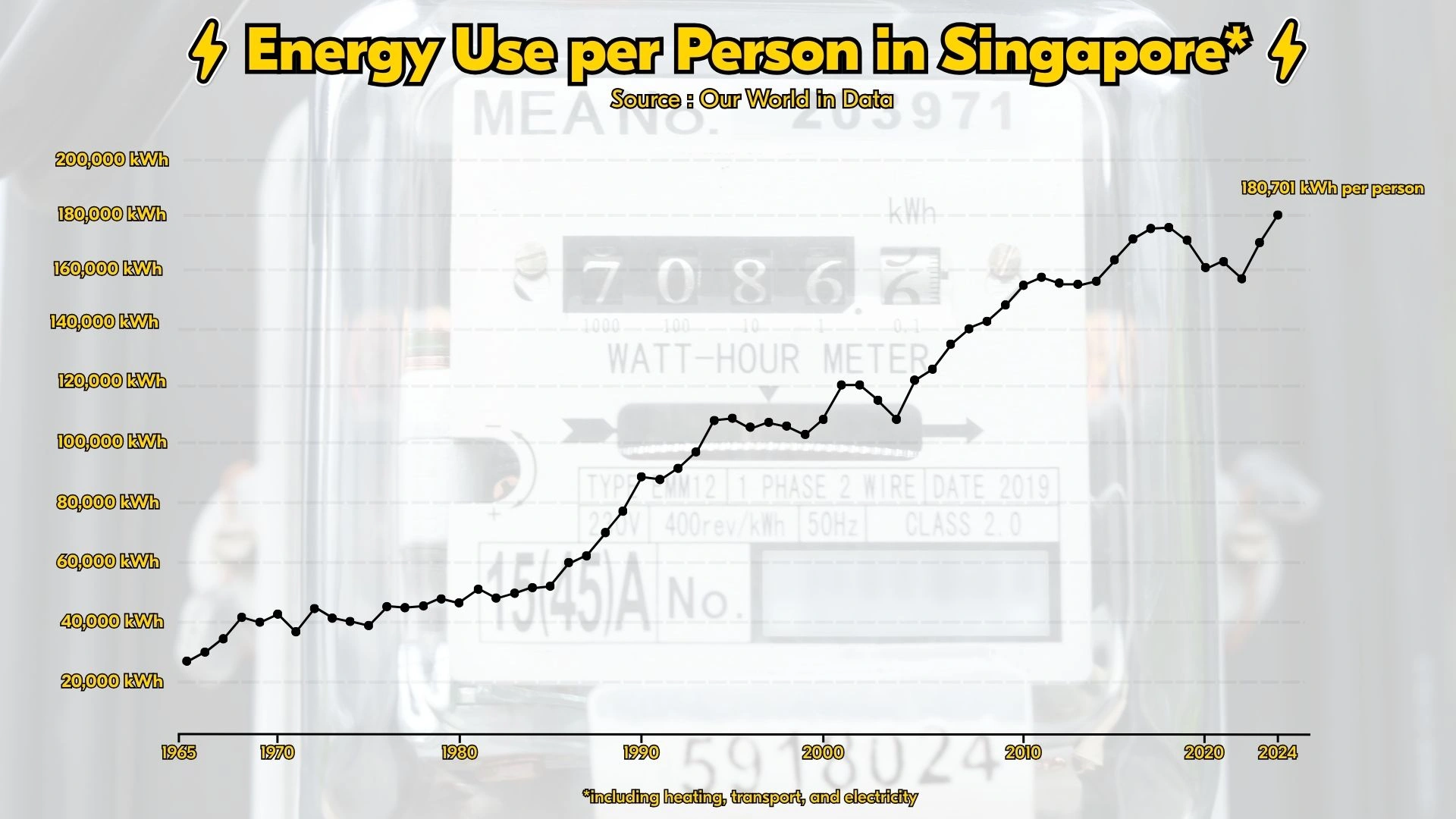
Our World in Data noted that in 2024, energy consumption per person reached 180,701 kWh (including heating, transport, and electricity). Regarding electricity, Singapore generated 10,221 kWh per capita and a total of 59.61 TWh in 2024.
Moreover, in the first quarter of 2025, Singapore consumed 29 TWh of electricity, according to the Energy Market Authority, with industrial and service sectors as the main consumers.
Singapore relies heavily on fossil fuels (oil, gas, and coal) to produce energy. In 2024, the oil consumption for energy reached 914.60 TWh, coal 3.51 TWh, and gas 129.82 TWh.
Singapore has limited resources for renewable energy, including a narrow tidal range and wind. However, interestingly, renewable energy still holds a place among energy sources.
Our World in Data revealed that solar power consumption for energy generation in Singapore reached 3.11 TWh, followed by other renewables at 2.64 TWh, in 2024.
This means that despite having limited resources, Singapore still has great potential for renewable energy development, especially solar panels, knowing that the nation is located near the equator. Being a tropical country surely benefits them in leveraging sunlight for electricity generation.
Read also: New Renewable Energy: Definition, Indicators, and Examples
The Development of Renewable Energy in Singapore
In spite of relying on fossil fuels for energy generation, Singapore has also developed renewable energy, especially to reduce carbon emissions. The International Energy Agency (IEA) noted that the trend of renewables for electricity generation in Singapore between 2000 and 2022 increased 338%.
Below are some efforts Singapore has made the following renewable energy development:
1. Solar Energy Deployment
The IEA mentioned that the largest source of non-combustible renewable electricity in Singapore belongs to solar PV, holding 100% of total generation.
Solar energy has become the key strategy developed by Singapore. In 2023, the use of solar PV reached 1,386 GWh. This figure is close to Singapore's target of 2 gigawatt-peaks by 2030.
The solar panel and renewable energy development also align with the Singapore Green Plan 2030, or Green Plan.
The Green Plan aims to achieve the national agenda on sustainable development. It contains concrete targets to strengthen Singapore’s commitment under the Paris Agreement and the UN’s 2030 Sustainable Agenda. The expected result is long-term net zero emissions by 2050.
Among the targets, solar energy deployment is emphasized. Singapore planned to quadruple solar energy installation by 2025.
Then, with the limited land and resources, how can Singapore develop solar energy? Fortunately, Singapore has implemented rooftop and floating solar systems. The panels are installed on the public housing and commercial buildings’ rooftops, while the floating system is deployed on reservoirs.
2. Clean Energy Mix
In addition to the solar panel development, Singapore also aims to accomplish a clean energy mix by 2035. The energy mix will be applied to 40% of the total electricity supply. It contains up to 30% of imported low-carbon electricity and 6% of domestic solar energy.
Regarding imported clean energy, Singapore attempted to import 100 MW of hydropower from Laos in 2022 through the Laos-Thailand-Malaysia-Singapore Power Integration Project (LTMS-PIP). In 2025, Singapore succeeded in importing 122.7 million kWh of clean energy.
Read also: 7 Green Technology Products & Their Environmental Benefits
Chandra Asri Group, a Renewable Energy Solution for Singapore
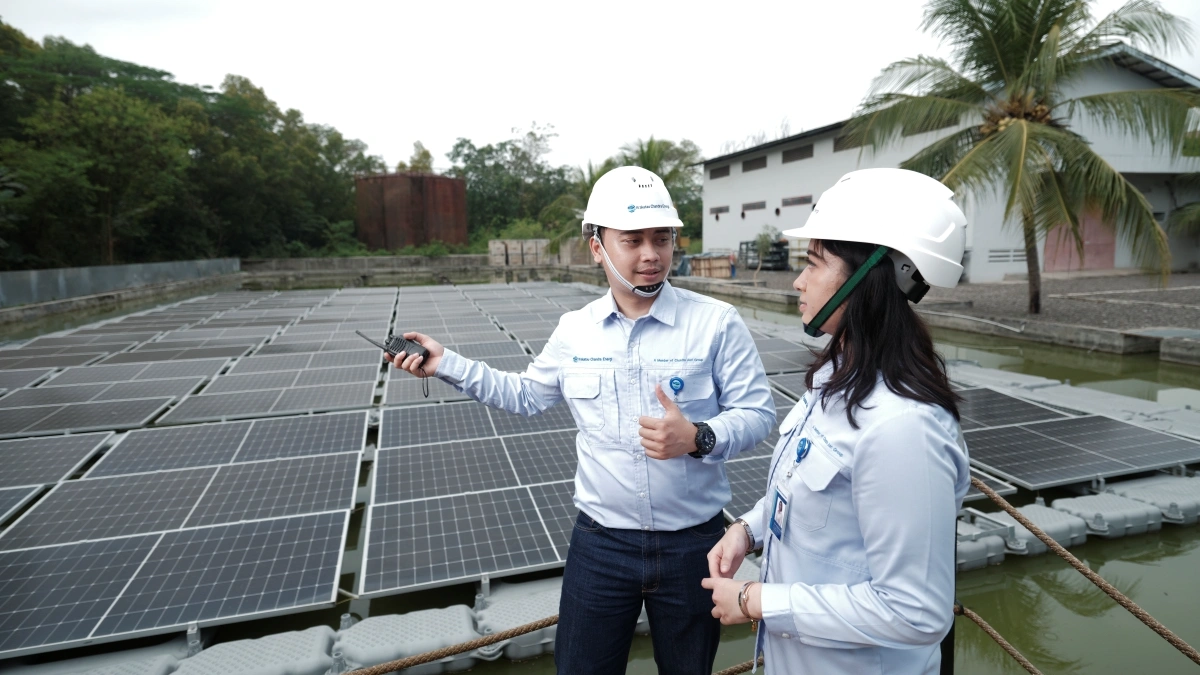
To support the renewable energy utilization, renewable energy companies in Singapore must take action. One of the reliable companies for this is Chandra Asri Group.
As #YourGrowthPartner, Chandra Asri Group offers energy solutions for Singapore, including renewable energy. Our energy business and operations are managed by PT Krakatau Chandra Energi (KCE), acquired from PT Krakatau Sarana Infrastruktur in 2023.
In July 2020, we entered the new and renewable energy sector by constructing and running a 102 kWp rooftop solar power plant.
Constructed on top of KCE's main station, the solar power plant is grid-connected to the electrical network of KCE. In the years to come, consumers will be able to switch to a variety of new and renewable energy solutions that are produced and offered with service options.
Chandra Asri Group and Krakatau Chandra Energi offer three types of solar systems, namely the Solar On-Grid System, the Solar Off-Grid System, and the Solar Hybrid System.
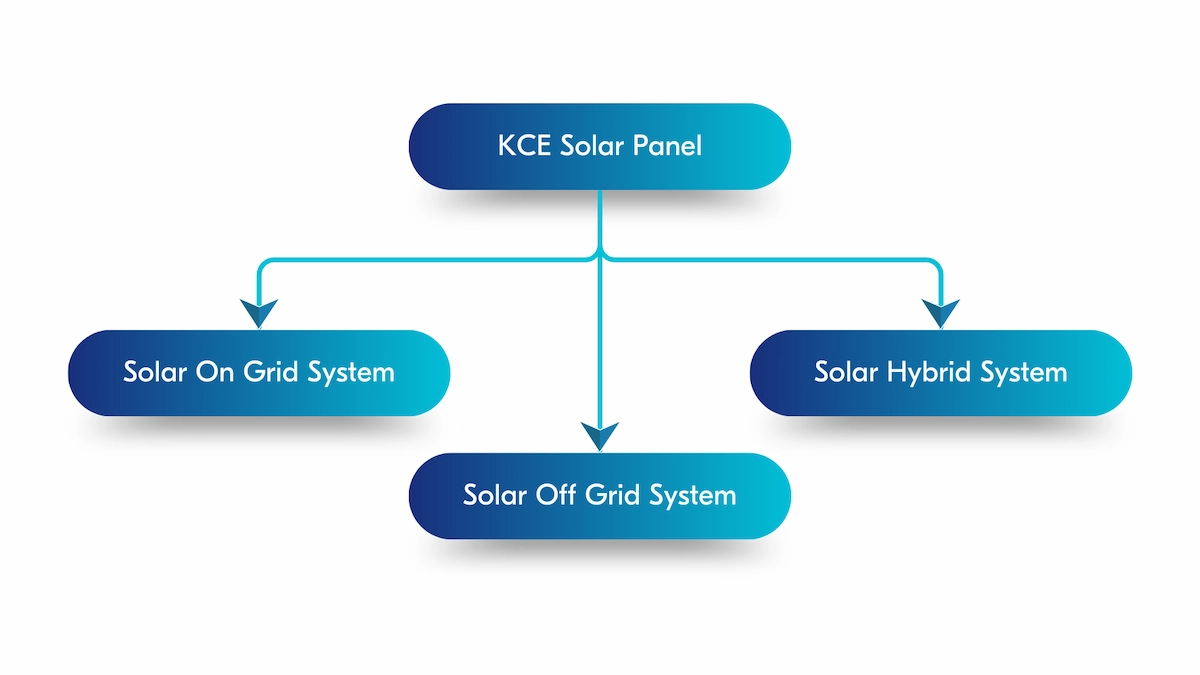
The solar on-grid system is integrated with the power grid, allowing the energy to be transmitted to the building without needing batteries. On the other hand, the off-grid system has a backup battery and operates autonomously without connection to the grid. Meanwhile, the hybrid one is the combination of both.
That is the information about Singapore’s renewable energy statistics and development that you can learn. Singapore has great potential for renewable energy advancement despite having limited area and resources.
Therefore, with dependable companies, you can realize solar panel utilization and support the nation’s attempt at net-zero emissions.
So, entrust your energy needs to Chandra Asri Group and Krakatau Chandra Energi!
Read also: 7 Examples of Electrical Energy and How to Generate It
.png&w=3840&q=75)