
23-06-2026
Boiler Deaerator: How It Works, Its Functions, and Benefits
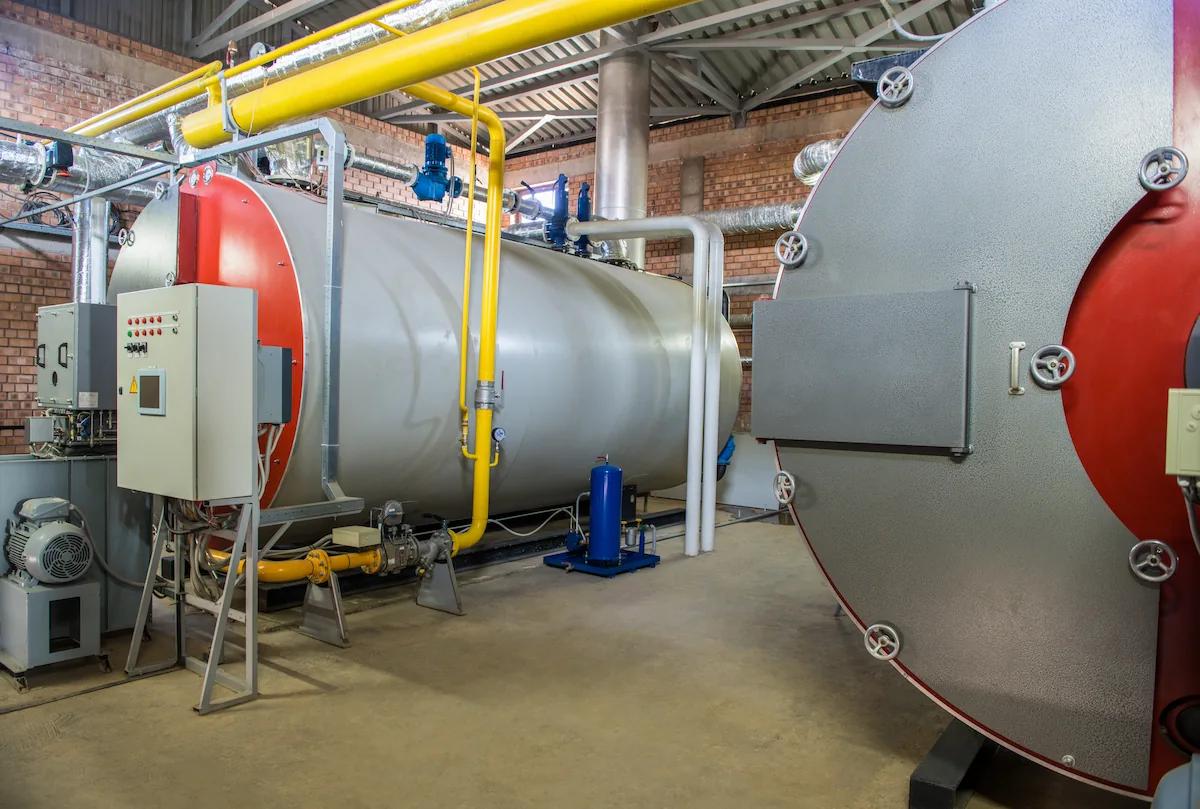
A boiler deaerator is a key component of a large-scale steam boiler. The deaerator removes dissolved gases from the boiler feedwater.
This component also plays other crucial roles and offers operational benefits in the industry. To learn about the function of a boiler deaerator, read the information below.
What Is a Boiler Deaerator?
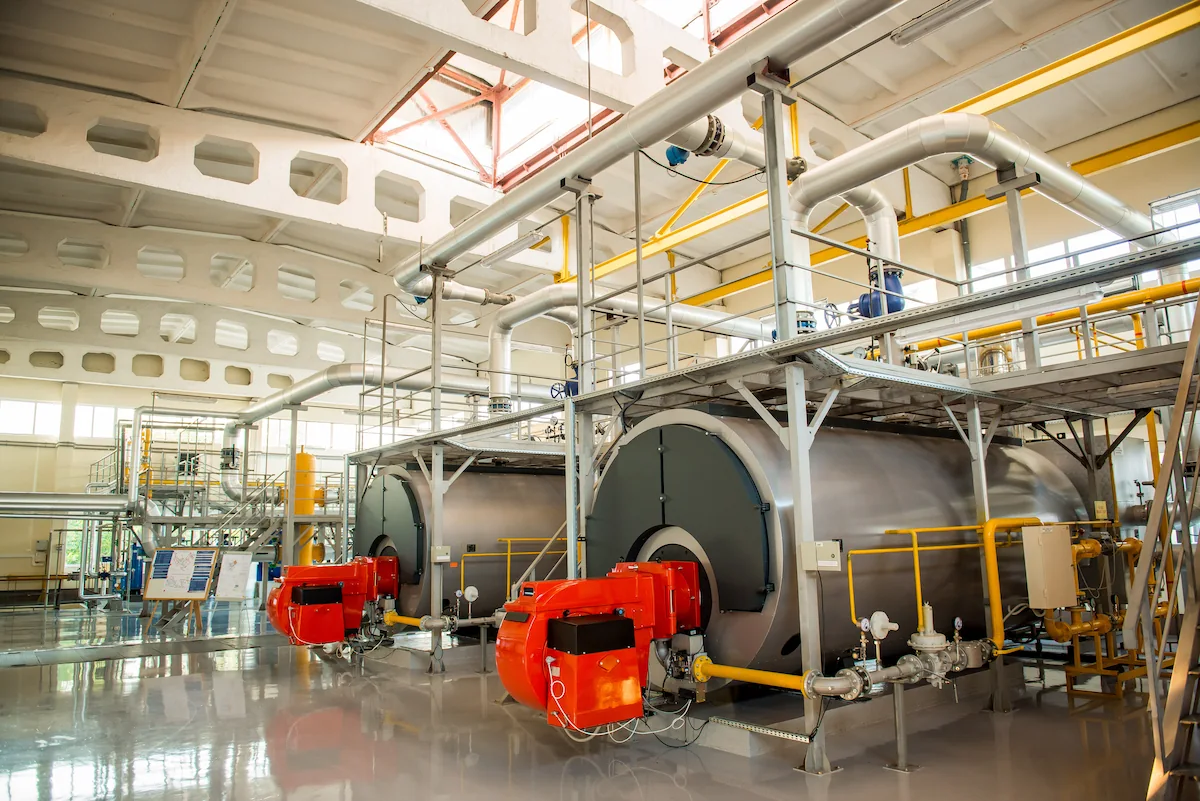
A deaerator is a boiler component that removes oxygen and other gases from the water used to generate steam. These gases must be removed from the feedwater to prevent them from adhering to the boiler’s metal components and causing corrosion.
There are two commonly used types of boiler deaerators: tray-type and spray-type. A tray-type deaerator features a tray-like section to hold the boiler water.
Meanwhile, the spray-type deaerator sprays water through nozzles into the deaerator chamber. The steam heats the water and removes the dissolved gases it contains.
It is important to note that dissolved gases, such as oxygen and carbon dioxide, can corrode metal boilers, thereby reducing operational efficiency and requiring extra maintenance.
This corrosion can lead to leaks and equipment failure. It is not uncommon for corroded equipment to break down over time.
Read also: Understanding a Pressure Vessel and Its Uses in Industry
How a Boiler Deaerator Works
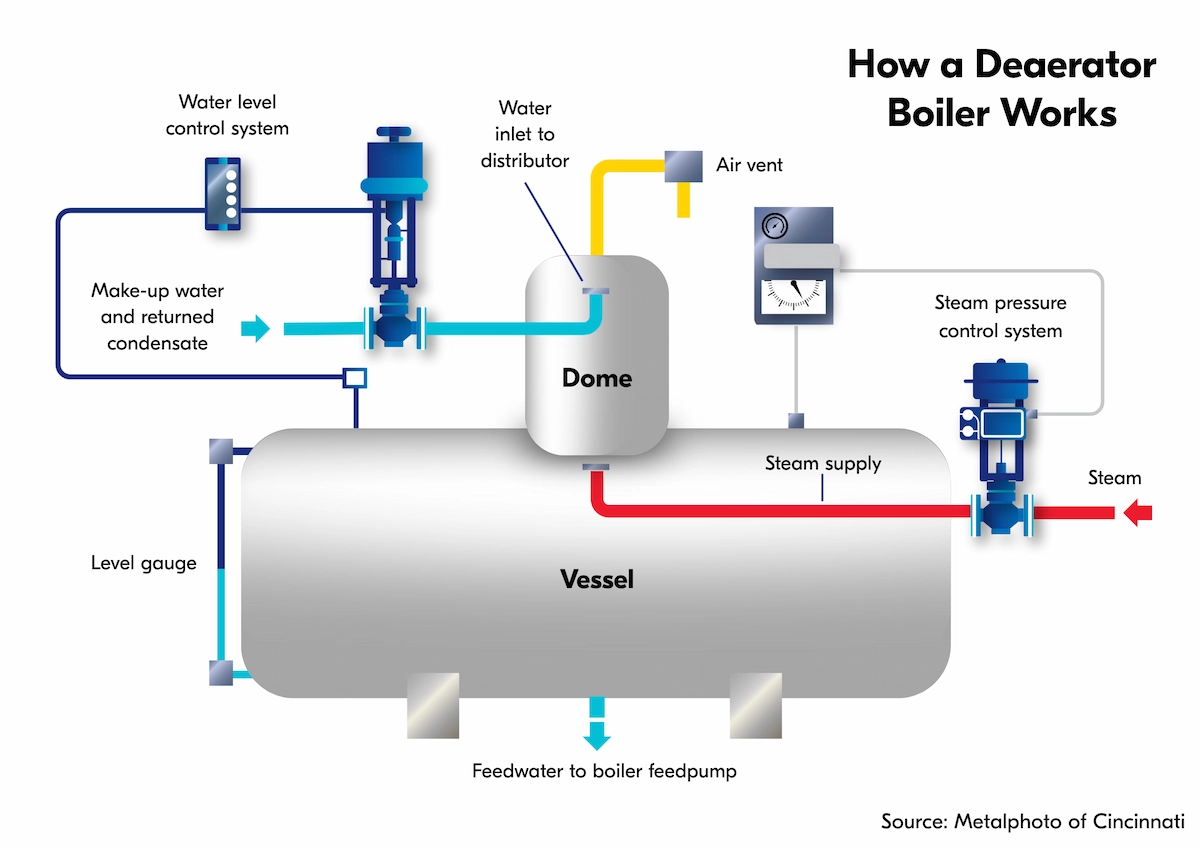
A boiler deaerator operates in several stages, including:
- Untreated feedwater enters the deaerator.
- The feedwater is heated inside the deaerator using steam. In this water-heating process, gas solubility decreases, making it easier to remove.
- The heated water is sprayed into the deaerator tower. At the same time, a stream of steam enters from the bottom of the tower, “forcing” the dissolved gases out of the feedwater and causing them to evaporate toward the top of the tower.
- The gases that evaporate at the top of the deaerator are vented through a special ventilation system.
- Feedwater stripped of dissolved gases is collected at the base of the tower and sent to the boiler to generate steam.
Functions of a Boiler Deaerator
A boiler deaerator has several main functions, such as:
1. Removing Dissolved Gases
Oxygen and carbon dioxide are the primary contributors to corrosion in boilers and steam lines. The deaerator uses heat and physical separation to remove gases from the feedwater before it enters the boiler.
2. Protecting the System
Since the feedwater no longer contains gases, the risk of corrosion in the boiler and steam lines is reduced. This can reduce maintenance costs and prevent sudden downtime caused by equipment failure.
3. Preheating Feedwater
Preheating feedwater can improve steam-generation efficiency and reduce equipment damage from sudden temperature changes (thermal shock).
Types of Boiler Deaerators
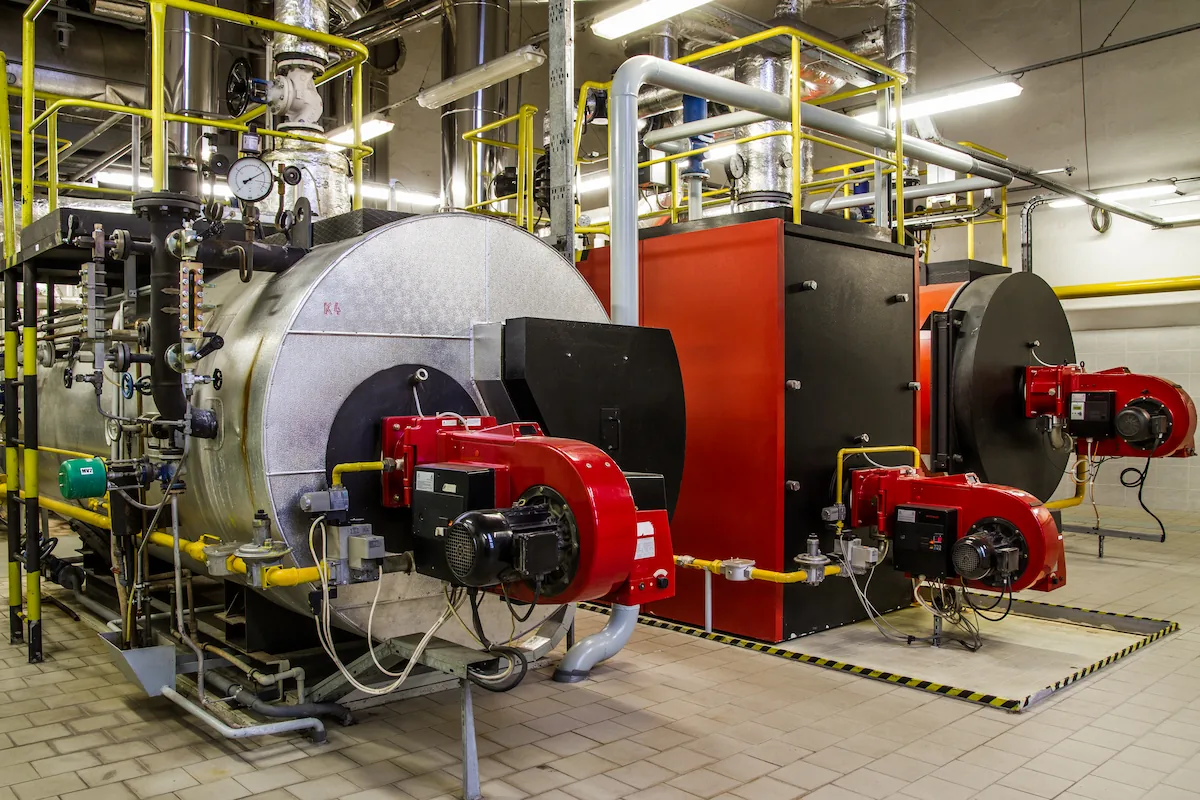
In addition to spray- and tray-type boiler deaerators, there are other types designed to meet the needs of various industries. Here is the explanation:
1. Spray-Tray Deaerator
This type of deaerator combines the features of a spray deaerator and a tray deaerator. It uses a “tray” to distribute water evenly and a spray nozzle to deliver degassing steam.
2. Vacuum Deaerator
Vacuum deaerators can operate under low pressure. They work by introducing steam into a sealed chamber. Then, the feed water is heated and deaerated as it evaporates at a lower temperature.
3. Mechanical Deaerator
This type of deaerator uses rotating mechanical components to enhance deaeration. The goal is to optimize contact between the feedwater and steam so that dissolved gases can be removed.
4. Pressurized Deaerator
Pressurized deaerators operate at high pressure, keeping the water in a liquid state. This type of deaerator can be used when you need feedwater at a higher temperature or to prevent flashing (sudden vaporization of water).
Read also: Understanding a Gas Turbine, Mechanism, and Advantages
Benefits of Boiler Deaerators
Boiler deaerators provide several benefits for the sustainability of operational processes, including:
1. Optimizing Operational Processes
Deaerators significantly improve heating efficiency by ensuring that the feedwater is free of dissolved gases. Faster heating times can optimize fuel usage, resulting in cost savings.
2. Extending Boiler Lifespan
As explained earlier, dissolved gases such as oxygen and carbon dioxide can cause corrosion in metal components.
Installing a boiler deaerator can be considered a corrosion prevention measure, thereby extending the boiler’s service life and preventing premature equipment failure.
3. Maintaining Boiler Pressure Stability
In addition to causing corrosion, dissolved gases also contribute to fluctuations in boiler pressure, which can disrupt steam generation. Therefore, a deaerator stabilizes this process by removing dissolved gases.
4. Improving Steam Quality
Deaerated feedwater has superior quality. High-quality steam is essential for industrial processes that rely on precise temperature and pressure control.
Deaerators also help maintain steam purity by reducing the risk of impurities entering the feedwater, which could contaminate equipment.
Chandra Asri Group and Reliable Operations Across Various Sectors
Deaerators are a critical component of boiler systems, helping maintain feedwater quality, reduce the risk of corrosion, and support operational efficiency.
As a leading company in the chemical, energy, and infrastructure sectors in Southeast Asia, the Chandra Asri Group understands the importance of reliable industrial utility management to support the sustainability and productivity of its operations.
To maintain the efficiency of its chemical manufacturing processes, the Chandra Asri Group uses boiler deaerators at several of its petrochemical complexes.
When it comes to chemical solutions, Chandra Asri Group, as #YourGrowthPartner, provides olefins, polyolefins, styrene monomer, butadiene, B1MTBE, chlor-alkali, and ethylene dichloride.
Additionally, we have expanded our chemical supply reach to Singapore through our subsidiary, Aster. Aster provides a wide range of chemical feedstocks, from propylene to styrene.
So, if your company is looking for high-quality industrial chemicals, trust Chandra Asri Group! Contact us now for further consultation!
Read also: Steam Turbine: Definition, How It Works, Types, & Functions