
27-03-2026
Understanding a Pressure Vessel and Its Uses in Industry
Chemicals are products needing specific treatment, ensuring that the distribution and storage are safe. One of the pieces of equipment protecting the condition of liquid and gas petrochemical products is a pressure vessel.
A pressure vessel is equipment made of a strong material to manage chemicals under high pressure. To get to know more about the function and type, read this article until the end.
What Is a Pressure Vessel?
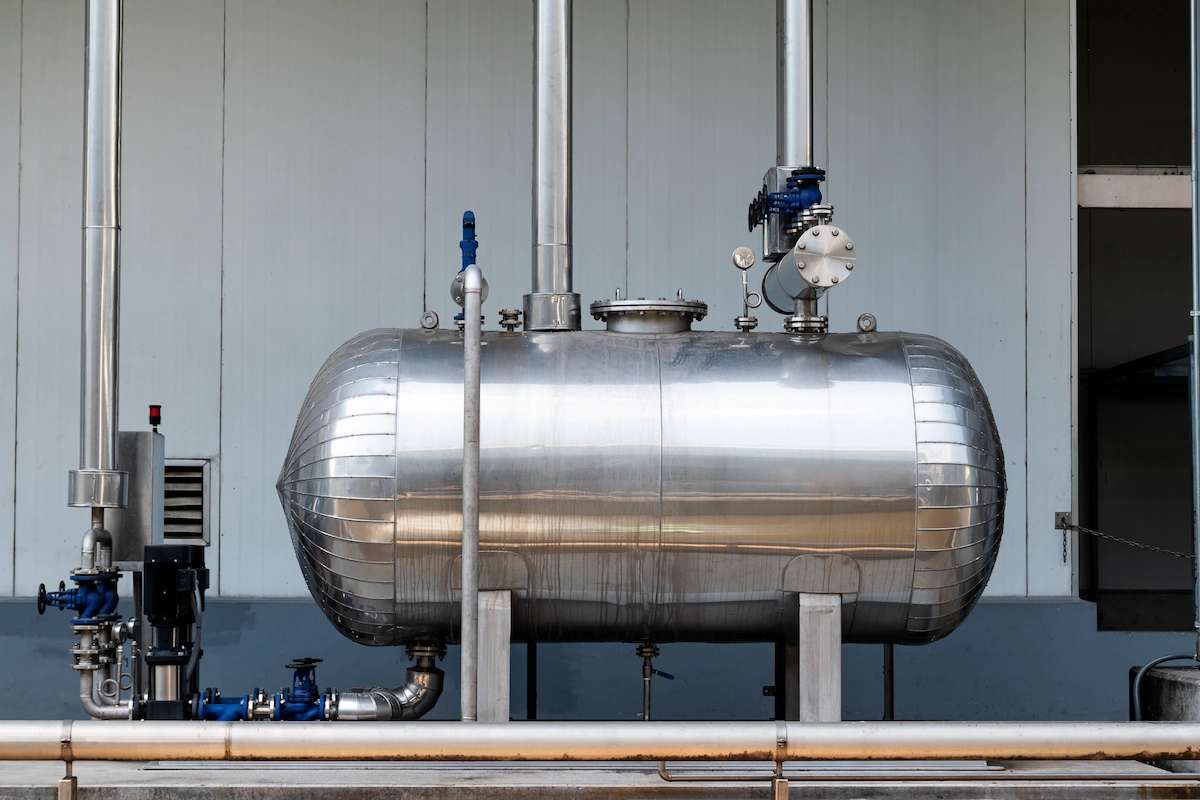
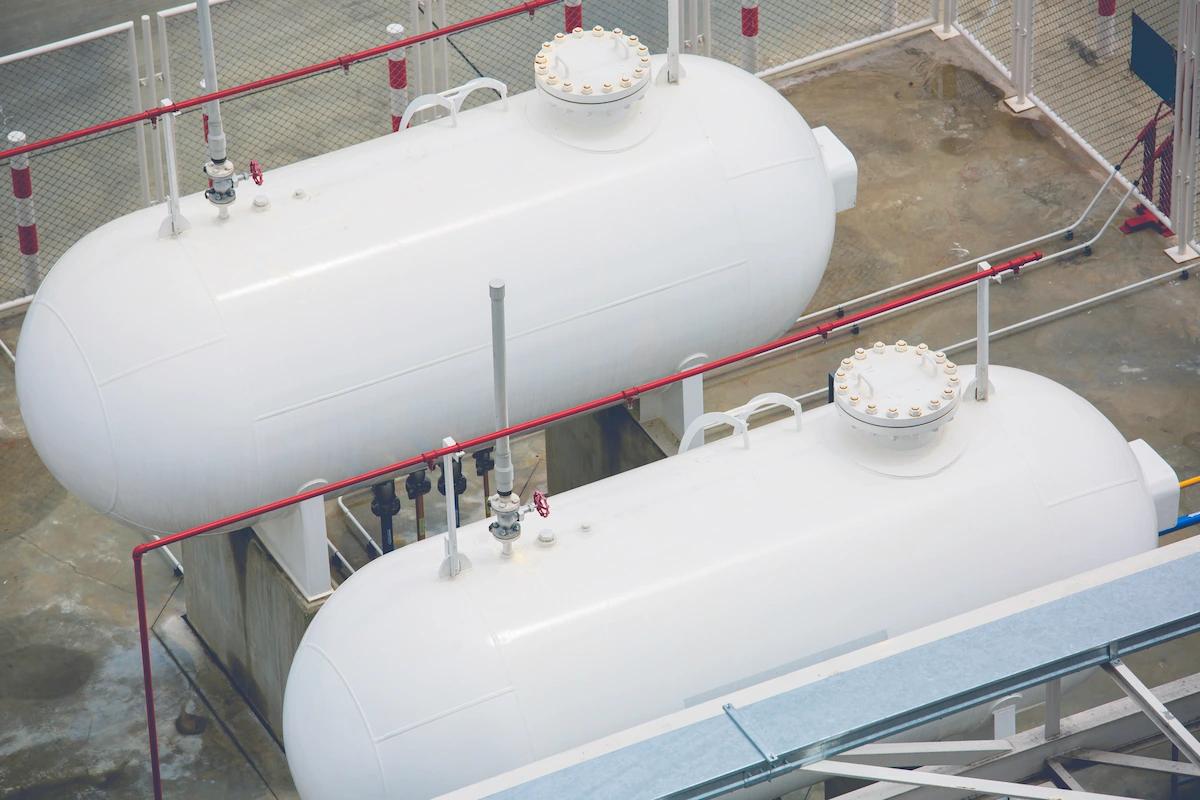
A pressure vessel is a strong and leak-proof container used to store liquid or gas chemicals. It is usually spherical or cylindrical in various sizes, depending on your needs. Yet, the most common shape is a long cylinder with two heads.
Spherical vessels are ideal for storing high-pressure liquids since they are crack-proof because the pressure is distributed evenly to the wall.
Meanwhile, cylindrical vessels are the most popular type because they are versatile enough for a wide range of applications. However, they are not as strong as spherical vessels, so they must be designed with thicker walls.
A pressure vessel operates at pressures different from the surrounding atmospheric pressure, whether higher or lower. Therefore, every vessel must be constructed in accordance with applicable safety standards and ensured to withstand extreme pressures.
Some standards applied to pressure vessels include the ASME Boiler and Pressure Vessel Code (BPVC), the Pressure Equipment Directive (PED), API 650, API 620, ISO 9001, and ISO 3834.
Examples of pressure vessels include chemical reactors, propane tanks, boilers, compressed air tanks, and heat exchangers. Typically, pressure vessels are made of carbon steel, titanium, stainless steel, composites, or aluminum.
Then, how does a pressure vessel work? It is designed to reach the required pressure. It can use heat transfer to apply pressure indirectly or directly via valves and pressure gauges.
These vessels can withstand pressures ranging from 15 psi to 150,000 psi. The temperature inside these vessels can also be extremely high, reaching up to 400 degrees Celsius. Typically, these pressure vessels can hold liquids or gases ranging from 75 liters to thousands of liters.
Read also: Oil Refinery: Definition, Processes, and Its Functions
Functions of a Pressure Vessel in the Industry
A pressure vessel is a container widely used in the industry sector, especially in the oil and gas industry. Here are some functions of a pressure vessel you must know:
- Carry gases or liquids safely.
- Store chemicals, such as fuels or LPGs, under certain pressure.
- Become a chemical reactor to undergo high-pressure and temperature reactions.
- Heat or cool material during production (heat exchanger).
- Manage fuel safely during gas storage and oil refining.
Types of a Pressure Vessel
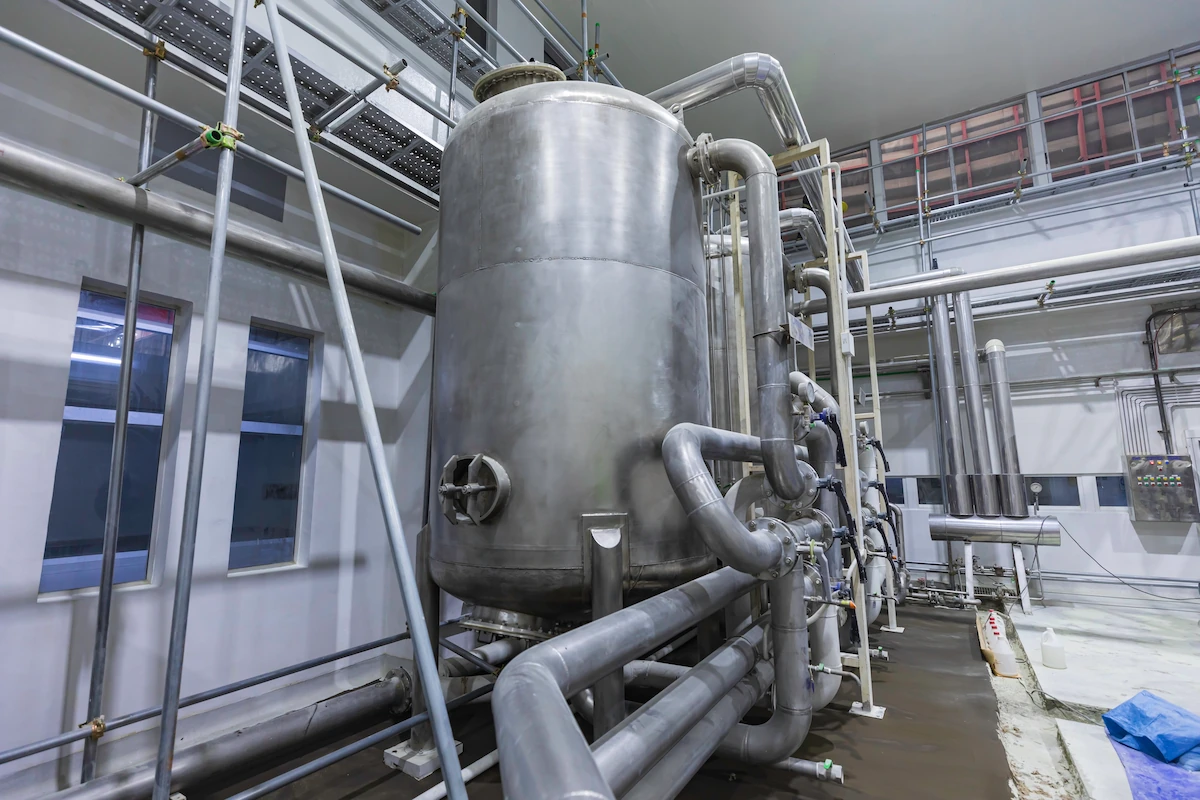
A pressure vessel is divided into several types based on its uses and properties, such as:
1. Autoclave
An autoclave is a large, high-temperature, high-pressure vessel typically round or cylindrical in shape. It is designed to hold and sterilize materials.
2. Process Vessels
This tank is designed to hold liquids used in integrated processes at petrochemical facilities, gas plants, oil refineries, and other facilities.
3. High-pressure Vessels
This vessel offers the highest durability on the market because it can handle the heaviest loads. It is also resistant to pressure, temperature, and corrosion. Typically, high-pressure vessels are made of stainless steel and are used as chemical reactors and high-speed mixers.
4. Heat Exchanger
A heat exchanger is a device that transfers heat from one medium to another. Heat exchangers are commonly used in petrochemical, pharmaceutical, textile, maritime, and power plants.
5. Expansion Tanks
This tank is designed to accommodate fluctuations in the volume of hot water within the heating system and changes in water flow. It works to maintain the static pressure of the pump in the domestic hot water system.
6. Water Pressure Tanks
It uses compressed air to pressurize the water, increasing the water pressure. The air pressure forces the water out of the tank through a pipe. An example of a water pressure tank is found in household wells.
7. Boiler
A boiler is a sealed pressure vessel used to heat water, which is then used for sanitation, heating, and electricity generation.
8. Thin-walled Pressure Vessel
It has thinner walls than most pressure vessels. As a result, the pressure inside is higher than the pressure outside the vessel.
9. Vacuum Tanks
This tank uses a vacuum to purify, prevent contamination, and remove moisture from the stored material. Typically, vacuum tanks are part of a filtration and air pump system.
Read also: What Is a Petroleum Reservoir in the Oil and Gas Industry?
Uses of a Pressure Vessel
A pressure vessel is commonly used in the oil and gas, energy, and chemical industries. Here is the complete explanation:
1. Chemical Industry
In the chemical industry, a pressure vessel is used for undergoing chemical reactions. Some products are mixed to produce new products or exhibit specific characteristics.
2. Energy Industry
The energy industry, such as power plants, uses pressure vessels to store hazardous gases. In addition, nuclear power plants use reactor pressure vessels (RPVs) to withstand high pressure and temperature as well as neutron irradiation.
3. Oil and Gas Industry
A pressure vessel is a container in which high-pressure, high-temperature physical and chemical processes take place. It requires other components to function optimally, such as an interior and a distillation tray.
Reliable Chemical Solutions in Southeast Asia
Pressure vessels are critical equipment in the petrochemical industry, as they are used to safely store chemicals and facilitate chemical reactions to create new products.
In addition to ensuring the reliability of chemical processing equipment, you must also ensure that the chemical raw materials used are of high quality.
Regarding this, you can rely on Chandra Asri Group and Aster. As a prominent chemical solutions provider in Southeast Asia, we supply ethylene, polypropylene, LLDPE, HDPE, caustic soda, and more.
Not only that, our Singapore-based subsidiary, Aster, also provides high-quality chemical raw materials for industrial needs, such as styrene, propylene, butadiene, and many others.
So, do not hesitate to entrust your industrial chemical needs for the manufacturing processes to us, #YourGrowthPartner!
Read also: Fractional Distillation of Crude Oil and Its Final Products
.png&w=3840&q=75)