
27-03-2026
Steam Boilers: Functions, Types, and Characteristics
A steam boiler is an important industrial component for operations and manufacturing. This component converts water into hot steam for use in engines or power plants.
This article discusses the role of industrial steam boilers in operational processes and the types of boilers. So, read to the end!
What Are Steam Boilers?
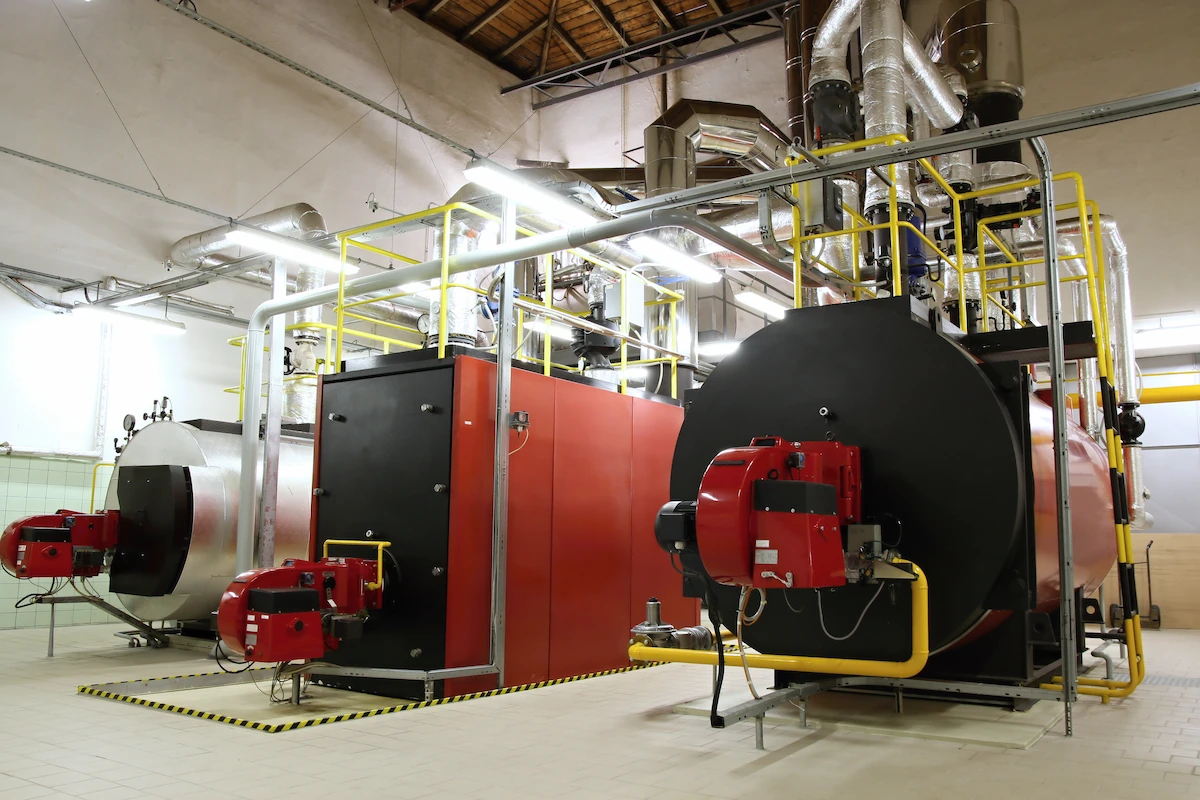
Steam boilers are high-pressure vessels that use heat from fuel to convert water into steam. This steam is then used to generate electricity, run steam engines, or heat rooms.
In commercial and residential contexts, steam boilers are ideal components for buildings that do not require large amounts of steam energy.
Meanwhile, in industrial settings, steam boilers support several processes that require high power output.
Common applications of steam boilers include rubber vulcanization for making vehicle tires and sterilizing equipment in the food industry.
Steam Boiler Components
Steam boilers have several components, such as:
- Steam drum: This steel component supplies clean, dry high-temperature steam to the steam turbine or superheater.
- Water drum: Supplies water to various components and collects deposits.
- Generator tubes: A set of large-diameter tubes that ensure gas flows to the right components. These tubes also carry steam and water from one place to another.
- Superheater tubes: Increase the temperature of the steam produced by the boiler, converting it from saturated to superheated steam.
- Steam pipes: Remove waste steam and contaminants that settle from the system.
Read also: Understanding a Gas Turbine, Mechanism, and Advantages
Types of Steam Boilers
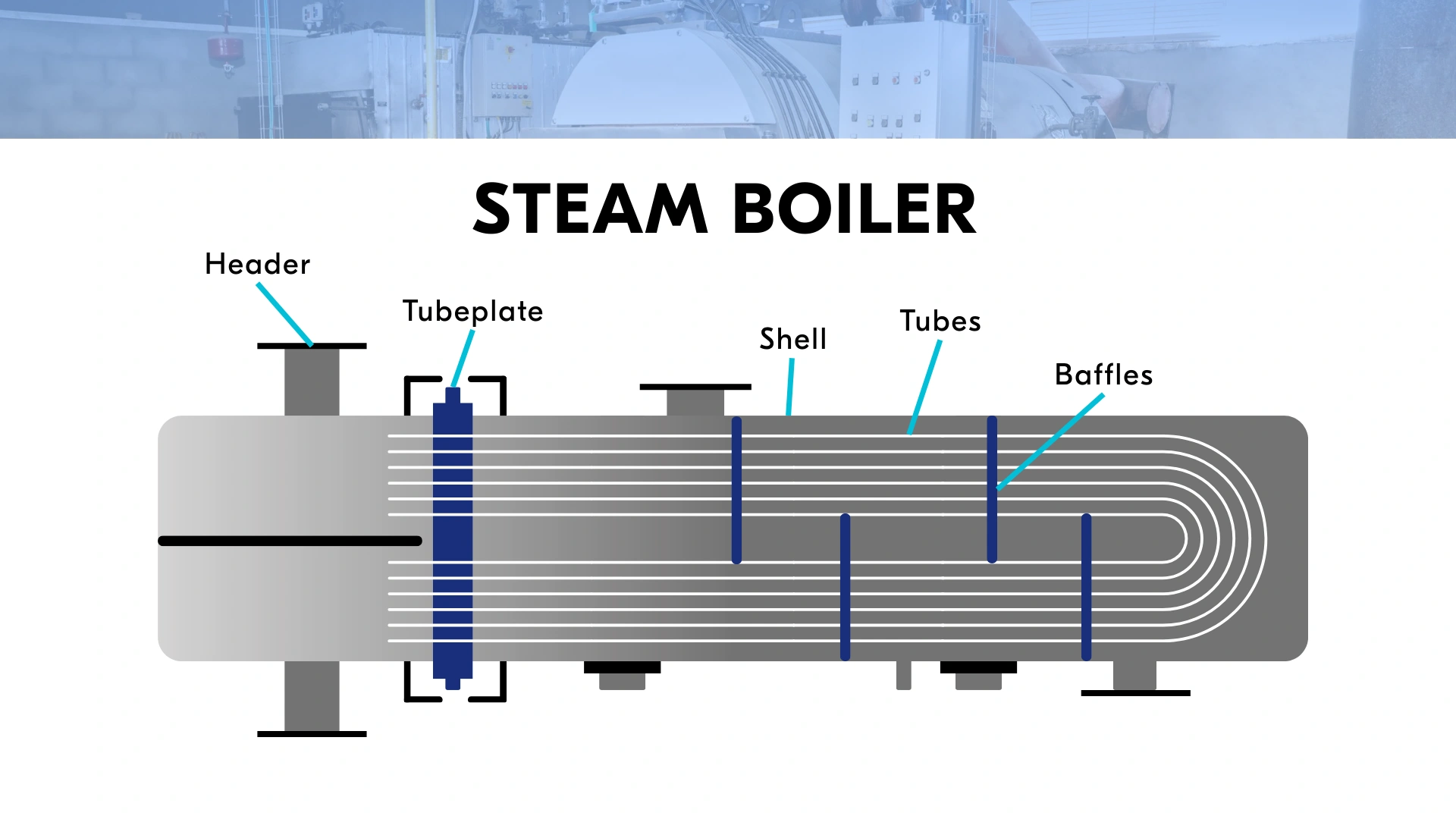
Steam boilers are categorized by tube type, fuel type, adaptability, structure, and pressure output. Steam boilers can be powered by a variety of fuels, including fossil fuels, natural gas, electricity, coal, and firewood. The following is a complete explanation of the types of steam boilers:
1. Hot Water Boiler
These boilers are usually made of aluminum, stainless steel, steel, or iron because they are resistant to high temperatures and pressures. This type is further divided into water-based or fire-based tube systems.
In fire-based boilers, the combustion tubes generate heat that is transferred to the water-filled tubes. As a result, the water around the tubes warms. Meanwhile, in water-based boilers, water flows through tubes heated from the outside.
2. Electric Boiler
This boiler uses electricity to generate heat, making it faster and more efficient at heating water. This type is highly durable and more environmentally friendly than fossil-fuel burning boilers.
3. Oil Boiler
This type uses oil as fuel in the combustion chamber. Oil boilers are considered more efficient than gas boilers because they are more durable.
4. Gas Boiler
Unlike oil boilers, gas boilers use natural gas or propane to operate. This type is suitable for industrial and low-pressure applications.
5. High-Pressure Boiler
High-pressure boilers generate extremely high pressure to power equipment and machinery. A steam boiler is classified as a high-pressure boiler if it can generate a pressure of 15–800 psi at a temperature above 121 degrees Celsius.
6. Low-Pressure Boiler
These boilers can transfer heat at 10–15 psi and temperatures of 145 degrees Celsius. They can supply steam faster than high-pressure boilers.
7. Watertube Boilers
These steam boilers circulate water through pipes surrounded by fire from the combustion chamber. As a result, the water temperature increases.
The design of this boiler produces high-pressure steam through tangential pressure (a force that acts parallel to a surface, often causing shear or hoop stress in structures such as pipes) within the tubes.
Read also: 12 Types of Power Plants for Alternative & Renewable Energy
Characteristics of a Good Steam Boiler
To work effectively, a steam boiler must meet the following criteria:
- Highly efficient: Steam boilers must produce maximum steam with minimal fuel.
- Lightweight and space-saving: Steam boiler units must be space-saving and easy to move for operational purposes.
- Responsive: Steam boilers must start up and operate immediately once turned on to save time.
- Minimal maintenance: Steam boilers require little maintenance and operate optimally, keeping the process running smoothly.
Applications of Steam Boilers
Steam boilers are widely used in various sectors, including:
- Commercial and domestic use for heating water and cooking.
- Generating electricity for industrial purposes, especially for operating machinery.
- Sterilizing equipment in the food and medical industries.
- Powering steam turbines to create mechanical energy or other forms of energy.
Gas-Steam Power Plant Solutions for Industry
Steam boilers are among the most important tools in industry, both for operational processes and electricity generation. One of the most important roles of steam boilers is to support power plants.
Electricity is essential to all ongoing business processes. However, you do not need to worry about electricity supply issues because Krakatau Chandra Energi has the solution.
Krakatau Chandra Energi, a subsidiary of Chandra Asri Group, provides electricity supported by a 120 MW power plant. We use a natural gas-fired Combined Cycle Power Plant (CCPP) consisting of two gas turbines, two Heat Recovery Steam Generators (HRSG), and one steam turbine.
The HRSG boiler recovers heat from the gas turbine exhaust to produce high-pressure, high-temperature steam. This steam drives the steam turbine, generating mechanical motion that powers the electricity-generating generator.
So, trust your industrial electricity needs to Krakatau Chandra Energi and Chandra Asri Group, #YourGrowthPartner!
Read also: 7 Examples of Electrical Energy and How to Generate It
.png&w=3840&q=75)