
Solar Energy in Vietnam: Potentials and Challenges
By Chandra Asri Group Editorial Team
18-05-2026
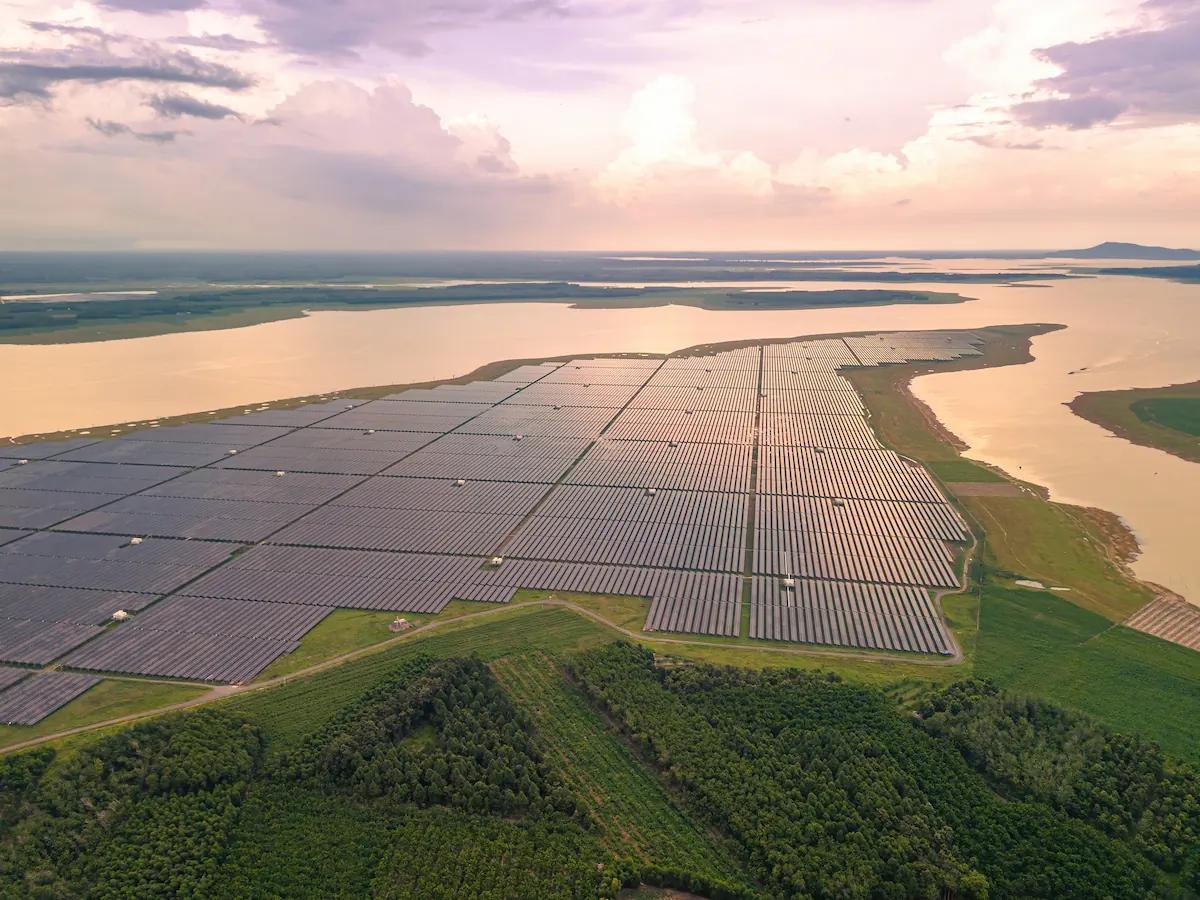
Vietnam is one of the countries in Southeast Asia that is currently moving to leverage solar photovoltaics as its net-zero commitment. With plenty of sunshine and robust government support, Vietnam is quickly becoming a regional leader in solar energy.
The nation's solar power capacity has grown exponentially over the last ten years, changing the country's energy landscape to one that is more sustainable. To learn more about the potential of solar energy in Vietnam, read this article until the end.
Vietnam’s Potential for Solar Energy Systems
Solar energy in Vietnam has great potential thanks to its abundant solar resources. The average daily solar radiation in Vietnam ranges from 4.0 to 5.0 kWh per square meter, with some areas reaching 5.5 kWh per square meter. It also has an average of 2,500–3,000 hours of sunshine per year.
Vietnam has a total solar power potential of 1,646GW (1,569GW on the ground and 77GW on the water). Also, approximately 386 GW of large-scale solar power could be developed nationwide.
Many areas are suitable for solar panel installation, such as lakes, coastal areas, mountainous regions, plains, and rooftops.
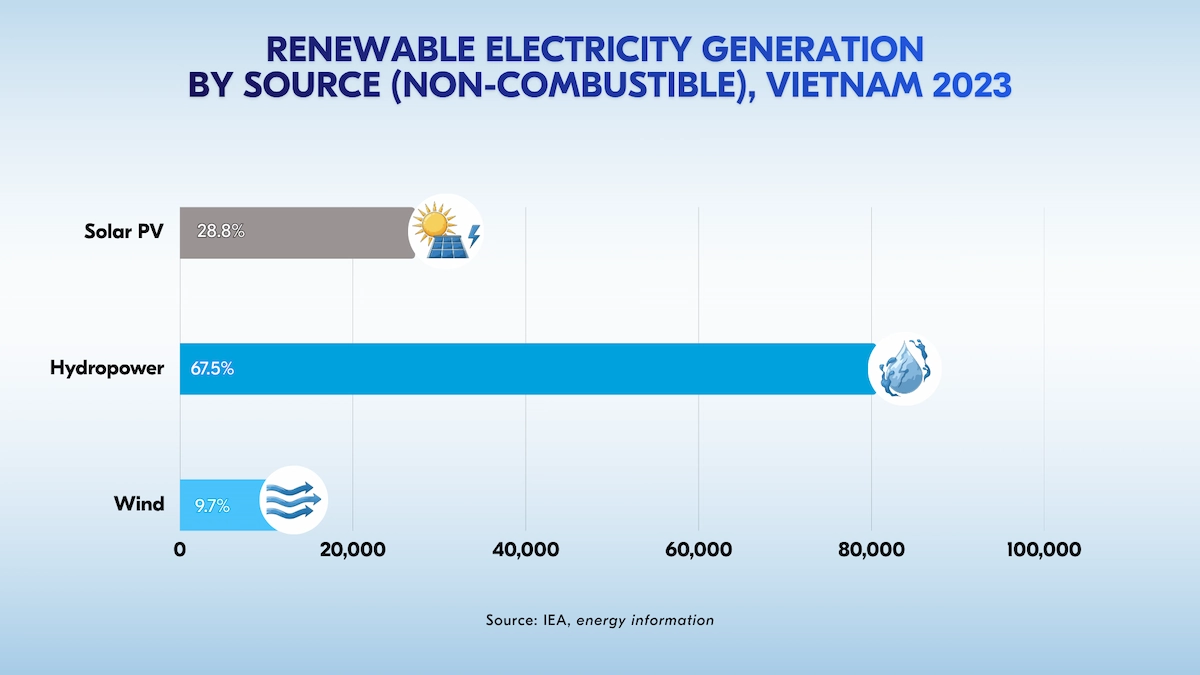
Interestingly, Vietnam has led the ASEAN region in the development of solar power over the last two years. In 2023, according to the International Energy Agency, Vietnam succeeded in generating 27,222 GWh of solar PV.
With this potential, Vietnam has a great opportunity to grow its renewable energy, tackle climate change by reducing fossil energy use, and achieve the net-zero commitment.
Read also: Indonesia's Renewable Energy Potential and Challenges
The Role of Feed-in Tariff (FiT) and PDP VIII in Vietnam’s Solar Energy Growth
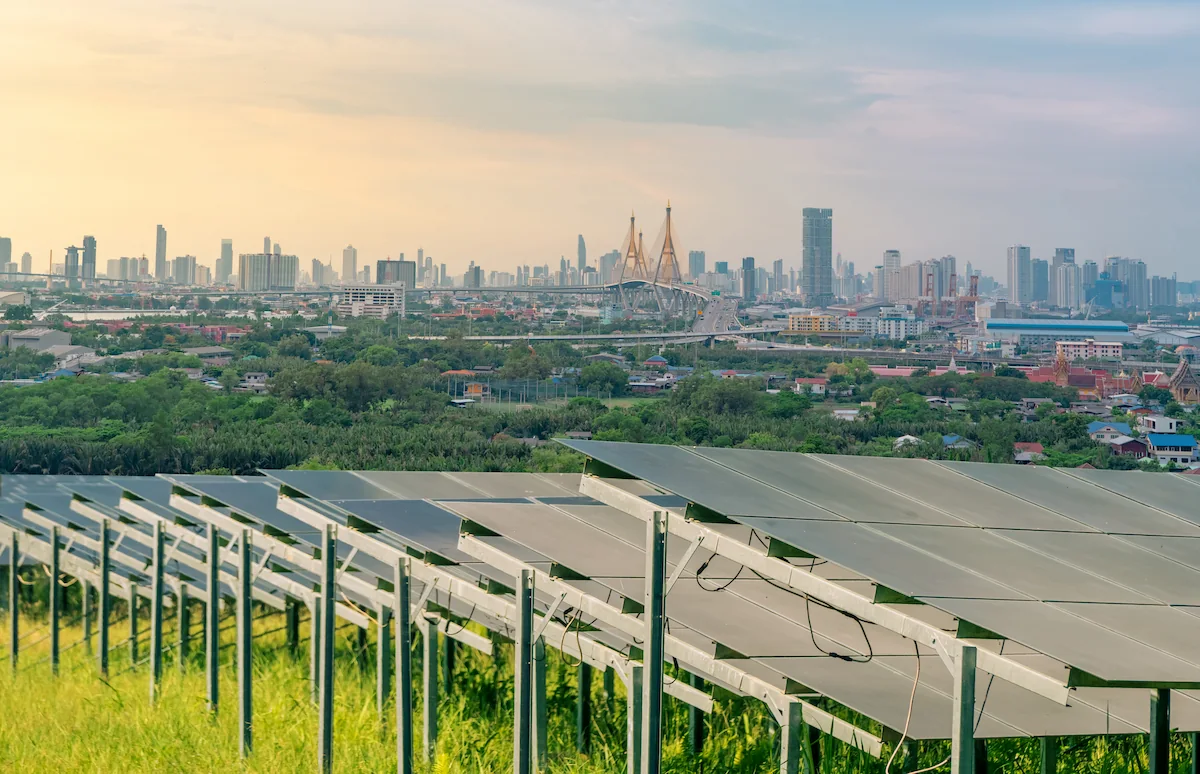
When we talk about solar energy in Vietnam, we will also hear the Feed-in Tariff (FiT) policy. FiT was launched in 2017, providing grid-connected solar projects with a fixed premium price of up to roughly 2,340 VND/kWh (or 9.35 US cents/kWh).
Utility-scale and rooftop solar installations were quickly deployed thanks to this guaranteed purchase price, which greatly reduced investment risk. Vietnam was also able to meet and surpass its initial solar capacity targets ahead of schedule due to the FiT policy.
After that, in 2021, the Vietnamese government transitioned from FiT to auction-based competitive bidding to control costs, align solar prices with the global market, and encourage market efficiency.
Auction-based competitive bidding mandated that developers submit bids to provide electricity at competitive prices, promoting cost savings while upholding open and equitable procurement.
Furthermore, Vietnam’s ambitions for renewable energy development keep surging as the government issued the 8th Power Development Plan (PDP VIII).
This plan highlights that the potential of solar energy in Vietnam reaches 963,000 MW, and the total capacity is projected to increase to 967,100 MW by 2030.
By 2050, the target is to increase total capacity to 168,594–189,294 MW and production capacity to 252.1–291.5 billion kWh, which would allow 50% of households to use rooftop solar for self-consumption and self-production.
Challenges in Solar Energy Development in Vietnam
Despite having great ambition, Vietnam still faces several bottlenecks, such as limited grid infrastructure. Implementing transmission infrastructure takes two to three years, whereas a 50–100 MW solar project can be developed in six months.
Vietnam might need PV modules, off-grid solutions, floating solar PV units, energy storage, sun-tracking technology, integrated solar energy, and so on, to support its solar energy growth.
Moreover, many consumers still lack solar technology awareness, thinking that the cost and maintenance would be high. In this case, a public campaign or education must be held to enlighten consumers about the misconceptions.
The legal framework for rooftop solar power presents another difficulty. Even though government policies have been beneficial, there are still issues with how these rules are put into practice and enforced.
The expansion of rooftop solar installations may be aided by streamlining the permitting procedure and ensuring precise grid connection regulations.
Read also: Renewable Energy in Thailand: Why Does It Matter for Us?
Chandra Asri Group, a Reliable Solar Energy Company in Southeast Asia
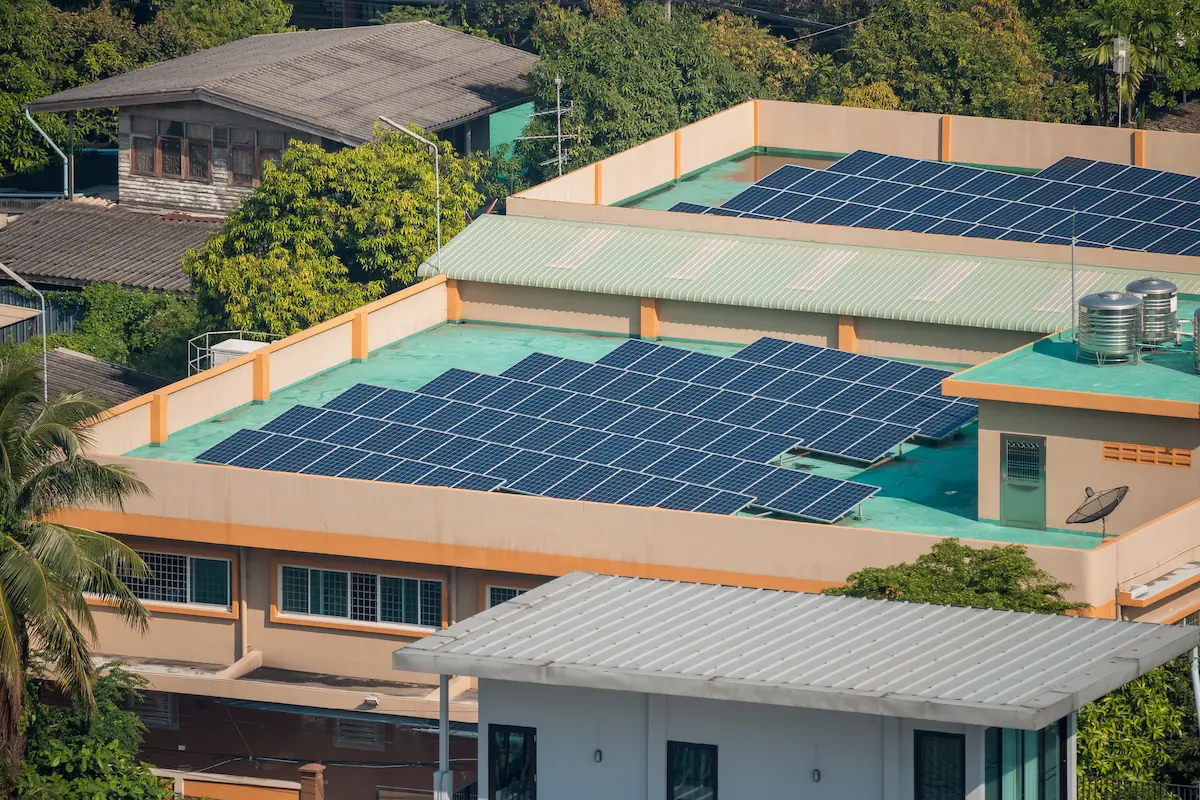
Vietnam has a massive potential for developing solar power, especially rooftop solar panels. It has abundant sunlight and is supported by the government by establishing upholding regulations.
In terms of infrastructure challenges, companies in Vietnam can invest in a solar energy company like Chandra Asri Group to fulfill their energy needs.
Through Krakatau Chandra Energi (KCE), companies in Southeast Asia can realize solar panel installation of four mechanisms:
- Solar on-grid system: Integrating solar panels with the power grid to directly transmit energy to the grid without a backup battery.
- Solar off-grid system: Operating solar panels autonomously without connecting to the grid, using a battery to store energy.
- Solar on-grid with battery backup system: Combining solar panels with a battery as backup power during power-supply disruptions.
- Solar hybrid system: Integrating solar panels with other energy sources to create a single stable power generation system.
KCE's reliability is undeniable. KCE expanded into the development of a 102 kWp rooftop solar power plant pilot project in 2020. KCE's solar power plant capacity is projected to reach 11 MWp by 2025.
If you are a company in Southeast Asia, rely on Chandra Asri Group and Krakatau Chandra Energi, #YourGrowthPatner for energy infrastructure!
Read also: Overview of Chemical Industry and Supplier in Thailand
.png&w=3840&q=75)