
11-03-2026
Renewable Energy in Thailand: Why Does It Matter for Us?
Recently, many countries have developed renewable energy as an alternative to fossil energy, including Thailand. This Land of Smiles aims to combat climate change, reduce carbon emissions, and align with the regional sustainability efforts.
So, how does this Southeast Asian country actualize the efforts? This article talks about the development of renewable energy in Thailand. Read the information below!
An Overview of Renewable Energy in Thailand

Thailand has historically supported and encouraged energy growth, particularly in energy efficiency and renewable energy. To lessen the usage of fossil fuels, like natural gas, and the environmental impact of conventional energy sources, the Thai government has been pushing renewable energy.
The International Energy Agency revealed that since 2000, coal, oil, and gas have dominated the energy supply. Oil became the most used energy source, accounting for 41.2% of the total energy supply (2,245,246 terajoules) in 2023.
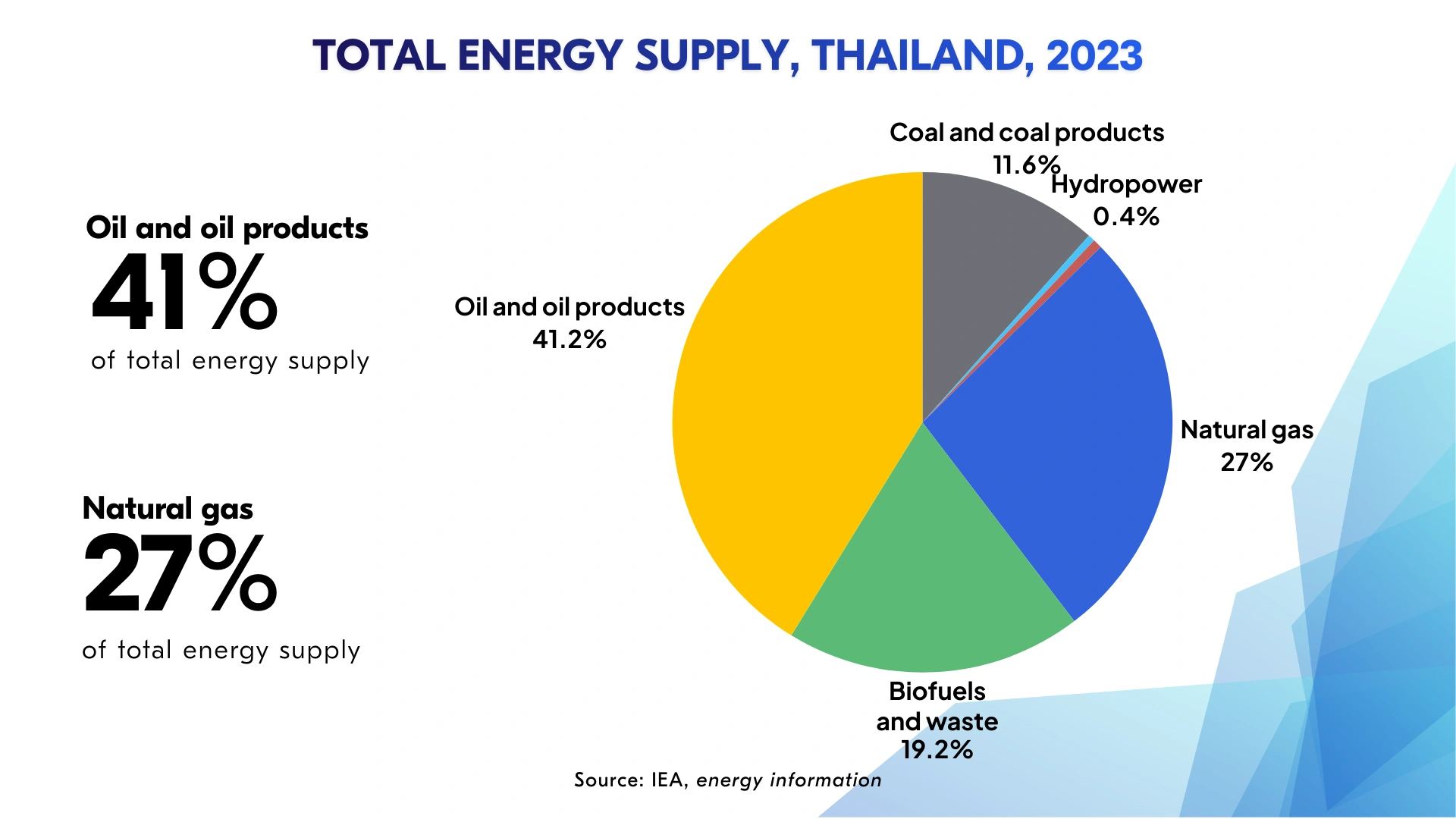
However, Thailand is seen to use renewable energy in its energy mix. Currently, Thailand has developed solar, wind, hydropower, geothermal, and many other alternative energy sources.
The data above shows that Thailand has utilized renewable energy in its energy mix, such as hydropower, solar power, and wind power. In 2023, hydropower supplied 24,328 terajoules, while solar, wind, and other renewables supplied 32,339 terajoules to the total energy.
In addition, Ember Energy mentioned that in 2024, 15% of Thailand’s electricity was generated from low-carbon sources, with solar energy accounting for 5%. Although 85% of Thailand's energy still comes from non-renewable energy, the country's steps to develop renewable energy are commendable.
Read also: 6 Advantages of Renewable Energy and Its Global Potential
Why Is Renewable Energy in Thailand Important?

The Thai government strives to develop more renewable energy power plants over the next 20 years under the Alternative Energy Development Plan (AEDP) 2018 and the Power Development Plan (PDP) 2018.
They target increasing the renewable energy contribution to 30% of the total energy consumption by 2037. It also includes imported hydropower. Along with that, the Thai government also targets purchasing renewable energy of 18,696 megawatts for electricity.
In terms of electricity, Thailand generates it mostly from natural gas. In 2023, 64% of electricity generation sources came from natural gas, followed by coal and biofuels.
The thing is, the total electricity production increased 104% between 2000 and 2023. In 2023, the total electricity production reached 196,108 GWh. In fact, natural gas is a non-renewable energy source and produces greater carbon emissions.
The International Energy Agency (IEA) mentioned that natural gas contributed 61.2% of total emissions from power generation in Thailand, or 51.9 MtCO2. Therefore, to reduce carbon emissions, lower reliance on imported fossil fuels, and tackle climate change, Thailand should consider shifting to renewable energy.
Optimistically, the use of renewable energy sources in Thailand has increased recently. IEA noted that the renewable energy share of electricity generation trend between 2000 and 2023 increased 186%. The share was bigger than Malaysia's (18.9%) and Indonesia's (15.9%) in 2023, which was 19.5%.
The largest renewable energy sources in Thailand are hydropower, solar PV, and wind energy. In 2023, hydropower contributed 43.3% of the total electricity from renewable energy, followed by wind (22.5%) and solar PV (34.2%).
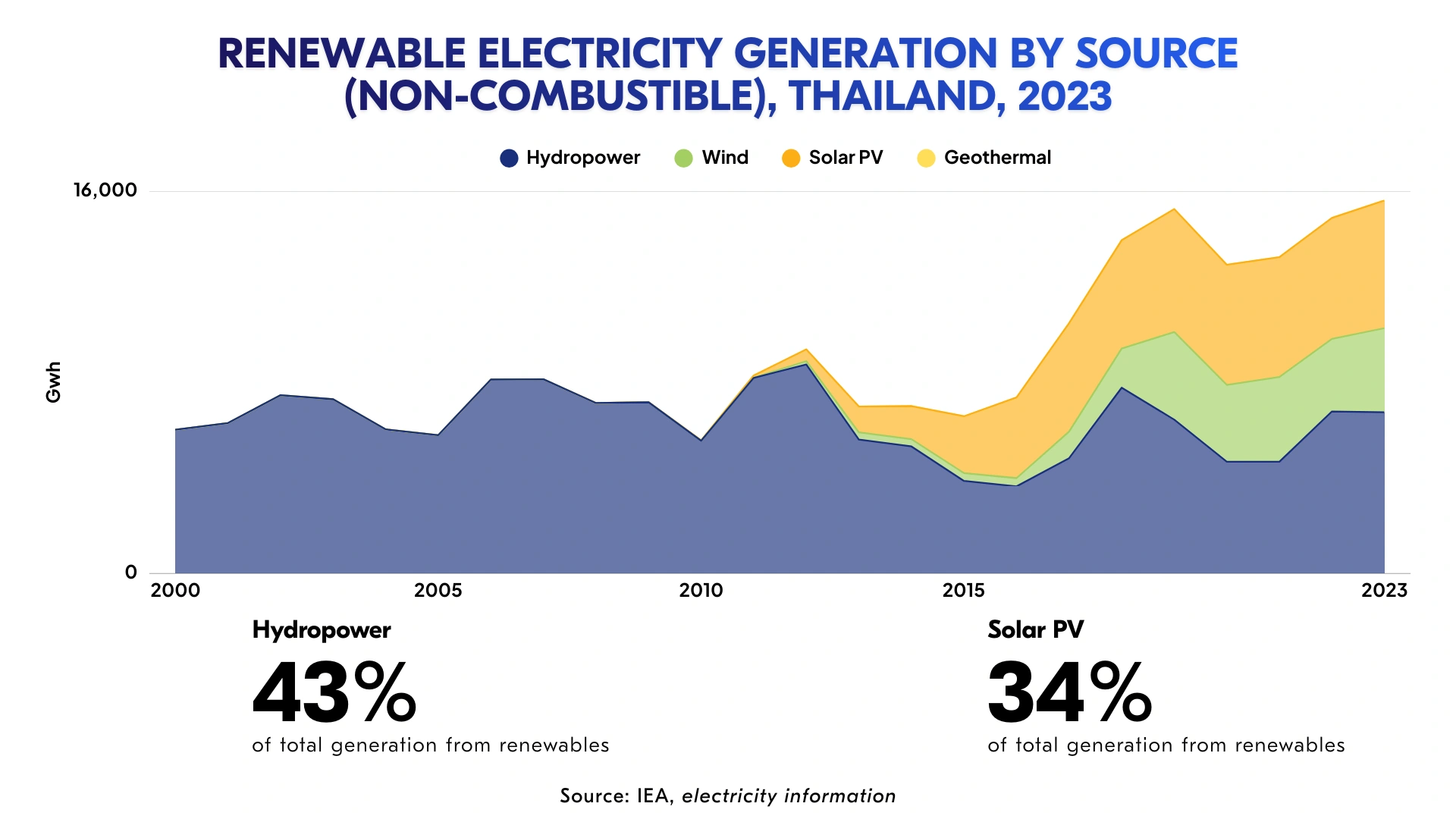
What makes Thailand particular from other countries is that they also utilize biofuels and waste as forms of renewable energy. The primary solid biofuel use increased to 15,895 GWh in 2023. Biofuels mostly come from industrial waste, household waste, and plants. They will be combusted and used primarily for cooking and heating.
Read also: What Is Clean Energy? Benefits, Types, and Examples
Renewable Energy Solution for Thailand
Currently, many countries participate in tackling climate change by reducing carbon emissions. They create policies and develop renewable energy to support the target in making the Earth green again.
The development might not be smooth at first. The Thai government must improve the energy storage technology and prepare a skilled workforce in the sector. This is where renewable energy companies in Thailand take part. A renewable energy company can support Thailand’s target of utilizing alternative energy for industry and the community.
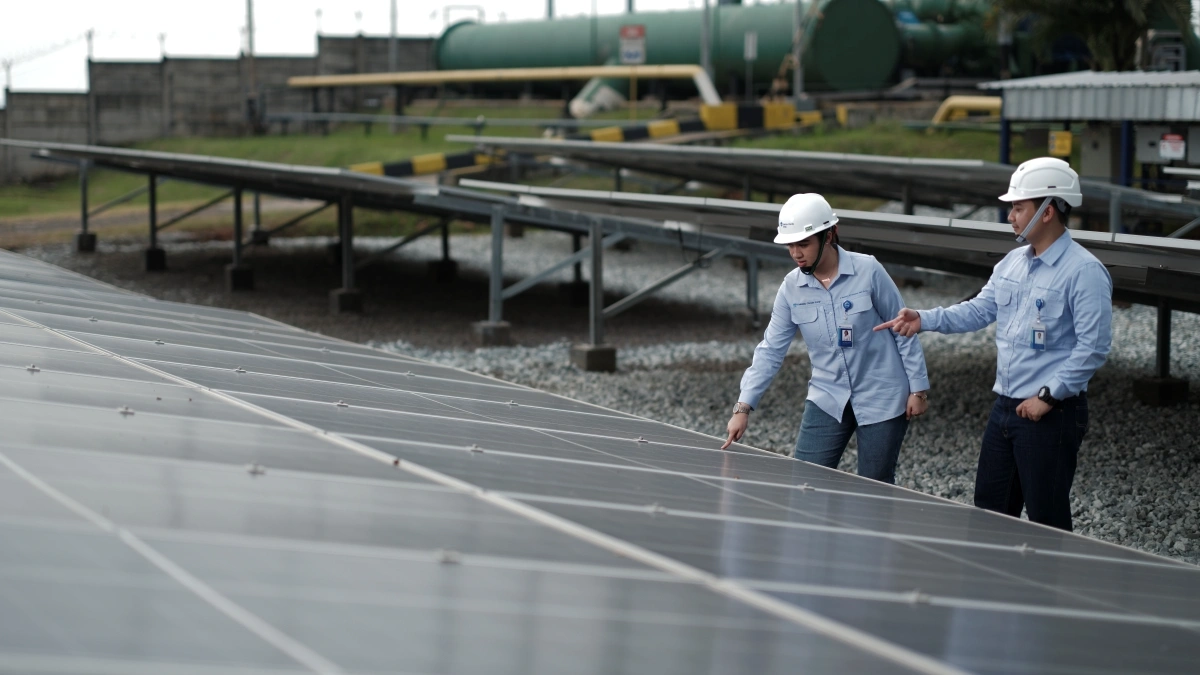
Regarding this, Krakatau Chandra Energi (KCE), as a subsidiary of Chandra Asri Group, can be the solution. KCE provides renewable energy service, operating rooftop solar panels of 102 kWp capacity. For now, we have four solar panel mechanisms.
The solar on-grid system is integrated with the power grid, allowing the energy to be transmitted to the building without needing batteries. On the other hand, the off-grid system has a backup battery and operates autonomously without connection to the grid.
We also have a solar on-grid system with a backup battery that supports the main power supply during a technical issue. Meanwhile, the hybrid works in parallel with other energy sources, such as batteries, diesel, and renewable energy.
Overall, it can be said that Thailand is entering a new era in the energy sector, one in which renewable energy is becoming more popular as a substitute for fossil fuels.
If your company plans to use renewable energy, such as solar PV, do not hesitate to entrust it to Krakatau Chandra Energi, #YourGrowthPartner! Reach out to us now and get ready to contribute to a greener nation!
Read also: A Guide to Solar Energy in Singapore: Why Does It Matter?
.png&w=3840&q=75)