
21-05-2026
What Is Power Transmission and How Does It Work?
By Chandra Asri Group Editorial Team
Electricity plays an important role in everyday life. Electricity is not only obtained from fossil fuels but also from renewable energy.
Before consumers can use it, electricity needs to be distributed through power transmission. Want to know more about the power transmission process? Pay close attention to the information below.
What Is Power Transmission?
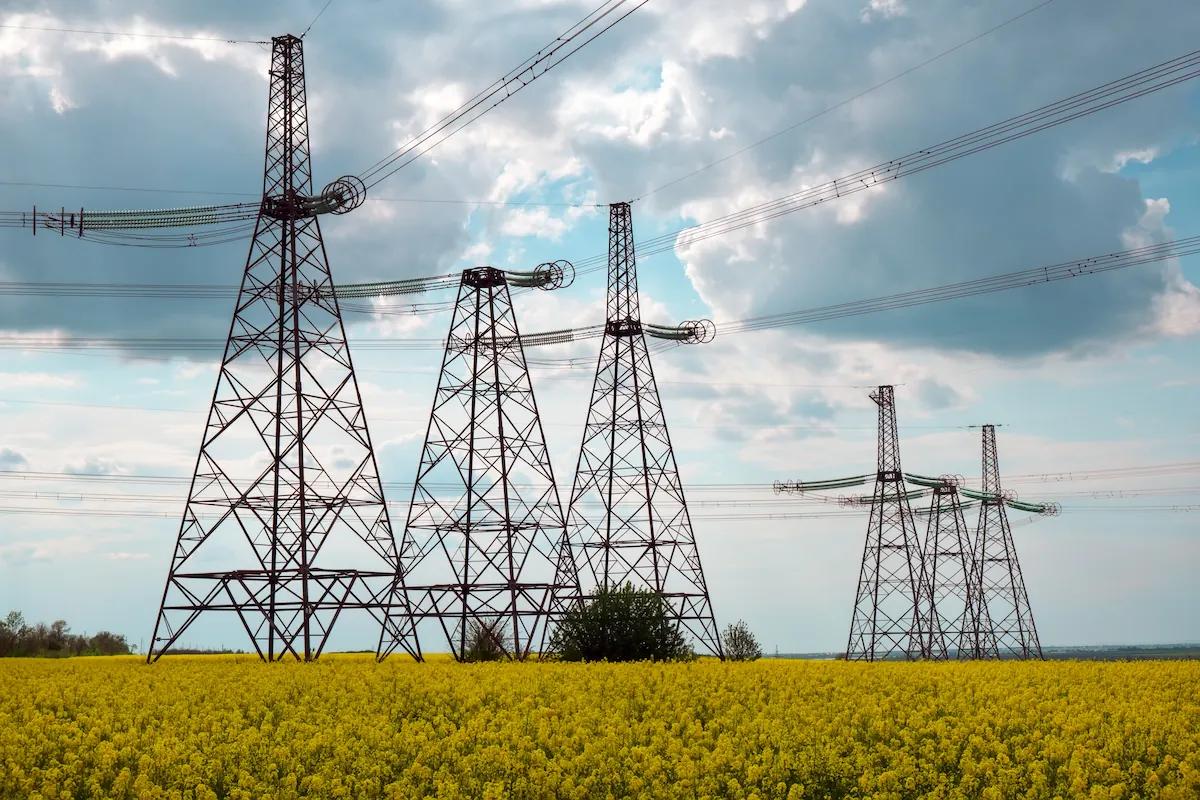
Power transmission is the stage of sending power to a destination so that it can be used by consumers. It can be said that transmission is a “highway” for electric energy because it channels this energy in large quantities and quickly to areas that need it.
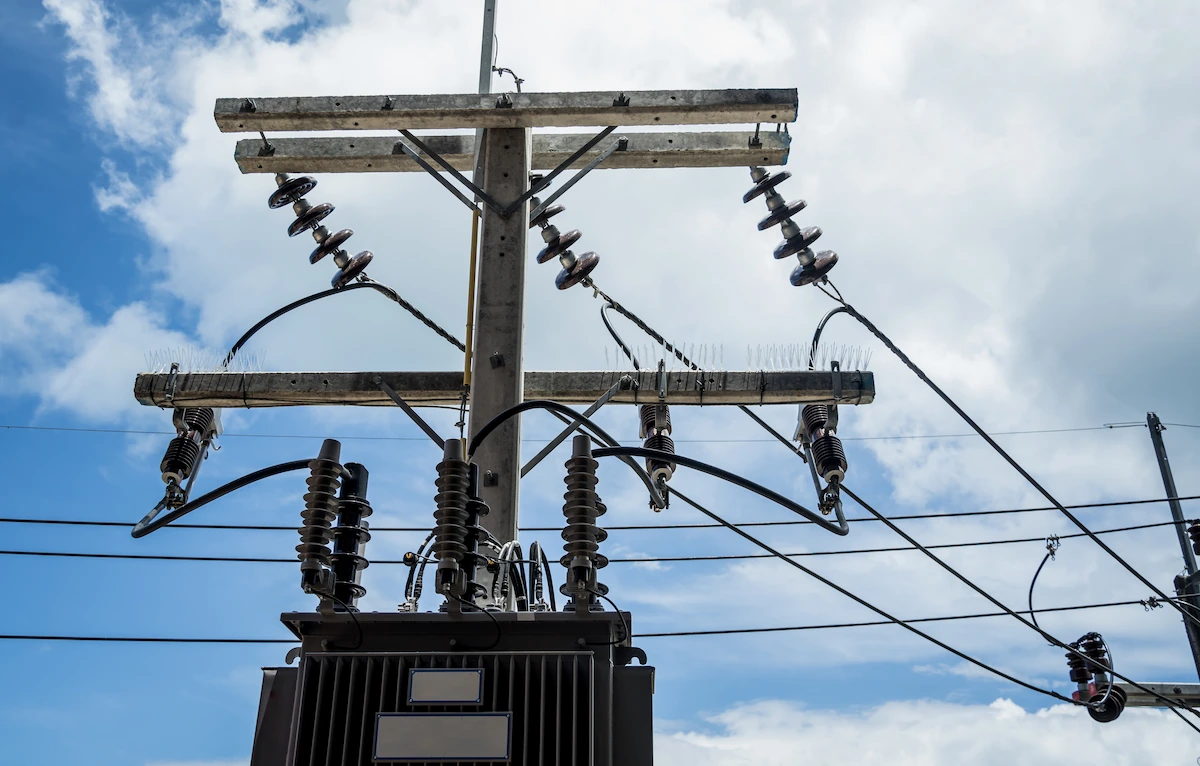
Power transmission is supported by several tools, such as poles, tall towers, transmission lines, transformers, and substations. In general, electric energy is sent from power plants to the nearest substation.
Electric energy is distributed through transmission lines, such as cables, poles, and towers, at high voltage levels, which are too high if directly supplied to homes or buildings.
That is why electric energy also undergoes power distribution. If power transmission is likened to a “highway,” power distribution is a “main road” or a “village road.”
Power distribution is the final stage in the delivery of electric energy. This stage reduces the electrical voltage so that it can be safely supplied to homes or business buildings.
When you go outside your house, you will see electricity poles with cables connected to many buildings. These cables are called distribution lines.
So, it can be concluded that for electric energy to be used by the public, it goes through two inseparable stages, namely power transmission and distribution.
Read also: 12 Types of Power Plants for Alternative & Renewable Energy
How Power Transmission Works
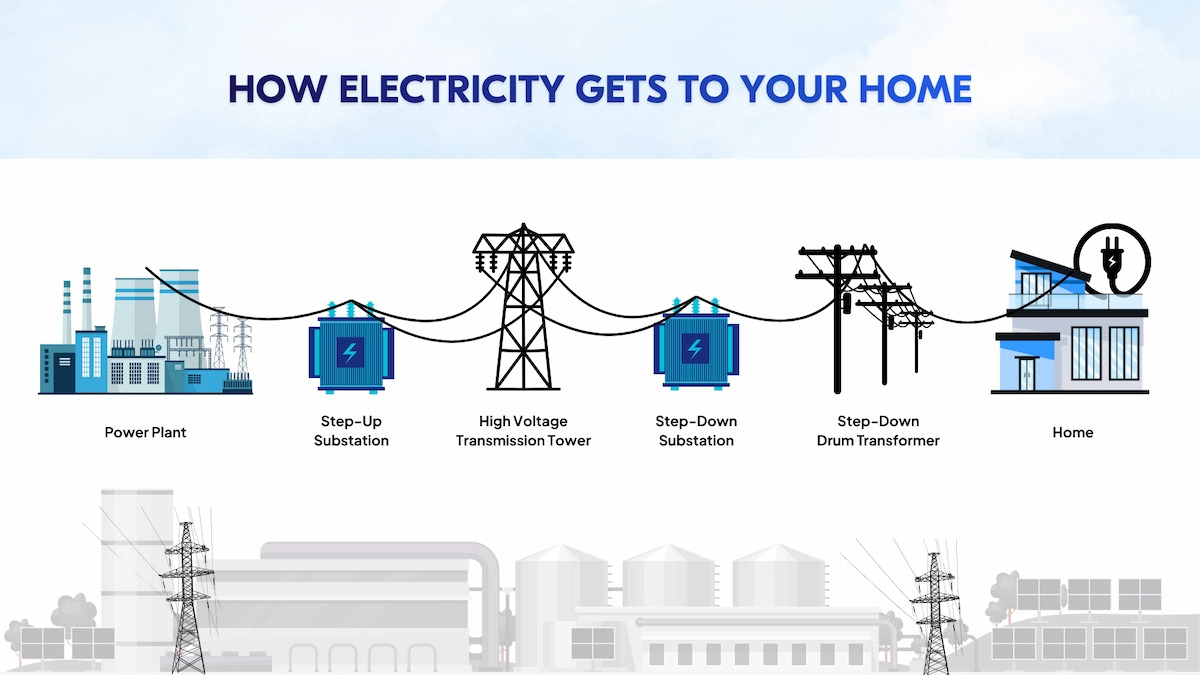
Power transmission is a fairly complex electricity delivery system because it combines many components to work together. The power transmission process is as follows:
- The power plant generates electrical energy.
- The electrical energy is distributed through cables and transmission lines at high voltage to reduce the risk of energy loss during transmission.
- The voltage is stepped down to medium voltage to make it safer for local distribution and more space-efficient.
- The power distribution network delivers medium-voltage electrical energy to consumers.
The Role of Transformers in Power Transmission
The power transmission process is supported by some devices, one of which is the transformer. This component ensures that the amount of current distributed along the power lines is sufficient.
Transformers also step up and step down the amount of power and maintain the appropriate current at each stage of power transmission.
As previously explained, electricity is transmitted at high voltage, which is even too high to be directly distributed to homes. That is why transformers reduce the voltage so that it can be used by businesses and households.
Transformers can explode due to various factors, such as overloading, wear and tear, lightning strikes, power surges, and so on.
This component has circuits that protect it from voltage spikes, but it takes 60 milliseconds for these circuits to respond to the issue, making it not fast enough to prevent an explosion.
When the transformer explodes, the electricity service to households and businesses connected to the component will be interrupted. The transformer must be repaired immediately so that the electricity flow returns to normal.
Read also: Combined Cycle Power Plant (CCPP), How Does It Work?
The Role of Alternating Current (AC) and Direct Current (DC)
Power transmission uses alternating current (AC), direct current (DC), or a combination of both. Alternating current changes its direction at certain times, whereas direct current only moves in one direction.
Power transmission more often uses alternating current because its voltage can be increased or decreased using a transformer, reducing the risk of energy loss during long-distance distribution.
Additionally, AC infrastructure is usually more affordable compared to direct current. Even so, DC also plays a role in high-voltage power transmission, especially in long underwater power lines. In short, both currents work together to distribute electricity to consumers.
Power Transmission Challenges
Power transmission is a complex process, making it often a challenge for various parties. Here are some obstacles that might be encountered:
- Location and logistics challenges: Not all areas can be reached by power lines, especially rural areas and 3T regions (remote, frontier, outermost). Likewise, remote renewable energy projects are not easily connected to urban areas.
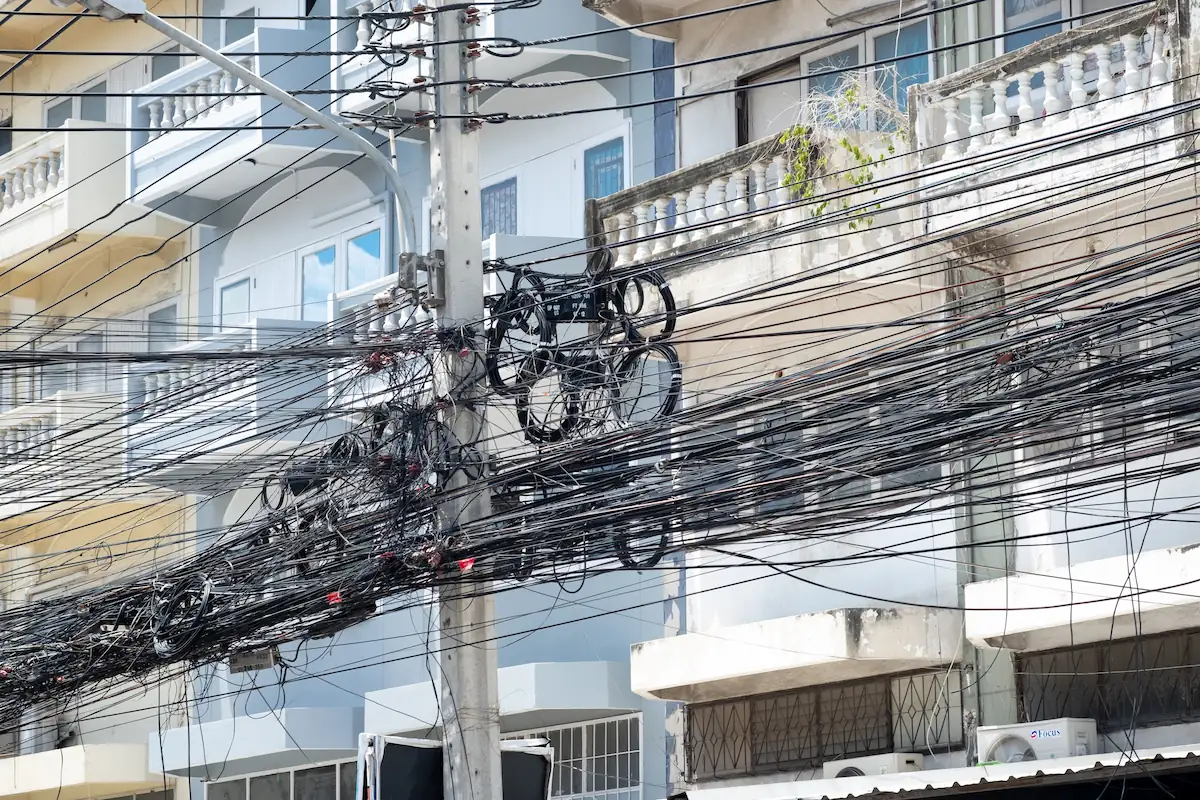
- Underground vs. overhead cabling: Underground cabling is more weather-resistant and tidier, but its installation and maintenance costs are higher. Meanwhile, overhead cabling is easier to maintain and more affordable, but less tidy because it hangs in the sky and is more susceptible to lightning strikes.
- Maintaining energy reliability and safety: Advanced power transmission networks are needed to connect power plants with homes and buildings. The use of smart grids and high-voltage direct current can also be considered to support the distribution of electricity to distant areas.
Reliable Electrical Solutions from Chandra Asri Group
Electricity can be said to be a primary human need, both for households and businesses. Therefore, a trusted energy solution is required.
In this regard, Chandra Asri Group is a reliable #YourGrowthPartner. Through our subsidiary, Krakatau Chandra Energi (KCE), we provide electricity supply services, electrical services, and renewable energy.
Electricity supply services are KCE's main business, supported by power plants with a total capacity of 120 MW. KCE serves more than 200 industrial, business, social, and government customers, and 1,000+ household customers.
We rely on Gas Steam Power Plant (PLTGU) technology and ensure that the quality of the electricity generated meets industry standards.
Furthermore, we also provide electricity services that include operations and maintenance (O&M), engineering, procurement, and construction (EPC), as well as transformer and electric motor overhaul repair services.
Additionally, we also provide solar panels consisting of four mechanisms that you can choose from, including:
- Solar on-grid system: Integrates solar panels with the power grid to send energy directly to the grid without backup batteries.
- Solar off-grid system: Operating solar panels independently without being connected to the grid, using batteries to store energy.
- Solar on-grid with battery backup system: Combining solar panels with batteries as backup power during electricity supply interruptions.
- Solar hybrid system: Integrating solar panels with other energy sources to create a single stable power generation system.
So, trust your company's electricity energy needs to Chandra Asri Group and Krakatau Chandra Energi!
Read also: Floating Power Plants: A Renewable Energy Innovation
.png&w=3840&q=75)