
Petrochemicals in Singapore: Overview and Potentials
By Chandra Asri Group Editorial Team
19-02-2026
Throughout the development of human civilization, petroleum has been a crucial source of materials and energy, not least in Singapore. In 2017, oil was the dominant energy source, accounting for 18.83 million tonnes of oil equivalent (Mtoe).
So, how are the petrochemicals in Singapore? This article talks about the overview of total petrochemicals in Singapore. So, learn the information below.
A Glimpse of Petrochemicals in Singapore
Globally, the demand for fossil fuels (natural gas, oil, and coal) continued to increase in the 20th century. In 2022, 82.3% of global energy consumption relied on fossil fuels.
Aside from energy consumption, fossil fuels are also used for creating chemical products, such as housing, clothing, transportation, and so on.
Singapore, a small island located in the Straits of Malacca in Southeast Asia, also relies on fossil fuels for its industries. It began when Singapore was a Crown Colony. During this time, the island-state was a leading colonial entrepôt (trading hub where goods are imported, stored, and then re-exported to other destinations) in Southeast Asia.
As a result, it handled the exports of mass commodities. Thus, Singapore also began the initial production of noteworthy commodities, such as rubber and oil.
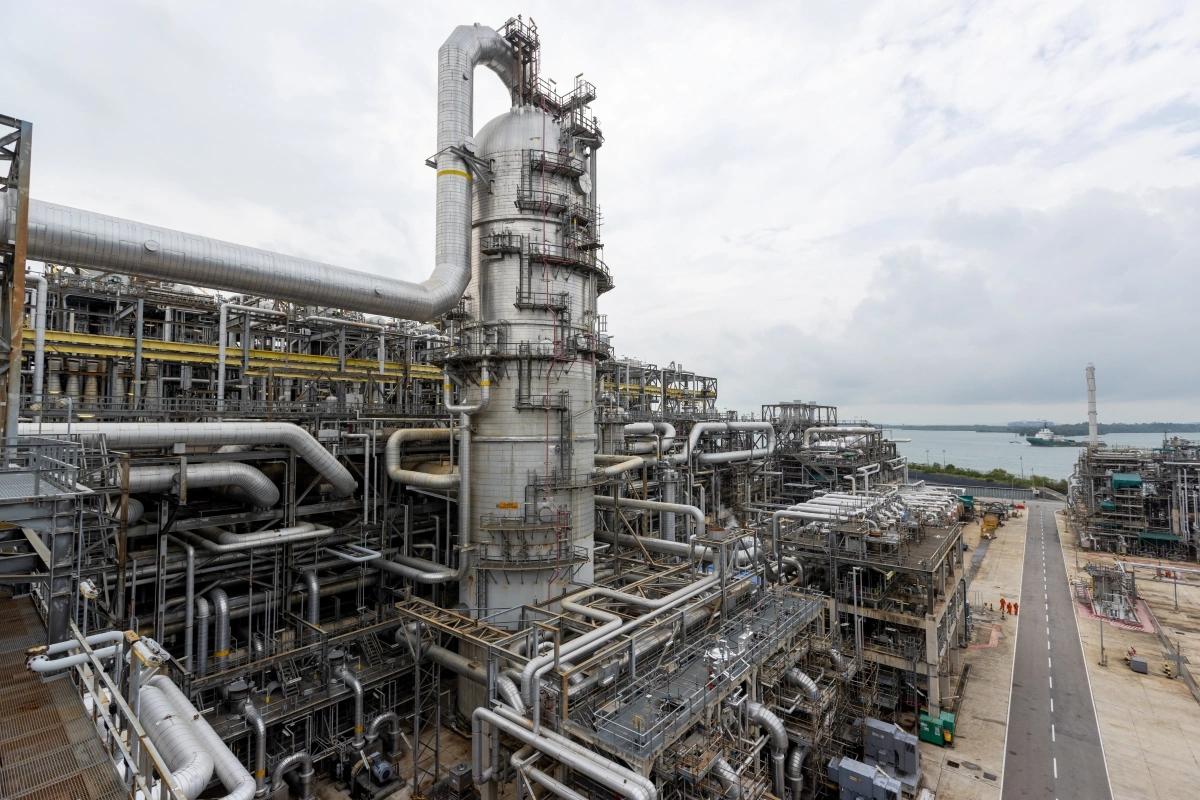
The petrochemicals in Singapore also involve the development of Jurong Island. Located in the southwest of the main island, this man-made landmass was created by connecting several nearby small islands using land reclamation.
The purpose of the island’s development is to host a big cluster of oil, petrochemical, and chemical companies. Currently, Jurong Island is home to most major global petrochemical companies in Singapore.
Singapore is the most industrialized and urbanized country in ASEAN, having a Gross Domestic Product (GDP) of USD 857 billion in Purchasing Power Parity (PPP) terms in 2025. The oil industry contributes 5% to the nation's total GDP.
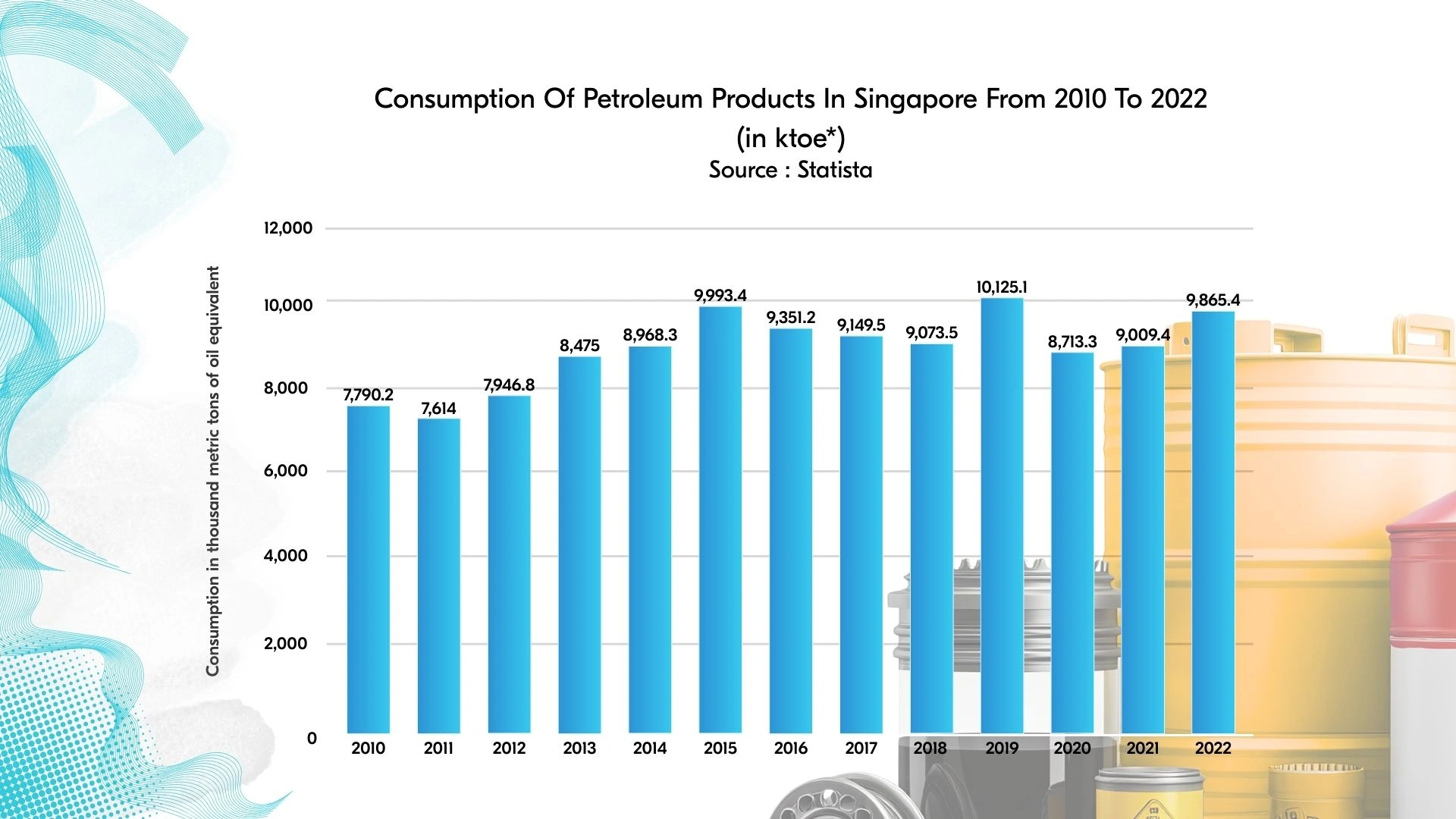
No wonder the consumption of petroleum products in Singapore is considered immense. Statista reported that in 2022, Singapore consumed approximately 9.8 million metric tons of oil equivalent (Mtoe) of petroleum products. This figure is higher than the 2021 figure, which was only 9 million.
Furthermore, the Singapore Country Report mentioned that crude oil is expected to play an extensive role in Singapore’s final energy consumption. Between 1990 and 2017, the oil share escalated from 76% to 76.6%. It is also predicted to continue becoming the primary energy source, contributing 55.5% of primary energy demand in 2050.
In conclusion, the petrochemicals in Singapore play a significant role in the industry, especially for petroleum product manufacturing and energy consumption from oil. To fulfill the chemical needs, prominent petrochemical companies must be able to support the supply.
Read also: What Is the Petrochemical Industry in Indonesia & Its Growth
Petrochemical Products by Aster
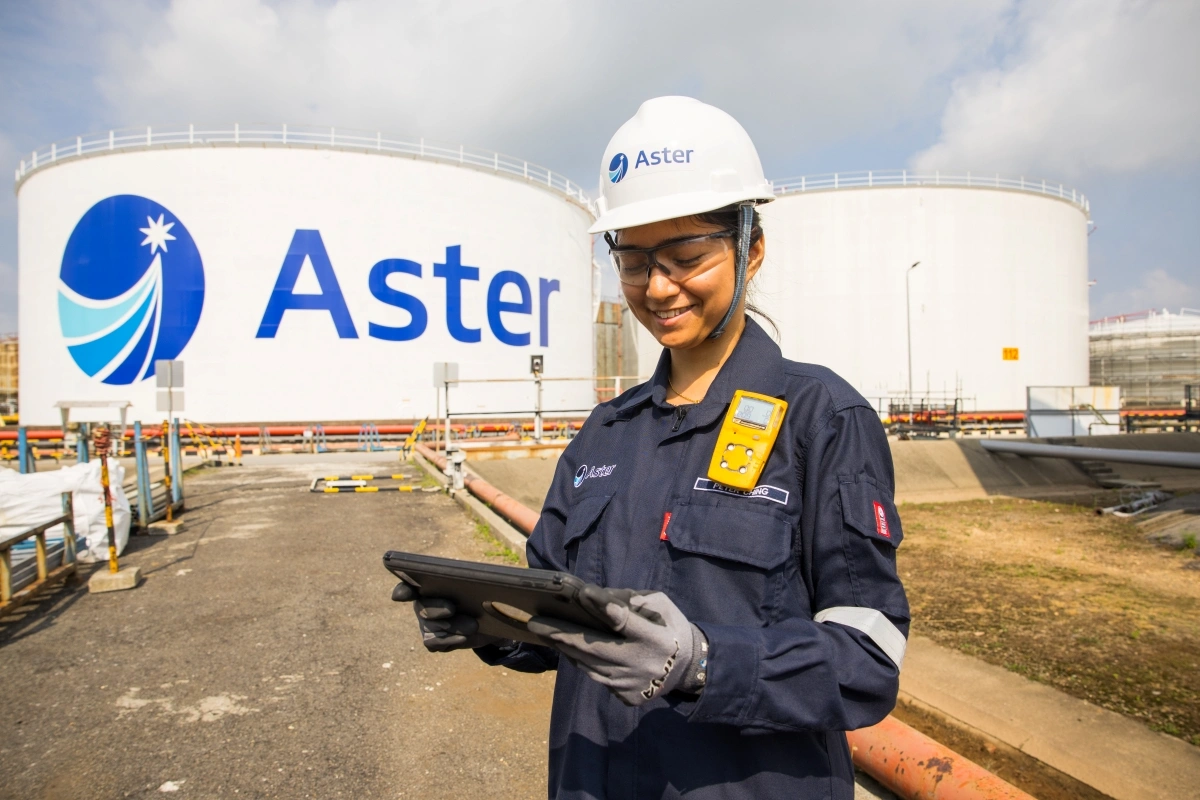
Aster is Chandra Asri Group’s subsidiary providing various solutions with a mission to be a leading provider of innovative chemical and energy solutions in Southeast Asia, enhancing the quality of life for communities and the environment, as well as promoting sustainable growth.
Aster Chemicals and Energy Pte. Ltd. (Aster) was established through the Chandra Asri Group and Glencore acquisition of the Shell Energy and Chemicals Park (SECP) in Singapore.
The Energy and Chemicals Park includes a refinery that can handle 237,000 barrels of crude oil per day, a large ethylene cracker that produces 1.1 million metric tons of ethylene annually, and other significant downstream chemical assets.
Aster produces an array of petrochemical compounds known as "building blocks," which serve as the foundation for innumerable goods that we use daily. Here is the range of products we offer:
1. Butadiene
Butadiene is a colorless and flammable unsaturated hydrocarbon used to manufacture synthetic rubber (styrene-butadiene rubber and polybutadiene rubber), plastics (acrylonitrile butadiene styrene and styrene-butadiene latex), and chemical intermediates.
2. Diethylene Glycols
Diethylene glycol is an odorless, colorless, and hygroscopic liquid. It is commonly used to produce solvents for resins, oils, and dyes; polyester resins; and polyurethanes.
3. Dipropylene Glycol
Dipropylene glycol is a colorless mixture that works as a solvent for body care products, a plasticizer for plastic and resin manufacturing, and an industrial chemical reaction.
4. Ethoxylates
Ethoxylates are widely used for paper manufacturing, textile processing, wetting agents in agricultural chemicals, and surfactants for cleaning products.
5. Ethylene
As the simplest alkene, ethylene is used for making polyethylene, essentially in household products. Also, ethylene is a primary starting material for chemical production, such as ethanol, vinyl chloride, and ethylene oxide.
6. High-Density Polyethylene (HDPE)
HDPE is a durable, strong, and versatile material that is resistant to moisture and chemicals. Therefore, HDPE is widely used to produce containers, packaging, household chemicals, and so on.
7. High-Purity Ethylene Oxide
High-purity ethylene oxide is a flammable and colorless gas that is widely used as an essential chemical intermediate for producing polyester fiber and resins. Moreover, it is used in the pharmaceutical industry as a fumigant and surfactant for cleaning products.
Read also: The Chemical Industry: Definition, Products, and Examples
8. Monoethylene Glycol (MEG)
MEG is an odorless and colorless liquid used in deicing solutions for aircraft as well as an antifreeze, coolant, raw material for polyester fibers, and heat transfer fluid.
9. Polyether Polyols
Polyether polyols are organic compounds utilized for making flexible foam blocks, automotive seatings, and furniture.
10. Propylene
Propylene is a flammable and colorless gas used to produce polypropylene (packaging, textiles, and automotive parts) and isopropanol (rubbing alcohol) and is a key ingredient in producing acrylonitrile and propylene oxide.
11. Propylene Glycol
Aster provides industrial-grade and US Pharmacopeia propylene glycols. The industrial-grade one is applied to produce solvents and personal care products and works as a chemical intermediate. The US Pharmacopeia one is for preservatives, antimicrobial agents, humectants, and solvents.
12. Propylene Oxide
Propylene oxide is a volatile and colorless liquid used to produce polyurethane and propylene glycol and works as a fumigant for foodstuffs.
13. Raffinate-1
Raffinate-1 is a colorless gas coming from mixing butenes with butane and residual butadiene. It is utilized to produce polymers and methyl tertiary butyl ether (MTBE).
14. Styrene
Styrene is a colorless liquid hydrocarbon widely used to produce composites, fiberglass, synthetic rubber (styrene-butadiene rubber), and polystyrene.
That concludes the explanation of petrochemicals in Singapore, including the development and potential. If your company needs industrial chemicals for your manufacturing process, entrust it to Aster and Chandra Asri Group!
Chandra Asri Group, as #YourGrowthPartner, and Aster, as our subsidiary, provide a wide range of chemicals for industrial purposes. So, contact us now and get the high-quality chemicals!
Read also: Supply Chain Management & Strategy in Petrochemical Industry
.png&w=3840&q=75)