
3 Oil and Gas Industry Segmentation: Know Their Challenges
By Chandra Asri Group Editorial Team
26-02-2026
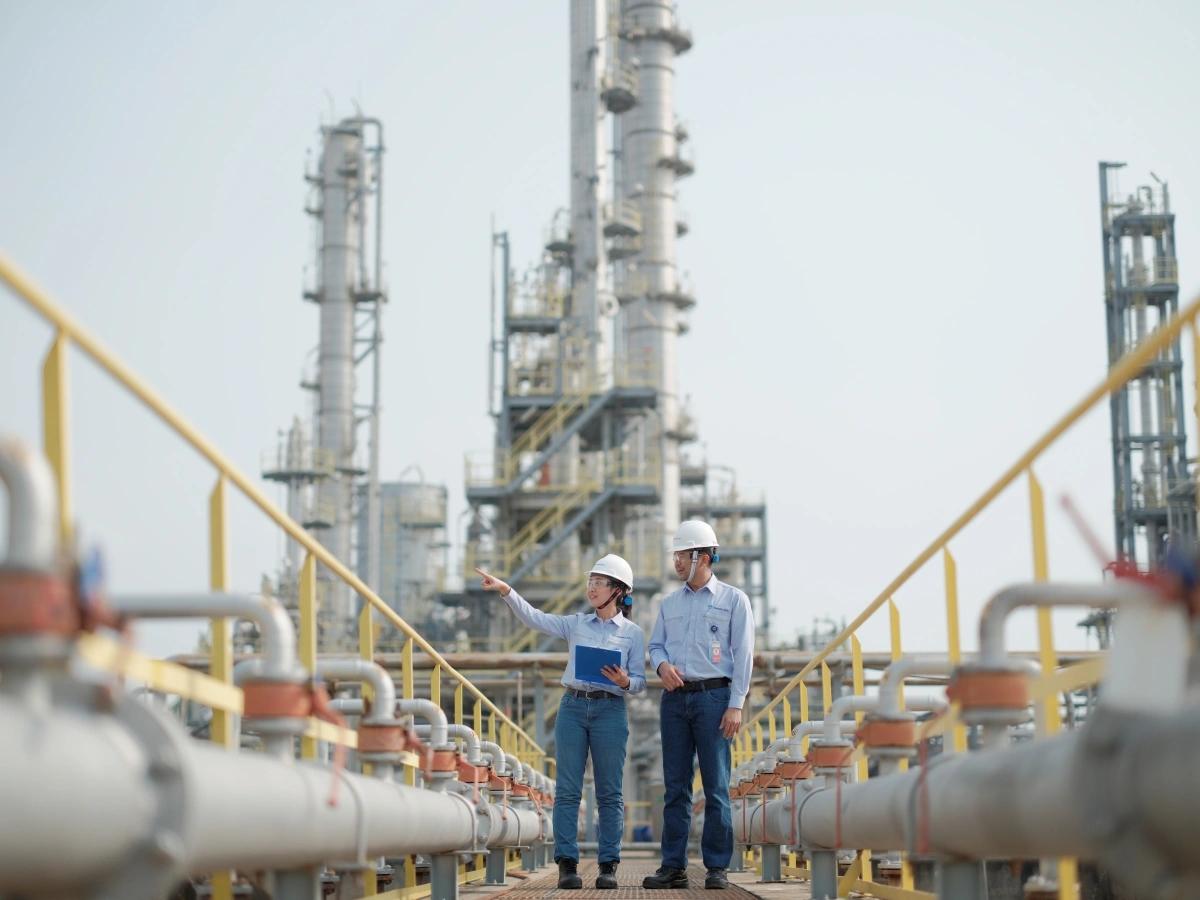
In the petrochemical, oil, and gas industry, there are three main business segments, namely upstream, midstream, and downstream. These three segments have different operational procedures and objectives.
This article examines the segmentation of the oil and gas industry and highlights the differences between the three segments. Read this article until the end!
What Is Upstream?
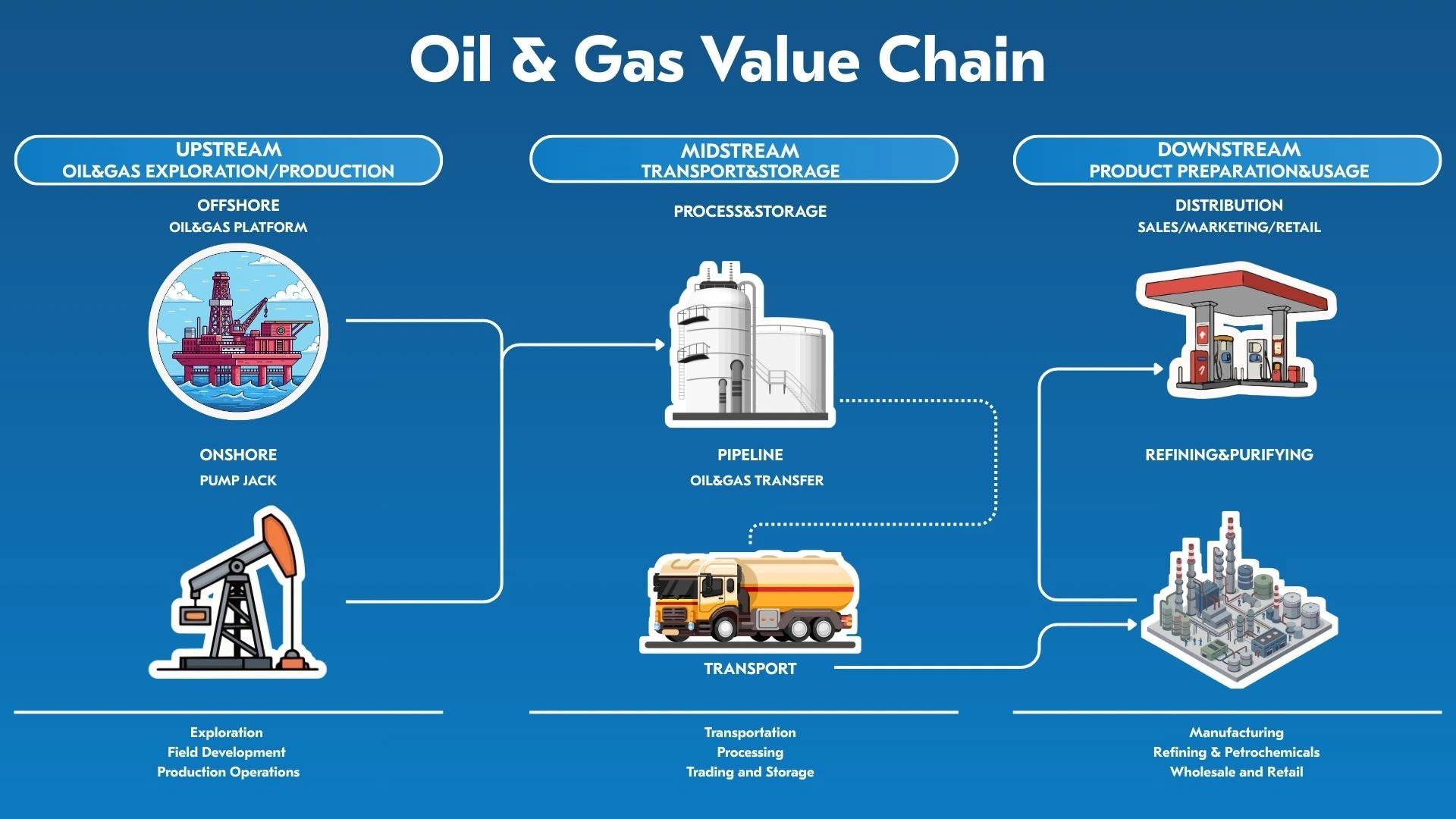
The upstream segment refers to the exploration and production process of natural gas and oil. This stage identifies potential resource reserves, conducts geological surveys, and extracts hydrocarbons with specialized technologies.
The process is not limited to extracting oil reserves from the earth, but it also involves recovering raw materials and separating hydrocarbons from water and pollutants. Some parties involved in the upstream segment include geologists, geophysicists, scientists, drilling contractors, and drill rig operators.
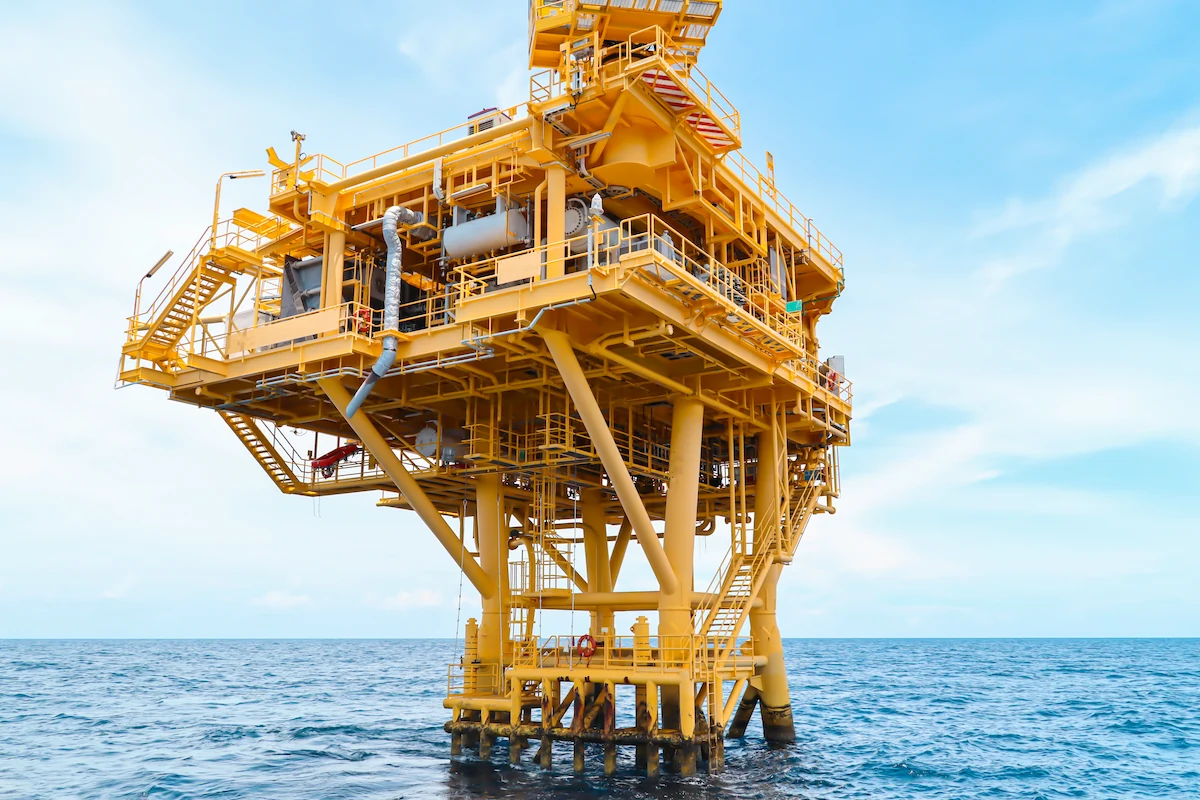
The upstream segment can be carried out offshore or onshore. Both have their own difficulties. Offshore drilling is more complicated due to high subsea pressure, the potential for structures to rust due to prolonged exposure to saltwater, and challenging ocean conditions.
Not only that, but building and running offshore structures requires complex logistics and specialized tools that can withstand extreme weather and underwater pressure.
Read also: 9 Petroleum Products You Must Know, from Gasoline to Naphtha
What Is Midstream?
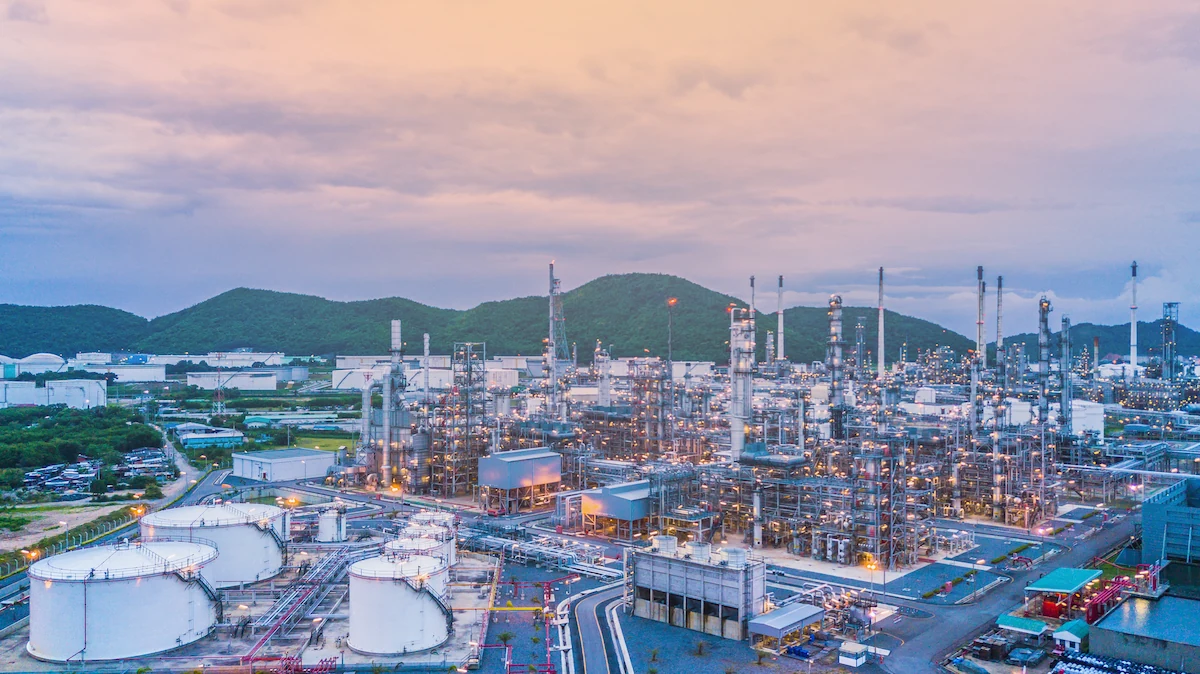
The next stage of the oil and gas industry is midstream, which focuses on the transportation and storage of extracted products. At this stage, oil and gas from the upstream segment will be sent to the oil refinery for further processing.
Before being shipped, the natural gas will be compressed at a gas compressor facility, and then shipped via specialized ships or pipelines.
This stage involves pipeline service companies, tank trucks, tanker ships, and others. To optimize the delivery process, efficient pipelines are necessary to make it more cost-effective to move hydrocarbons in large quantities and over long distances.
What Is Downstream?
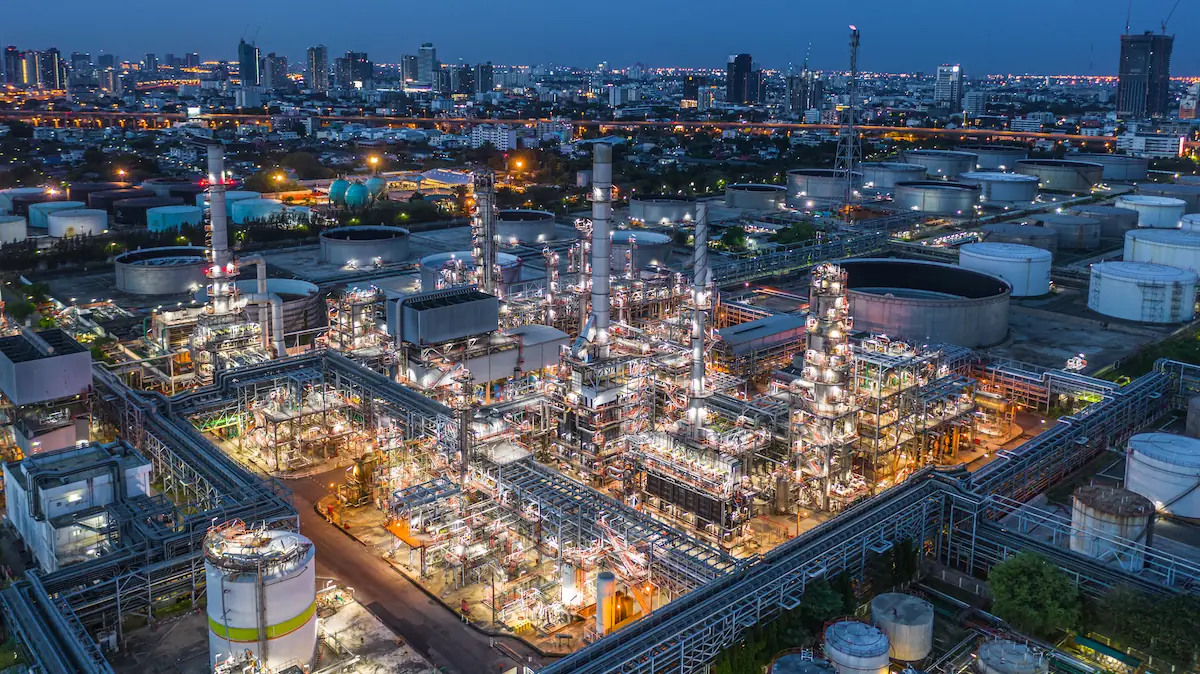
Downstream segmentation is the final stage of oil and gas processing. Here, several methods and processes are performed to convert hydrocarbons into consumer products.
At this stage, some parties involved include petrochemical plants, oil and gas distributors, refineries, and stores that sell the final product.
Examples of end products from the downstream segment include gasoline, diesel, plastics, pharmaceuticals, pesticides, lubricants, solvents, food containers, synthetic rubber, and many more.
Challenges in Each Segment of the Oil and Gas Industry
As explained earlier, each segment of the oil and gas industry has its own objectives. This is also why the perceived challenges may be different at each level.
For the upstream segment, the most significant challenge may be the dangerous offshore environment, especially during stormy weather or strong waves.
These extreme conditions can also damage facilities, and to reach the center of the coast, onshore logistics must travel a long route through unpredictable weather. Therefore, the team involved in the upstream process must carefully plan and execute.
Then, for midstream, a possible challenge is maintaining the pipeline structure. This structure determines the extent of optimized hydrocarbon distribution.
Over time, pipelines may be prone to leaks, corrosion, and rust due to constant exposure to extreme weather and chemicals. To mitigate these risks, companies should conduct regular monitoring and maintenance of pipelines.
Lastly, the downstream stage may be challenging due to long-term exposure to chemicals and high temperatures that can easily damage equipment. Just as in midstream, regular maintenance and monitoring must be conducted to ensure the plant's equipment functions optimally and lasts long.
Read also: Fractional Distillation of Crude Oil and Its Final Products
How Does Chandra Asri Group Produce Chemicals?
As the oil and gas industry in Indonesia continues to advance, downstream processing technology is becoming more progressive. One chemical solution company that supplies chemicals to various industries in Indonesia and Southeast Asia is Chandra Asri Group.
As #YourGrowthPartner, Chandra Asri Group provides a range of chemicals derived from petroleum and natural gas, including ethylene, polyethylene, polypropylene, styrene monomer, butadiene, caustic soda, and more.
To be able to produce these chemicals, we rely on the following precise and meticulous production flow:
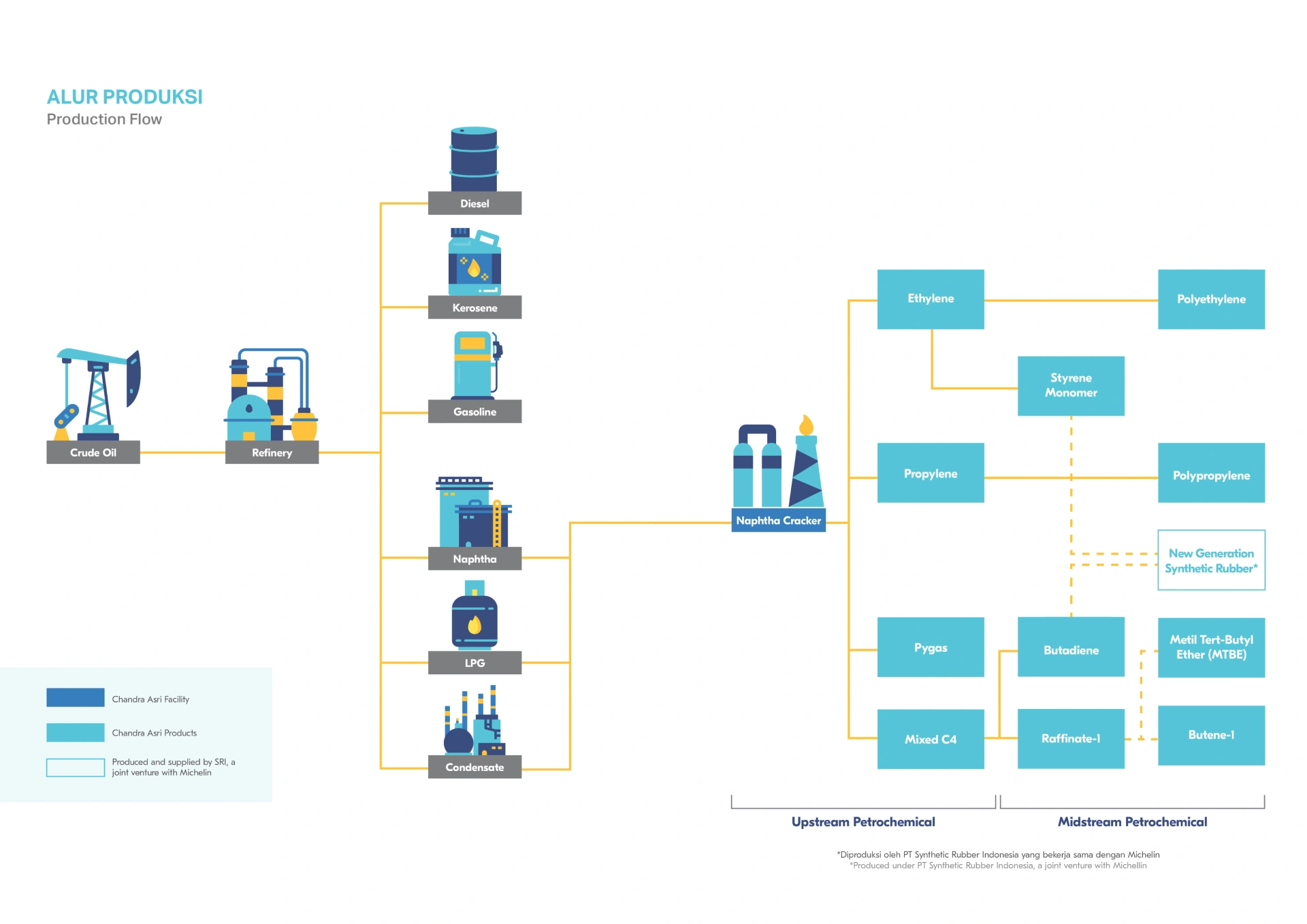
The extracted petroleum will enter the oil refinery for conversion into diesel, kerosene, gasoline, naphtha, LPG, and condensate.
Then, naphtha, LPG, and condensate are processed in a processing unit called a naphtha cracker. This unit breaks down hydrocarbons into simple, valuable olefins.
From there, we can manufacture ethylene for the production of polyethylene and styrene monomer; propylene for the production of polypropylene, pyrolysis gasoline, and mixed C4 for the production of butadiene, raffinate-1, butene-1, and methyl tert-butyl ether (MTBE).
Chandra Asri Group has factories to support the processing of petroleum and natural gas into derivative or end products, including:
- Olefin factory to process naphtha into ethylene, propylene, pyrolysis gasoline, and mixed C4 with annual capacities of 900 KTA, 490 KTA, 418 KTA, and 330 KTA, respectively.
- Polyethylene factory to produce LLDPE and HDPE.
- Polypropylene factory to produce homopolymer, random copolymer, and impact copolymer.
- The styrene monomer factory is strategically located to meet the demand of downstream industries.
- 137 KTA butadiene factory to produce raffinate-1 and butadiene.
- MTBE and Butene-1 factories with capacities of 128 KTA and 43 KTA, respectively.
Not only in Indonesia, but the Chandra Asri Group also has an oil refinery in Jurong, Singapore, under Aster, a subsidiary acquired in 2025 together with Glencore.
Aster has a refinery with a capacity of 237,000 barrels of oil per day, an ethylene cracker with a capacity of 1.1 million metric tons per year, and other downstream chemical assets.
This concludes the information you can learn about the segmentation of the oil and gas industry. Each segment has its own operational process and is important for processing hydrocarbons into consumer products.
For downstream chemical needs, you can trust Chandra Asri Group and Aster! Contact us now to get high-quality chemicals!
Read also: What Is a Petroleum Reservoir in the Oil and Gas Industry?
.png&w=3840&q=75)