
27-04-2026
Various Dock Structures and How to Plan the Construction
By Chandra Asri Group Editorial Team
A dock is part of a port, working as a place for vessels and boats to anchor. It has several functional structures, such as decking, piles, and many more. Want to learn more about dock structure? Read this article until the end!
Various Dock Structures
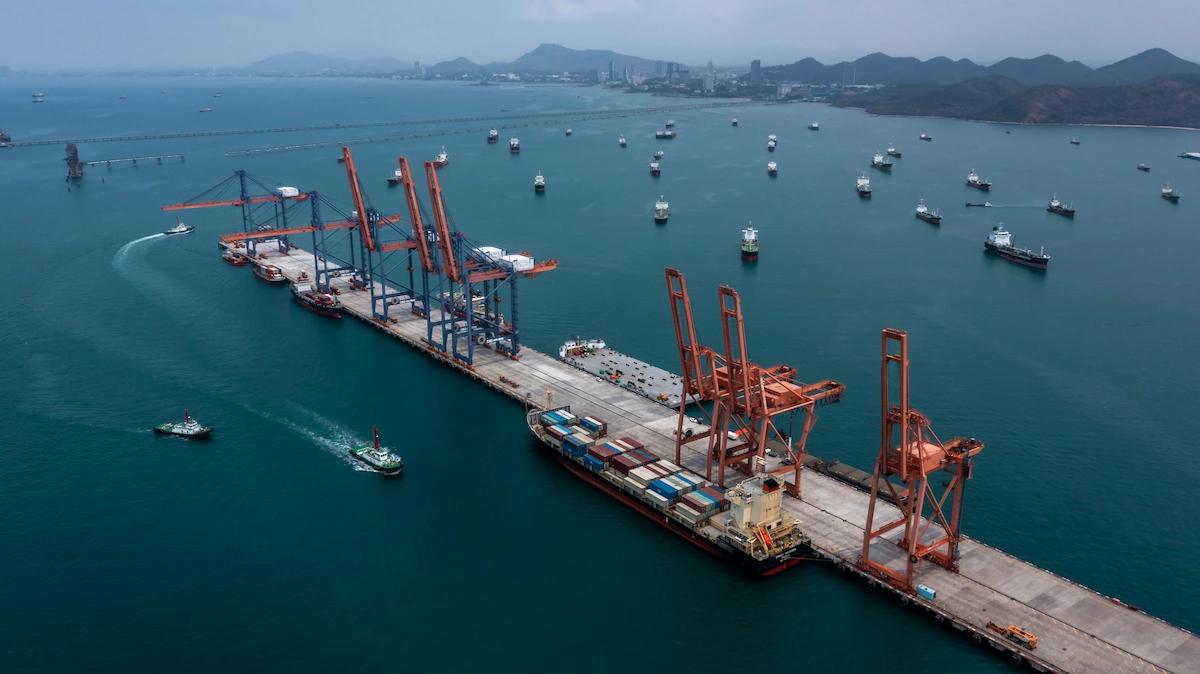
A dock is a structure connecting the port to the land. It is built on the sea and becomes a place for boats and ships to anchor. In the context of sea logistics, a dock also functions as a place for unloading and loading goods.
Furthermore, a dock is also used for boarding and disembarking passengers. Its size depends on the size of the vessel docking there.
Generally, a dock’s structure consists of an upper and lower section. The upper section consists of a platform, while the lower section consists of piles. A more detailed explanation of the dock structures for ships or boats is as follows:
1. Decking
Decking refers to the surface of a dock that people typically walk on. For standard docks, decking can be made of wood or sturdy plastic. However, for harbors, docks are often constructed from reinforced concrete.
Decking must be made of materials that are strong, corrosion-resistant, durable, and slip-resistant. These characteristics are essential because decking or dock platforms are frequently exposed to seawater and constantly changing weather conditions.
2. Fender
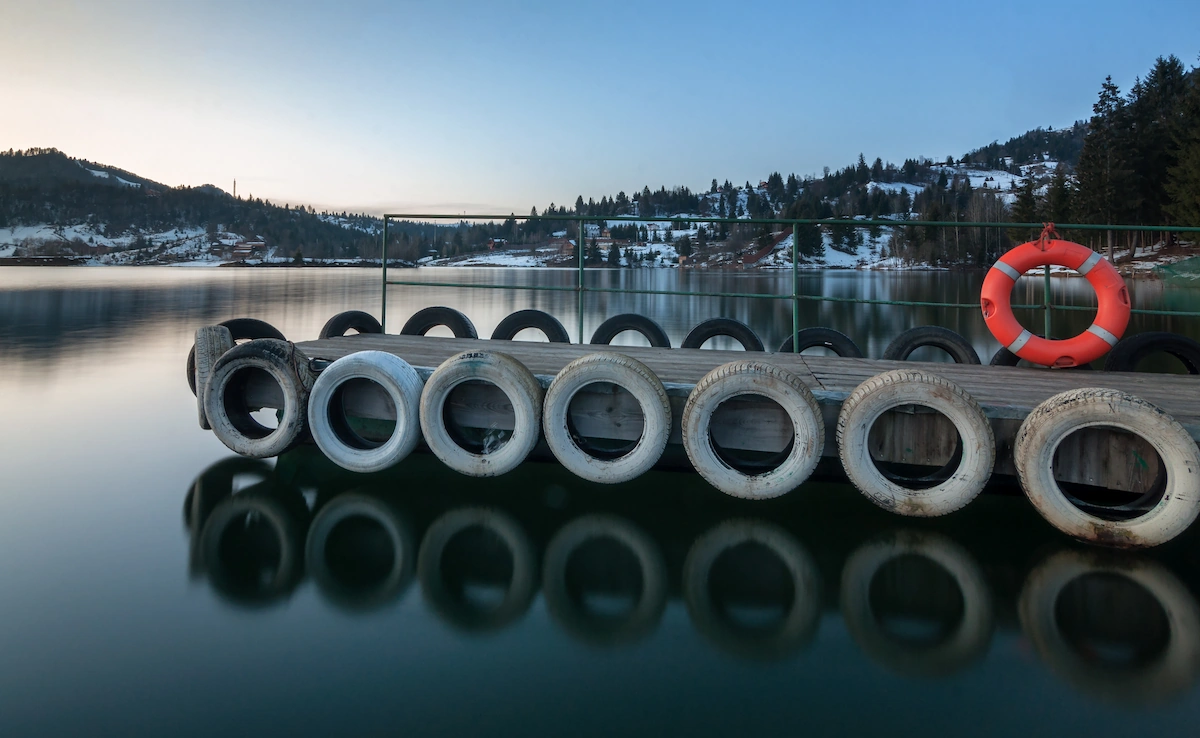
A fender is a structure protecting the dock from collision when the vessels anchor. It is usually made of rubber or wood. Yet, nowadays, fenders are also equipped with suspension and collision-proof technologies, absorbing the kinetic energy when the vessels hit the dock. A fender is installed on the side of the docks and can withstand horizontal force.
3. Piles
Piles are one of the foundation elements of a dock that are driven into the seabed to support the decking. Piles can be cylindrical, rectangular, or triangular in shape. The function of piles is to maintain the stability of the dock.
Piles can be made of concrete, steel, or wood, depending on the load they support and the dock’s environmental conditions. These piles also serve to withstand waves and water currents that could disrupt maritime logistics operations or even endanger people walking on the dock.
4. Mooring System
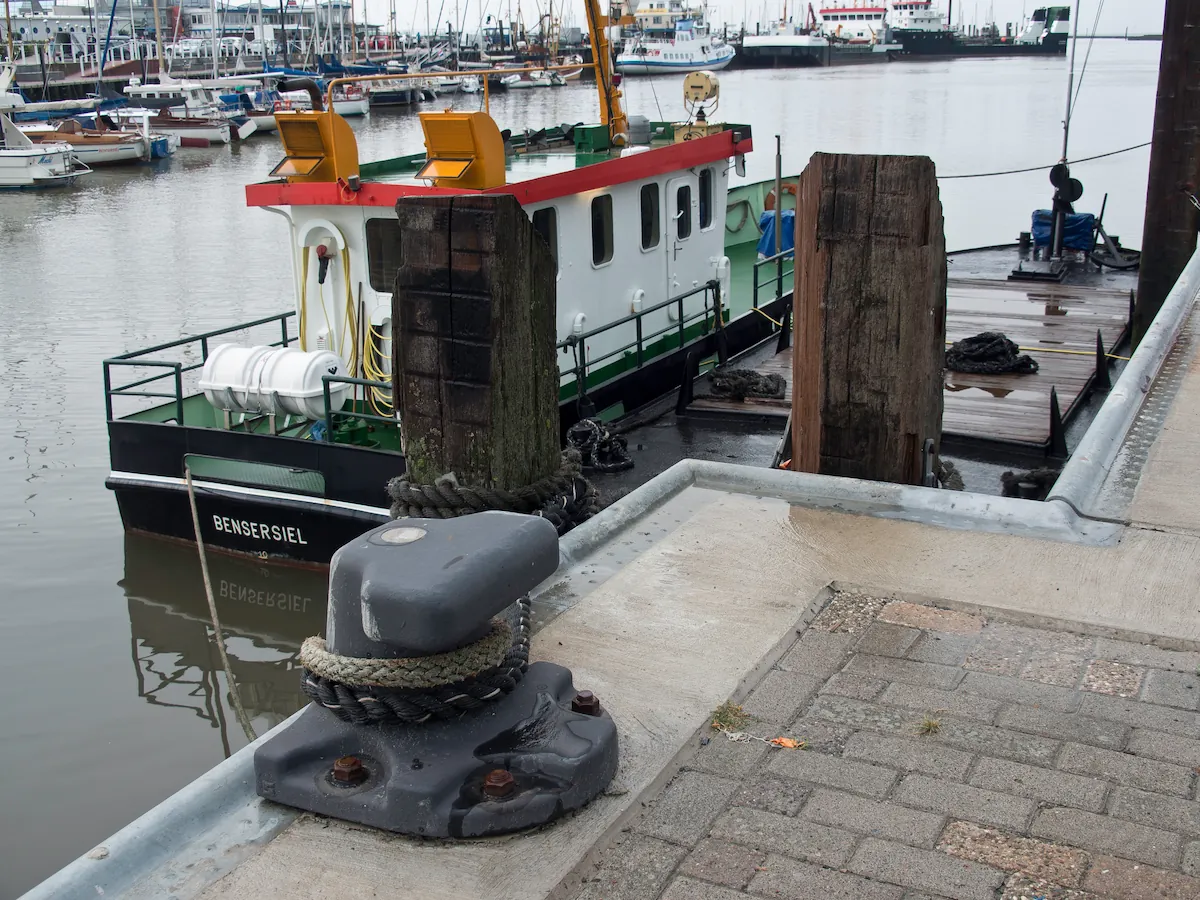
Mooring systems protect ships anchored at the dock. Effective mooring systems enhance safety and operational efficiency by ensuring that ships and docks remain stable.
There are two types of moorings: bollards and buoys. Bollards are moorings permanently installed along the edge of the dock. This prevents ships from being jostled too much by ocean waves or gusts of wind.
Read also: 7 Port Functions for the Economy and Trading, Must Note!
5. Gangway and Rampway
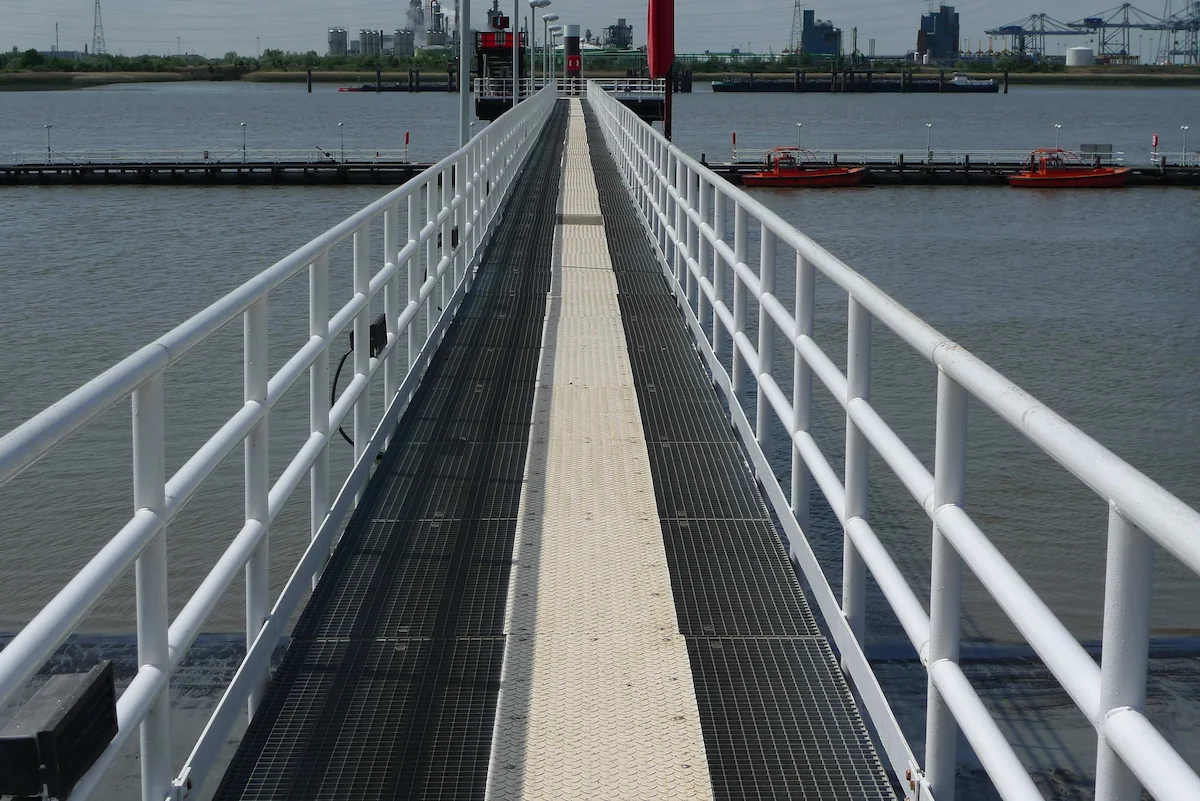
A gangway and rampway help people to reach the dock from the land safely. Generally, a gangway connects the dock with the shoreline.
6. Dolphin
A dolphin is a dock structure jutting into the sea. It is used to tie the boat when anchoring to prevent it from moving despite being hit by the waves.
Dock’s Structure Planning
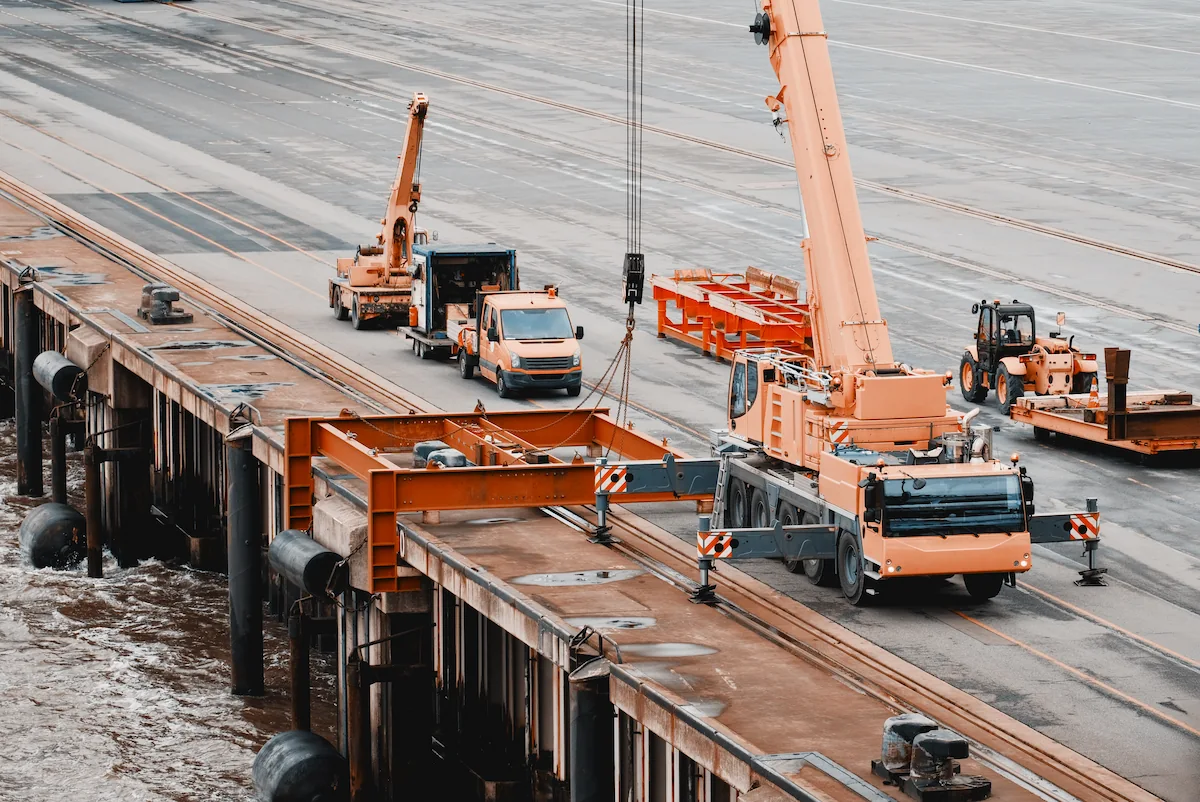
To build a strong dock structure, you must plan it strategically. Here are some steps to build a dock structure you can learn:
1. Site Survey
The first step before designing a dock structure is to conduct a site survey. During this process, you need to assess the physical characteristics of the area, including soil composition and load-bearing capacity.
Not only that, but you also need to assess the surrounding environmental conditions. You certainly do not want your dock project to potentially harm the ecosystem. Additionally, study the water quality and weather patterns in the target area to minimize ecological disruption.
2. Check Existing Regulations
Next, review the applicable local regulations. Make sure your dock has obtained the necessary permits from the authorities and does not violate any existing regulations. This is important to minimize the risk of disputes and delays caused by having to process paperwork in the middle of the project.
3. Discuss with Stakeholders
The dock project should be discussed with local leaders, environmental groups, and local government officials to gather diverse perspectives on the dock’s construction. These discussions also foster collaboration among stakeholders and help prevent future disputes.
4. Design the Dock
This section is a critical part of the planning process because you will be designing a dock structure that is expected to function for a long time and be highly durable.
To achieve this, you must evaluate the loads it will support, the constant forces exerted by the dock structure itself, and other factors. Moreover, the dock structure must be strong enough to withstand the impact of ocean waves, continuous current forces, and the forces of tidal movements.
In addition, you must determine the materials and types of piles to be used. These must be tailored to the conditions of the shoreline, the seabed topography, ocean currents, and weather patterns.
Read also: Get to Know a Container Port, Its Functions, and Charges
5. Start Building the Dock Structure
Once the design is finalized and the budget has been approved, you can bring in heavy equipment to begin construction of the dock. Ensure that the construction process does not endanger nearby residents or pollute the environment.
You can use technology, such as vibration dampers, to ensure the construction activities proceed safely.
Dock and Port Solution for Chemicals
Docks and ports are crucial elements for the maritime trade. A strong dock structure can accommodate the goods and passengers' movement.
If you need a port and storage solution for chemicals, you can rely on Chandra Asri Group! As a chemical, energy, and infrastructure solution company, Chandra Asri Group provides dock and tank services for chemicals through our subsidiary, Redeco Petrolin Utama (RPU).
RPU features two docks, 72 storage tanks with a total capacity of 130,000 kiloliters, a centralized fueling station, a customer order service system, and an internationally certified safety system.
So, do not hesitate to entrust your company’s chemical logistics needs to Chandra Asri Group and Redeco Petrolin Utama, #YourGrowthPartner!
Read also: Get to Know Sea Freight and Its Development in Indonesia
.png&w=3840&q=75)