
27-03-2026
Uses of Chemical Storage Tanks and How to Choose Them
The chemical industry often works with dangerous goods, so it needs safer equipment. This is because chemicals can explode, corrode, or combust if they are not stored properly.
One of the components used in the factories is a chemical storage tank. It is designed to prevent leaks and other impacts of chemicals. To learn more, read this article!
What Is a Chemical Storage Tank?
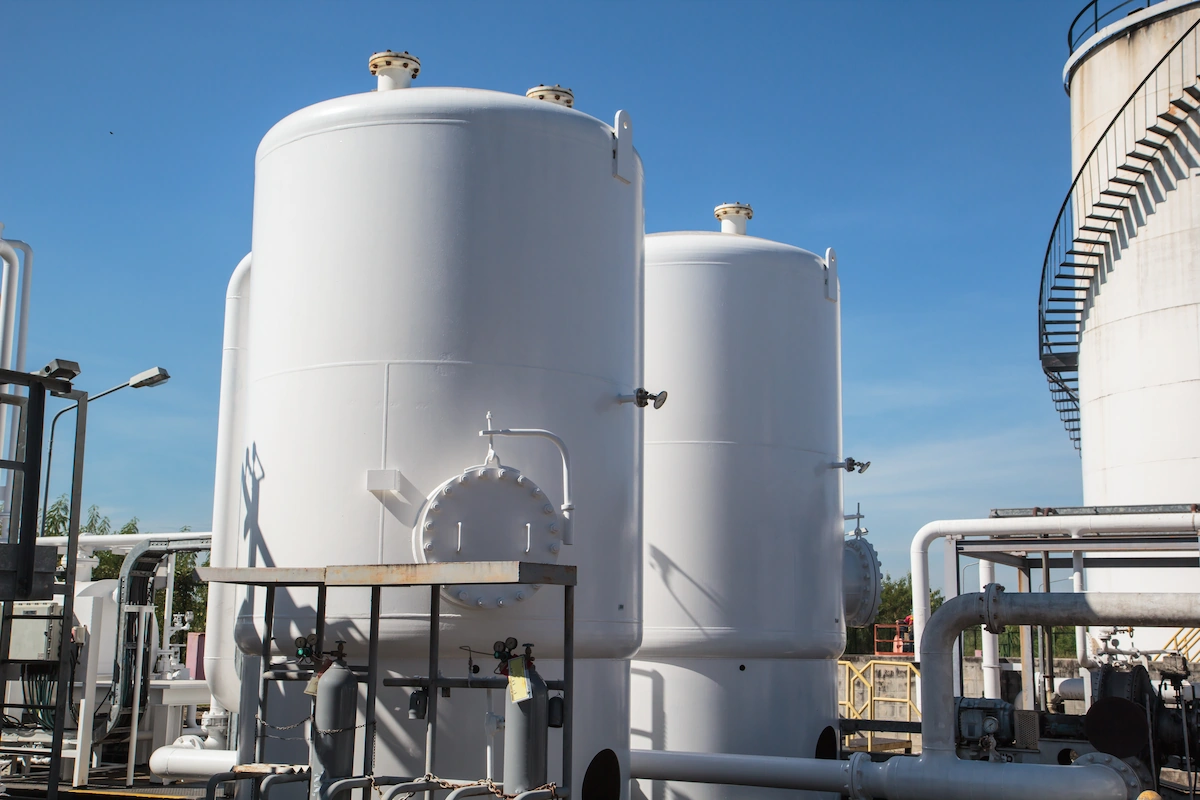
A chemical storage tank is a container designed to store and transport chemicals. It is made with certain features to protect the chemicals from outside factors that could affect their quality.
Moreover, it also prevents the hazardous impact on human health and the environment, such as explosion, spark, chemical reaction, leak, and others.
A chemical storage tank is widely used in the refinery to store LPG, petroleum products, and other chemicals. Furthermore, it is also used to store latex polymer, acid, lubricant, coating, hot water, and preservatives.
For industrial purposes, it can be built on or underground, depending on the chemicals. Some of them also have an insulated area to maintain the temperature.
Read also: Petrochemical Product Classification & Their Industrial Uses
Types of Chemical Storage Tanks
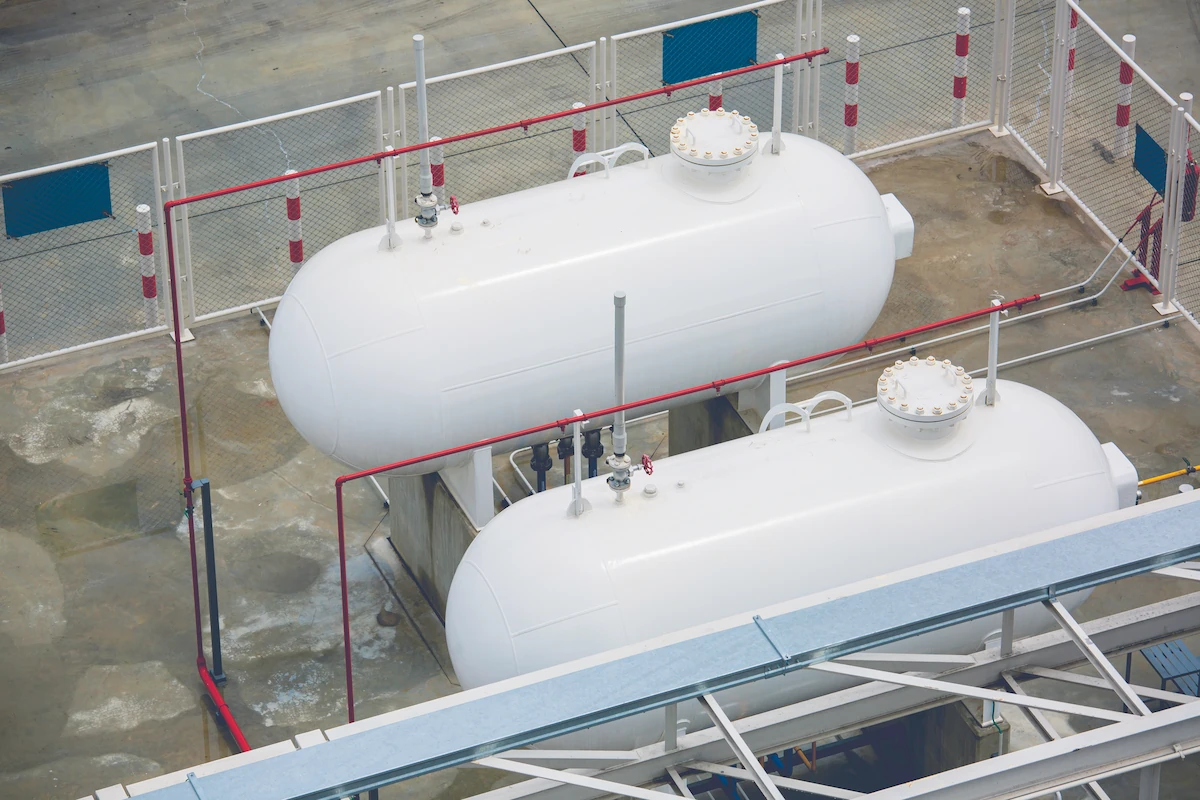
A chemical storage tank is categorized based on its material. The complete explanation is as follows:
1. Fiberglass Tanks
Fiberglass tanks (fiberglass-reinforced plastic/FRP) are made of a composite reinforced with glass fibers, making them corrosion-resistant. The advantages are that they are lightweight and strong.
It is usually used to store harsh chemicals and needs to be able to handle corrosive environments and very high or low temperatures.
Although strong, lightweight, and corrosion-resistant, these tanks require intensive maintenance because they remain susceptible to corrosion over time. That is why FRP tanks generally have higher operating costs than other types of tanks.
2. Nickel-alloy Steel Tanks
Nickel-alloy steel tanks are a popular choice for chemical storage due to their strength and corrosion resistance. These tanks offer high performance, are easy to move, are durable, and can store a wide variety of chemicals.
3. Stainless Steel Tanks
Stainless steel tanks are known for their resistance to rust and corrosion, as well as their ability to withstand high temperatures. These tanks are made of a combination of iron, chromium, and other components that form a thin layer on the tank’s surface. This layer protects the tank from corrosion.
Stainless steel tanks are also one of the most popular choices for chemical storage because they can withstand high pressure and volume. They are suitable for storing acids, bases, and solvents.
4. Polyethylene Tanks
Polyethylene (PE) is one of the most commonly used materials for manufacturing chemical storage tanks due to its durability, strength, and chemical resistance.
PE is also corrosion-resistant, making it suitable for storing aggressive chemicals, acids, solvents, and bases. The PE tanks available on the market are typically made of HDPE, cross-linked polyethylene, and LLDPE. LLDPE tanks are generally more affordable but not as strong as other PE tanks.
5. Polypropylene Tanks
In addition to PE, polypropylene (PP) is also a common material used for chemical storage tanks. This thermoplastic polymer is also resistant to many chemicals.
PP tanks are suitable for storing chemicals that require high temperatures, such as steam and hot water, as they can withstand temperatures up to 160 degrees Celsius.
6. Carbon Steel Tanks
Carbon steel tanks are made from an alloy of iron and carbon, making them strong and capable of withstanding high temperatures. Carbon steel tanks are considered more affordable than stainless steel tanks.
However, these tanks also have several drawbacks, such as being more susceptible to corrosion, which requires intensive maintenance.
Although not ideal for storing corrosive chemicals, these tanks are ideal for transporting flammable chemicals, such as fuel and oil. Aside from being categorized by material, chemical storage tanks also come in various orientations, such as vertical, horizontal, and square.
Vertical tanks are ideal for storing bulk chemicals in areas where space is limited. Meanwhile, if you are looking for a tank that does not take up much vertical space and can be easily transported, you might want to consider a horizontal tank.
Additionally, for a more compact design that maximizes space utilization, you might want to consider a square-shaped tank.
Read also: 9 Petroleum Products You Must Know, from Gasoline to Naphtha
Tips to Choose Chemical Storage Tanks
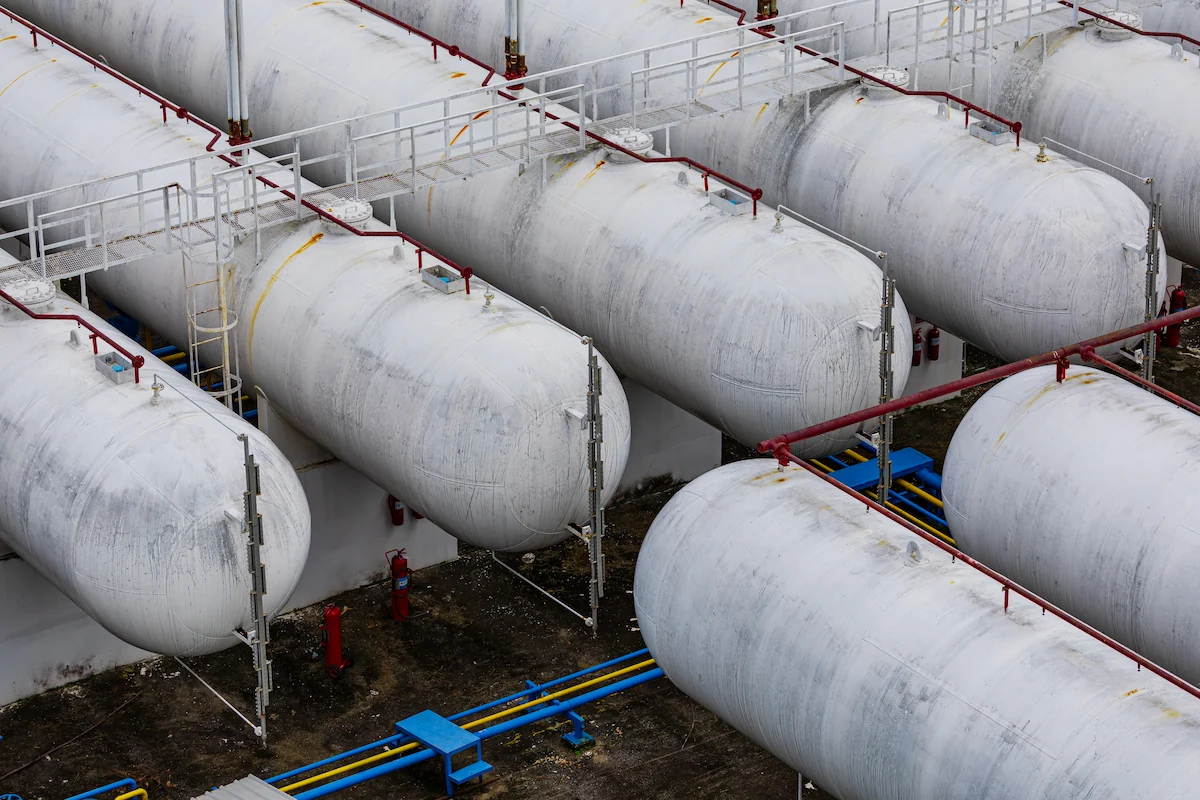
You cannot carelessly choose chemical storage tanks because the wrong treatment can cause damaging impacts, such as environmental pollution and poisoning. Here are the tips you can follow:
1. Understanding the Existing Standards and Regulations
One important tip to keep in mind is to understand the applicable standards and regulations. This includes tank location, tank structure, and procedures for handling leaks or accidents. Also, tanks should be placed on a concrete base or steel platform for added safety, have proper ventilation, and provide sufficient space for maintenance.
2. Determining the Chemicals
Each chemical has its own properties, such as being highly acidic, flammable, or corrosive. Some chemicals also need to be stored at specific temperatures. Based on these characteristics, you can choose the right tank to meet your needs.
3. Identifying Tank Capacity
After selecting a tank suitable for the chemicals to be stored, you need to determine its capacity to prevent leaks or spills caused by overfilling. Also, ensure that the tank’s capacity and material comply with the chemical storage SOP.
4. Checking on the Tank Certifications
The tanks must meet safety standards and certifications appropriate for the chemicals. For example, if the chemicals are flammable, you can choose tanks that meet American Petroleum Institute (API) standards.
Trustworthy Chemical Storages in Indonesia
Chemical storage tanks are a type of equipment that must be carefully selected based on the substances to be stored to avoid posing health and environmental risks. Tanks also require regular maintenance to ensure they function properly.
However, you have nothing to worry about when entrusting your chemical storage needs to Chandra Asri Group! As #YourGrowthPartner, Chandra Asri Group, through PT Chandra Pelabuhan Nusantara (CPN) and PT Redeco Petrolin Utama, offers reliable port and petrochemical feedstock storage solutions.
CPN manages 53 tanks with a total capacity of up to 518,000 m³: atmospheric tanks for liquid chemicals and pressurized tanks for liquefied gas chemicals. Furthermore, PT Redeco Petrolin Utama operates 72 tanks with a total capacity of 130,000 kiloliters.
Along with tanks, Chandra Asri Group, as a leading chemical, energy, and infrastructure solutions company in Southeast Asia, also operates jetties, a centralized fueling station, customer order service stations, oil booms for handling oil spills, and specialized docks for various chemicals.
So, your company does not need to worry about chemical storage. Let us do it for you!
Read also: 17 Household Chemical Products and How to Store Them Safely
.png&w=3840&q=75)