
29-04-2026
Discover Cross-Docking: A Time-Saving Distribution Strategy
By Chandra Asri Group Editorial Team
In the rapidly evolving supply chain and logistics industry, many companies are prioritizing speed and accuracy in their operational processes.
Another strategy is cross-docking, a practice that cuts down on the time that goods are held in handling and storage while in transit, so they can reach customers more quickly. To learn how this strategy can benefit your business, read this article to the end.
What Is Cross-Docking?
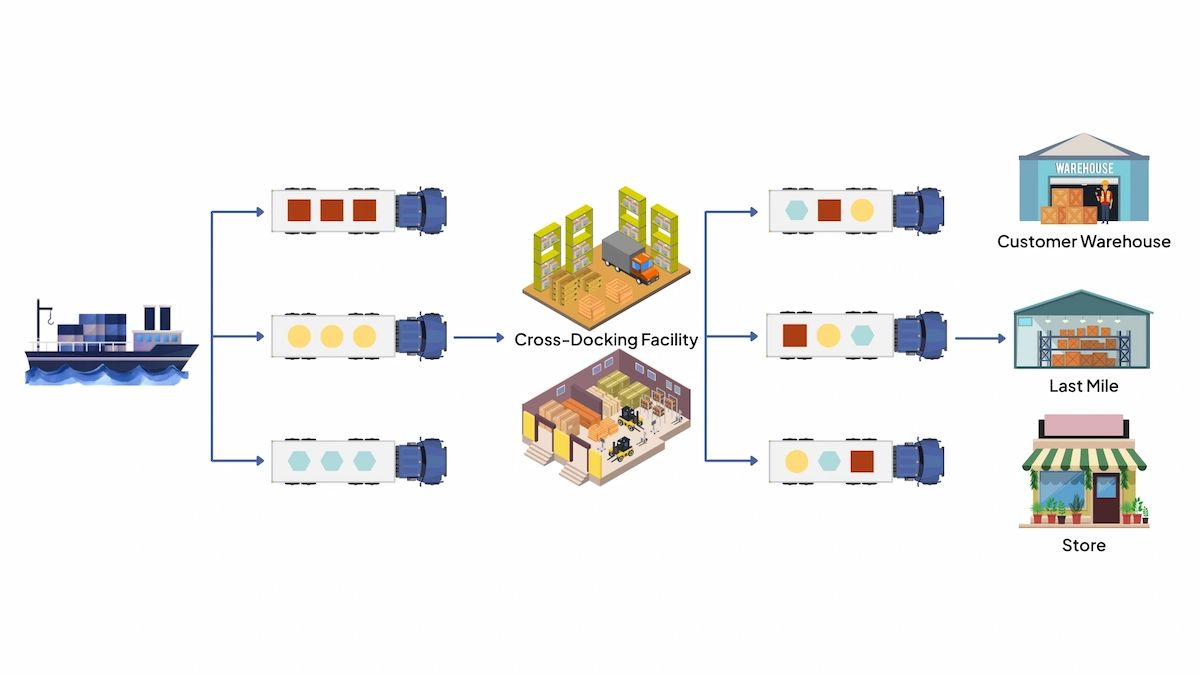
Cross-docking is the process of distributing goods directly from the manufacturer to the customer with little or no storage time. The goal of cross-docking is to speed up the delivery of goods and improve supply chain efficiency.
Cross-docking works by sending goods to a logistics facility, where they are transferred directly to the next vehicle. As a result, goods are not stored for too long, reducing transit time.
Cross-docking can help companies break down bulk shipments into smaller loads, rearrange the configuration of goods, and consolidate products from various suppliers.
To ensure goods reach customers on time, suppliers, logistics facility managers, and customers must coordinate effectively. The shipment timeline must be optimized to keep the supply chain running smoothly.
Cross-docking strategies are typically employed by companies that need to distribute large quantities of goods continuously. Retail stores are a good example.
They usually receive goods directly from manufacturers or farmers, skipping the storage step entirely. To speed things up, the process often takes place near ports or airports.
Read also: Definition, Benefits, and Strategies of Green Logistics
Types of Cross-Docking
Cross-docking can be categorized based on its processes and methods. The types of cross-docking are as follows:
1. Pre-Distribution and Post-Distribution Cross-Docking
In this type of cross-docking, the final destination is determined before the cargo arrives at the cross-docking terminal. At the terminal, the goods are unloaded and transferred to designated trucks. These trucks are specifically designed to deliver goods to specific destinations.
Meanwhile, post-distribution cross-docking sorts and allocates products to their final destinations while they are at the cross-docking facility. Goods are stored at the terminal until their destinations are determined.
Post-distribution cross-docking allows suppliers to determine destinations based on demand. Meanwhile, pre-distribution cross-docking is suitable for suppliers who have already mapped out retailers based on their needs.
2. Continuous, Consolidation, and Deconsolidation Cross-Docking
This type is categorized by the processes that occur at the terminal. Continuous cross-docking involves moving goods from incoming to outgoing vehicles with a shorter storage time.
Consolidation cross-docking combines smaller shipments into a single large shipment. Deconsolidation, on the other hand, involves breaking down a large shipment into smaller ones for easier distribution.
3. Cross-Docking by Industry
Cross-docking can also be tailored to specific industries. In manufacturing, for example, raw materials and components are received and sent straight to the production floor. In the food and beverage industry, perishable goods move quickly from suppliers to retailers to maintain freshness.
Advantages of Cross-Docking
Cross-docking offers several benefits for businesses, including:
1. Improved Operational Efficiency
Cross-docking simplifies traditional logistics processes by reducing storage time for goods. As a result, goods move faster and distribution times are shorter. This naturally reduces operational costs and labor requirements.
2. Faster Delivery
One of the goals of cross-docking is to speed up the delivery of goods. By skipping warehouse storage, products can reach customers more quickly. That is why cross-docking is suitable for electronics, perishable foods, and retail goods.
3. Centralized Operational Processes
Cross-docking facilities serve as central hubs for companies looking to consolidate goods before distributing them to their final destinations. You can optimize shipments and ensure trucks are fully loaded. This improves inventory management and operational efficiency.
4. Saves Time and Costs
Cross-docking certainly saves time and costs by eliminating storing goods in a warehouse. Since goods do not linger in the warehouse, you can allocate the costs of managing them to more important matters.
This logistics strategy also reduces transportation and fuel costs because trucks go directly to the final destination from the terminal rather than heading first to the warehouse.
5. Reduces the Risk of Loss and Damage to Goods
The short storage time ensures goods do not remain in the warehouse for too long. This reduces the risk of damage and loss. Product quality is also guaranteed, especially for perishable goods, since they are distributed immediately upon arrival at the cross-docking facility.
Read also: Bill of Landing: Definition, Function, Types, and Components
Challenges of Cross-Docking
Although cross-docking appears to be a breakthrough in the supply chain, you must remain aware of the associated challenges to ensure you are prepared to handle demand and operational processes. Here are some of the challenges:
- Synchronizing inbound and outbound shipments: Ensure every process runs on schedule. Shipping delays will hinder the cross-docking process and overall logistics management.
- Complexity in managing goods: This strategy requires strong coordination among various parties, from suppliers to end customers. Furthermore, the goods being managed are diverse and require varied handling methods.
- Requires reliable suppliers: You need to choose responsible, consistently punctual suppliers to prevent goods from getting stuck or arriving late to customers.
Cross-Docking vs. Dropshipping vs. Direct Shipping: What Is the Difference?
Cross-docking is often compared to dropshipping and direct shipping. Dropshipping is a business model in which retailers sell goods without stocking them, with the distributor shipping them directly.
Meanwhile, cross-docking is a distribution strategy where trucks enter and exit directly without storing goods in a warehouse. The difference between cross-docking and direct shipping lies in their mechanisms.
Direct shipping distributes goods directly from the supplier to the customer without routing them through a distributor or retailer. Businesses that implement this strategy are known as direct-to-consumer (DTC).
Trust Chandra Asri Group with Your Land Logistics!
Cross-docking is a logistics management mechanism that can reduce time and costs by transferring goods directly from incoming trucks to outgoing trucks.
In logistics management, you not only determine the distribution strategy but also the mode of transportation selected. If your company needs land logistics services for chemicals and LPG (Liquefied Petroleum Gas), trust Chandra Asri Group!
As #YourGrowthPartner, Chandra Asri Group operates land logistics through PT SCG Barito Logistics (SBL) and PT Chandra Cold Chain (CCC). We have a fleet of 200+ trucks and manage warehouses owned by Chandra Asri Group and other clients.
Contact us now and consult with Chandra Asri Group about your company’s logistics needs!
Read also: What’s a Shipping Instruction and Its Function in Logistics
.png&w=3840&q=75)