

27-03-2026
Definitions, Benefits, and Strategies of Green Logistics
Over time, more people are becoming more aware of the impacts of global warming and climate change. Thus, companies, governments, and individuals are increasingly adopting sustainable practices, including in logistics management.
One of the practices of logistics management, considered more environmentally friendly, is green logistics. Discover how this concept contributes to environmental sustainability in the article below.
What Is Green Logistics?

Green logistics is the concept of reducing the carbon emissions from logistics activities, such as storage, distribution, production, and packaging. This practice is implemented across the supply chain to reduce environmental impacts without affecting the running business processes.
Some activities that can be implemented in logistics management include optimizing storage, using sustainable infrastructure, and opting for the most efficient supply chain.
Green logistics has become a viable solution to consider, since the transportation sector is the second-largest contributor to global greenhouse gas emissions.
Statistics show that the land, sea, and air transportation sector emits more than 8 billion metric tons of equivalent to carbon dioxide to the atmosphere each year. This amount has been doubling since 1990.
Therefore, the transportation sector continues to be improved to become more environmentally friendly. One example of sustainable logistics is using electric vehicles for distribution. These vehicles produce lower emissions than fossil-fuel vehicles, making them cleaner.
Read more: Supply Chain Management & Strategy in Petrochemical Industry
Benefits of Green Logistics

Green logistics offer a few benefits for the environment and the company, including:
1. Improving Efficiency
Green logistics is one of the practices of sustainable supply chain management. Therefore, each of its plans and activities is designed to reduce negative environmental impacts.
This way, companies can focus on more efficient activities and avoid wasting energy to reduce carbon emissions. In addition, companies can implement standardized, environmentally friendly waste and junk management practices, such as recycling materials for other operational processes.
2. Reducing Waste
Green logistics also helps you reduce waste from logistics activities. The current popular approaches are task automation by using software.
Integrated applications store all logistics data in real time and with high accuracy to support the logistics flow from production to shipping. The benefits include reduced paper waste from unused documents.
3. Decreasing Packaging Costs
The green logistics concept encourages the use of reusable and recyclable materials and packaging. Therefore, you don’t have to keep buying one-time-use packaging that may add to the company’s budget. Examples of this packaging include a thick carton as an alternative to wooden pallets.
4. Improving the Company’s Image
Companies that pay attention to sustainable practices are more environmentally responsible. The company's image and reputation are improved in the eyes of investors, stakeholders, customers, and society.
Read more: Bill of Lading: Definitions, Functions, Types, and Components
Strategies to Implement Green Logistics
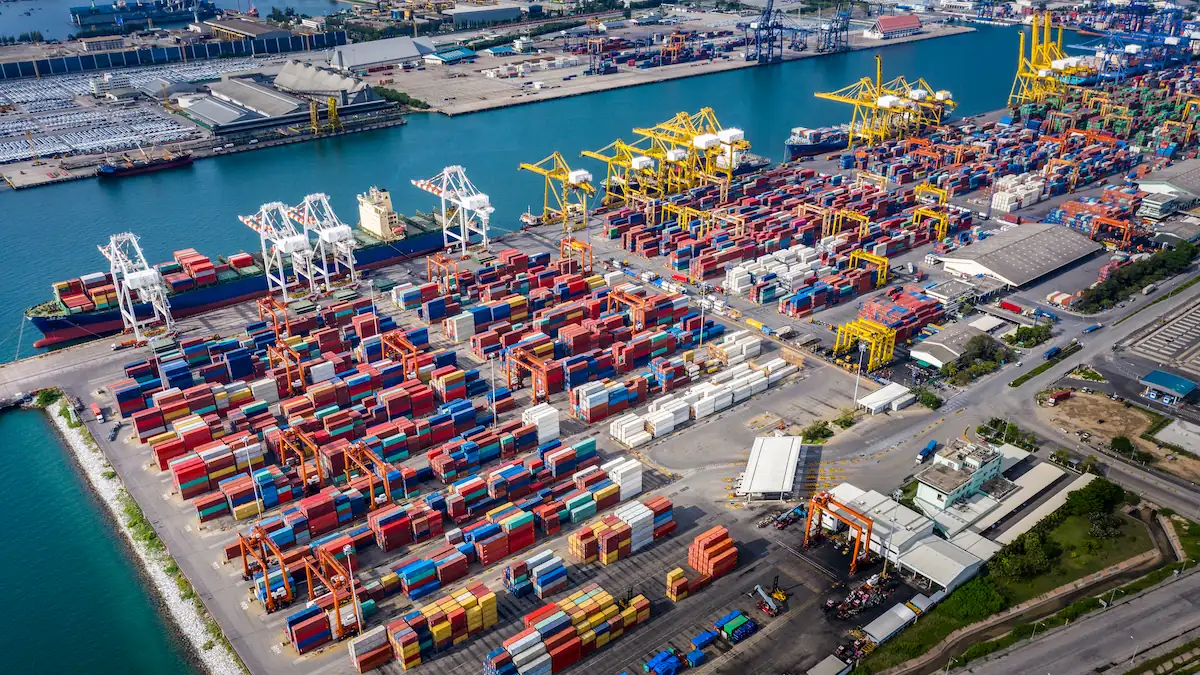
Green logistics may be a distinct practice compared to most logistics management, since it requires planning the most efficient and environmentally friendly processes to reduce environmental impacts. Some practicable strategies involve the following:
1. Optimizing Warehouses
The primary applicable strategy is optimizing warehouses. The company can reduce unnecessary costs and machine operations. Therefore, there is little unused energy and little pollution generated.
2. Using Latest Technologies
Warehouse automation by using the supply chain management system (SCM), transportation management system (TMS), and warehouse management system (WMS) can also become a solution for green logistics.
The systems above help you manage inventory, warehouse operations, and other administrative tasks for greater efficiency. The resources used are also appropriately allocated to reduce energy waste and costs.
3. Optimizing Shipping Routes
As previously explained, the transportation sector contributes to annual carbon emissions. Thus, you can start optimizing shipping routes for efficiency. These routes allow for shorter routes, which save on costs, time, and fuel.
4. Using Environmentally-Friendly and Efficient Packagings
Packagings that are efficiently designed can reduce material use. In addition, you can use easily recyclable packaging aligned with the circular economy, so it will not end up in the dump.
Chemical Substances Logistics Solutions and Reliable LPG for Industries
Applying green logistics is not only about reducing emissions; it also aims to build a more efficient, transparent, and sustainable supply chain. By using technology, optimizing transportation, and implementing an integrated distribution system, the company can ensure safer, more on-time, and environmentally friendly shipping.
Through integrated infrastructure development and logistics services, the company can strengthen cargo handling and support the industry’s needs in a more sustainable way.
Regarding integrated logistics services, Chandra Asri Group, through Chandra Shipping International, offers sea logistics solutions for chemicals and LPG. We are managing more than 10 ships with a combined capacity of 106,650 DWT. These numbers can grow even further over time as acquisition processes continue.
Aside from sea logistics, we also offer land logistics through Chandra Cold Chain and SCG Barito Logistics, with 200+ trucks across a range of truck types. We also manage warehouses in Java areas and Cilegon.
If your company is looking for industrial chemical logistics services and an LPG provider, entrust your needs to Chandra Asri Group, #YourGrowthPartner!
Read more: Get to Know Sea Freight and Its Development in Indonesia
.png&w=3840&q=75)