
24-04-2026
Understanding a Berthing Plan: Definition, Aims, and Factors
In maritime logistics, vessels transport goods from one point to another. When vessels reach the port, they cannot immediately dock and unload goods.
The company must book a docking area called a berth. That is why a berthing plan is essential to allow vessels to anchor and unload goods safely without colliding with other ships. To understand more about a berthing plan, read this article until the end.
An Overview of Berthing
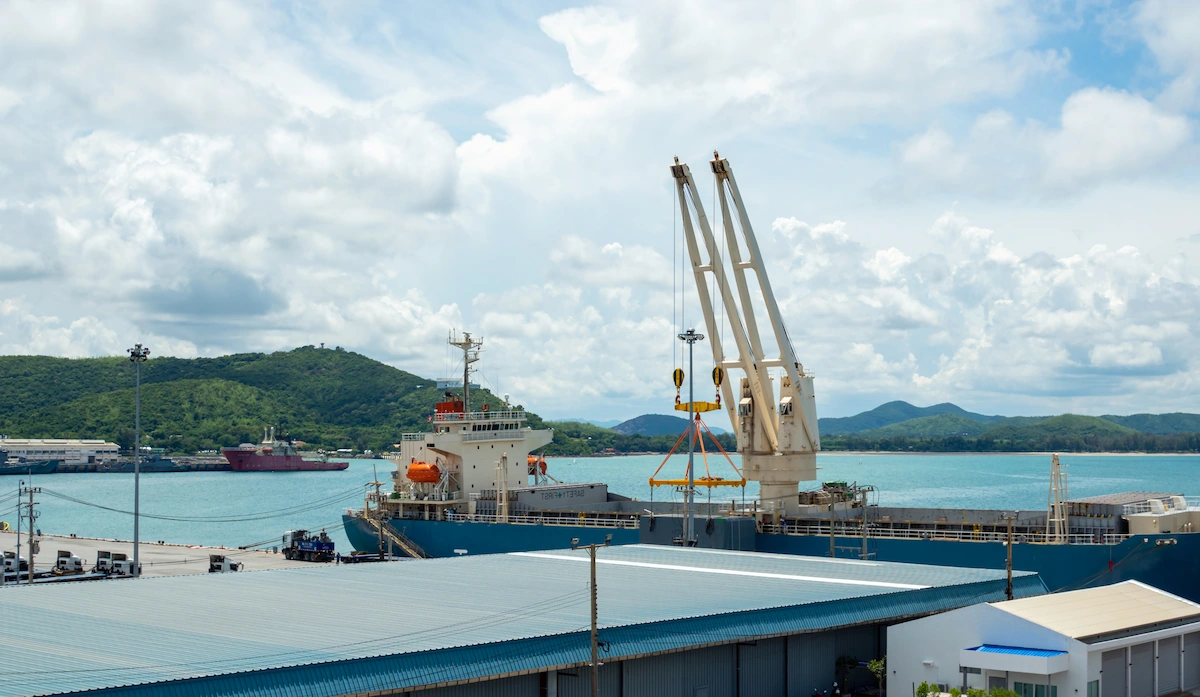
Before learning about a berthing plan, you must understand the berthing process. Berthing is the process of navigating vessels to the designated area along the dock. A berth is a special area for docking vessels.
In berths, ships can unload and load goods. Usually, a berth is 10% longer than the larger vessels, allowing them to maneuver. Here, you will also find binders, fenders, and bollards that protect the ships and berths.
The role of a berth is very important in sea logistics. Imagine large ships must be able to maneuver in a limited area without hitting or colliding with the port infrastructure.
The berthing time varies for each ship. Commonly, this process takes 2–24 hours. Small vessels will be faster in wrapping the berthing process up, while the larger ones might take longer time.
Read also: 7 Port Functions for the Economy and Trading, Must Note!
What Is a Berthing Plan?
A berthing plan is a detailed document explaining the operational plan of all docking vessels in the port. It contains complete resource allocation for the ports and the surrounding facilities.
To prepare the berthing plan, the port operations manager will gather information regarding the ships scheduled to berth within a specific timeframe. Every ship that “reserves” a berth at the port for a specific day is immediately recorded in the system and forwarded to the operations team to be added to the berthing plan.
The berthing plan must be carefully formulated to ensure that maritime logistics run smoothly. Every port has specific berths for each type of vessel. For example, berths for tankers are located somewhat far from passenger ship berths to ensure the safety of the supply chain process.
That is why every berth has its own anchoring plans. Yet, every berthing plan is interrelated to each other because it has the same track.
Therefore, the berthing plan must be efficiently formulated to avoid congestion during the ship’s docking process. All machinery and equipment at the port must be ready for use when the ship arrives and docks so that the ship does not have to wait any longer when it is time to unload its cargo.
Purposes of a Berthing Plan
A berthing plan aims to ensure the port infrastructure is used optimally and efficiently; reduce service time; optimize departure and arrival time; optimize fuel, emissions, and berthing costs; reduce unplanned departures and arrivals; and minimize turnaround time.
A vessel’s service time is the time spent in port (excluding arrival and departure times), which includes queuing, docking, and berthing. During this time, the vessel cannot operate and is considered idle. A berthing plan is designed to minimize idle time so that the berthing process remains smooth.
In addition, the berthing plan is also designed to reduce unplanned ship arrivals and departures. Ships that are late or arrive early will inevitably disrupt the day’s berthing schedule.
The vessels arriving early will have longer idle time because they must wait for other ships to finish their berthing, making it less effective. On the other hand, late vessels will also depart later, disrupting the next ship’s schedule.
Moreover, the berthing plan also ensures optimized fuel consumption so that costs incurred during the service do not escalate and result in excessive emissions.
Read also: Get to Know a Container Port, Its Functions, and Charges
Aspects Affecting the Berthing Plan
In creating a berthing plan, the port operational manager must consider some factors, such as expected time of arrival (ETA), expected time of departure (ETD), berthing estimated time, estimated crane displacement per ship per berth, and external factors (waves and weather).
The ETA is determined by the ship’s departure time from the port of origin, traffic along the route, and weather conditions. Each ship must have a sequential ETA and ETD to ensure optimal service.
Additionally, the estimated crane movement per ship per berth also affects the berthing plan. Cranes are used to unload and load cargo to and from the ship. Cranes must move as little as possible to save operational time. As a result, the loading and unloading process can proceed more quickly once the ship has berthed.
Then, external factors like weather and waves must be projected well. The port operational team must be able to read the weather and wave patterns to see the estimated speed of the berthing service provided.
Aside from that, the operational team must also map the docking vessels to prevent bottlenecks and idle time.
Factors Affecting Berthing Time
The berthing time must be planned properly in the berthing plan to avoid waiting vessels. Therefore, you should be aware of the factors that influence berthing time, such as:
- Berth availability in the port: Every ship reserving a berth will have a certain area in the port. If the ship is late and loses the spot, it must wait for the next slot.
- Peak hour: The port also has rush hour, making it full of vessels. The more docking ships, the longer the time to wait for empty spaces.
- The amount and types of unloaded/loaded goods: The more unloaded/loaded goods, the longer the berthing time is. This also includes handling complex cargo, such as dangerous goods.
- Weather and wave conditions: Strong waves and winds can make the berthing process more risky. In fact, if the weather worsens, port authorities may postpone berthing until conditions improve.
- Ship size: Large vessels require more space and deeper water to dock. However, not all ports have the facilities to accommodate all types of ships.
Chandra Asri Group, a Petrochemical Feedstock Port and Storage Solution
A berthing plan must be developed in detail to ensure that every vessel calling at port receives optimal berthing services and efficient loading and unloading processes. The berthing plan is a crucial component in ensuring the smooth operation of maritime logistics.
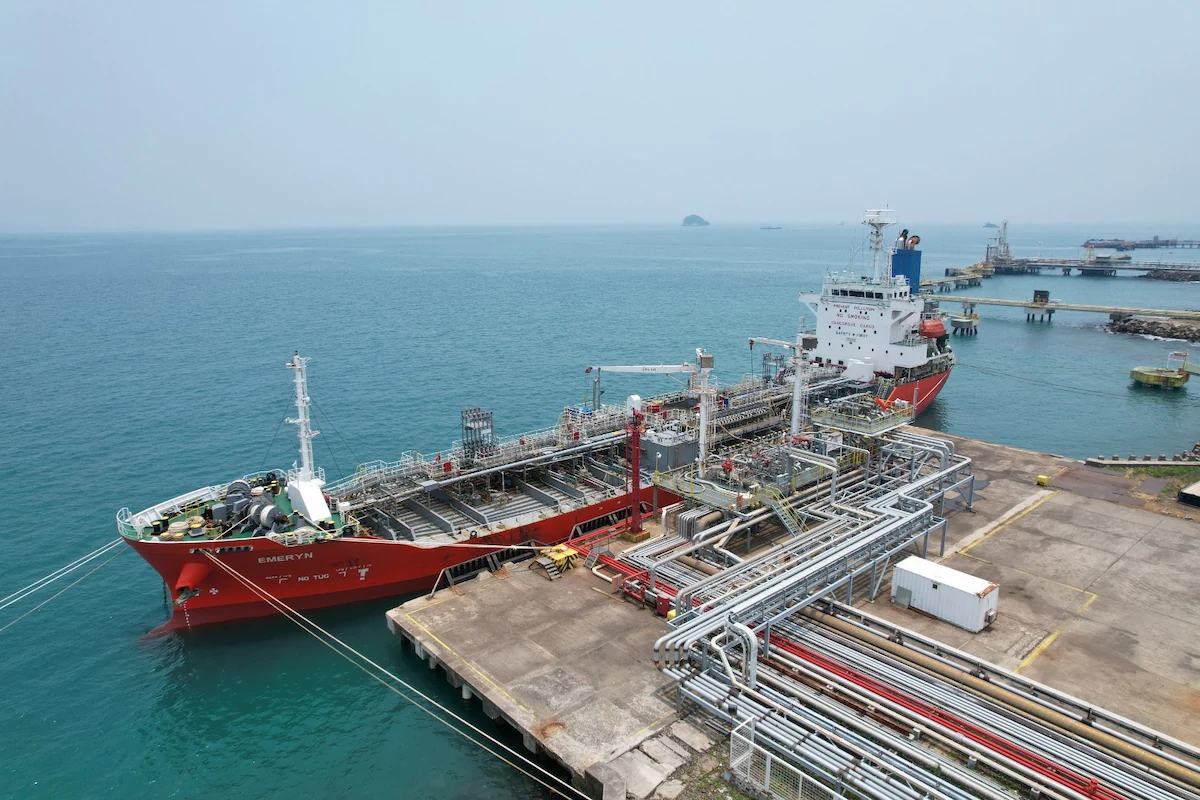
Regarding maritime logistics and ports, Chandra Asri Group, as a leading chemical, energy, and infrastructure solutions company in Southeast Asia, operates its own port services, including deep-water terminals and raw material storage facilities.
Through PT Redeco Petrolin Utama (RPU), we operate several docks, tank farms, and other supporting assets.
RPU features two berths with a water depth of 10 meters, suitable for vessels with a deadweight tonnage of 35,000 DWT and a LoA of 200 meters.
RPU also features 72 storage tanks with a total capacity of 130,000 kiloliters, a centralized fueling station, a customer order service system, and oil booms that meet international standards for handling oil spills.
So, do not be confused when selecting a port and storage service provider. Entrust your needs to Chandra Asri Group, #YourGrowthPartner!
Read also: Get to Know About Stevedoring in Shipping, Process, and Type
.png&w=3840&q=75)