
27-05-2026
Boat Mooring: Definition, Components, and Techniques
In the maritime logistics and port industry, it is common to see vessels “parked” alongside the port. However, boats cannot simply dock at random without proper arrangement. One of the crucial processes that must be carried out is boat mooring.
This article discusses the ins and outs of boat mooring and why this process is important in port operations. So, be sure to read this article to the end.
What Is Boat Mooring?
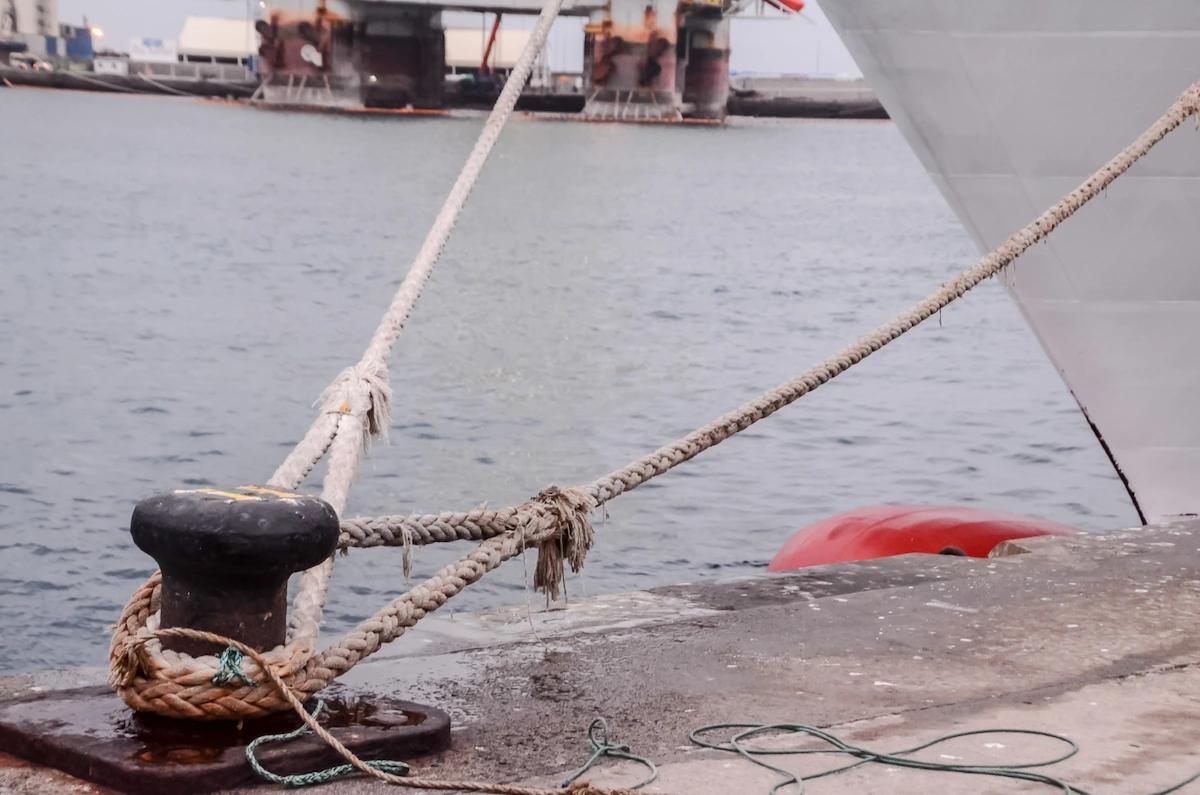
Boat mooring is the process of securing a boat to the dock using various tools to maintain the boat’s stability while docked. Typically, boats are moored with lines tied to bollards. As a result, the boat remains stable during the cargo loading or unloading.
Boat mooring is considered safer than simply dropping an anchor to the seabed because the vessel is secured to fixed points within the port facility while docked. However, this process requires various equipment, such as chains, buoys, ropes, and others.
Boat mooring is also crucial during refueling, bunkering, boarding or disembarking passengers, ballasting, repairs, maintenance, and docking at a berth.
After completing activities at the port, the boat will unmoor, releasing the mooring lines to continue its journey.
So, why is boat mooring important? There are several reasons, including:
- Maintaining the boat's stability so it does not shift even when hit by waves, wind, or ocean currents.
- Supporting the smooth operation of activities on the boat and at the port.
- Improving the efficiency of operational processes to ensure they remain on schedule.
- Reducing the risk of accidents, loss of boat control, and worker injuries.
Read also: Get to Know About Stevedoring in Shipping, Process, and Type
Boat Mooring Components
Boat mooring systems use various tools to maintain the stability and safety of the vessel, such as:
1. Anchors
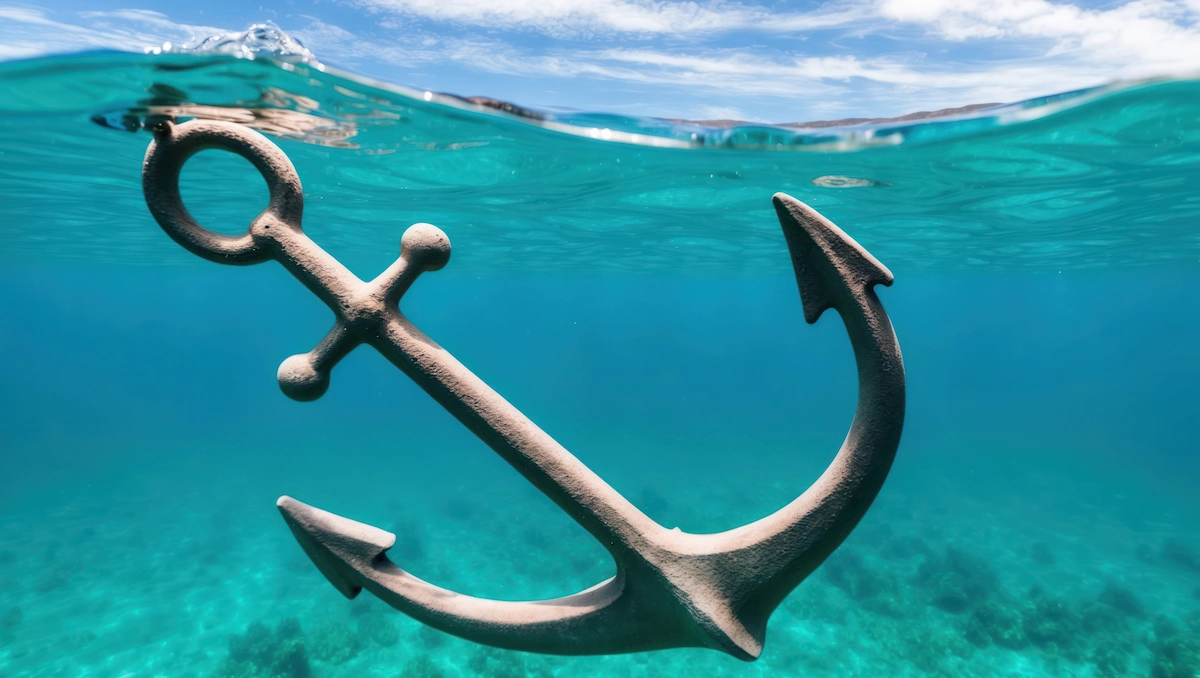
There are various types of anchors you can use depending on your needs, such as mushroom, pyramid, helix, and concrete anchors.
Mushroom anchors can hold up to five times their weight. Typically, these anchors are buried in soft mud or sand during the mooring process. Meanwhile, pyramid anchors have a strong grip and are ideal for confined spaces.
Helical anchors are embedded directly into the seabed and leave almost no scuff marks, making them more environmentally friendly. Meanwhile, concrete anchors are an easy, inexpensive, and simple option, but they rely on a sufficiently large mass.
Concrete anchors are easy to make because they rely on a combination of cast concrete and steel, materials that can be found at hardware stores at affordable prices.
This anchor relies on its own weight because it loses mass when submerged in saltwater. That is why concrete anchors must be heavier when dry so that when they enter seawater, they are not easily carried away by the waves.
2. Buoys and Flags
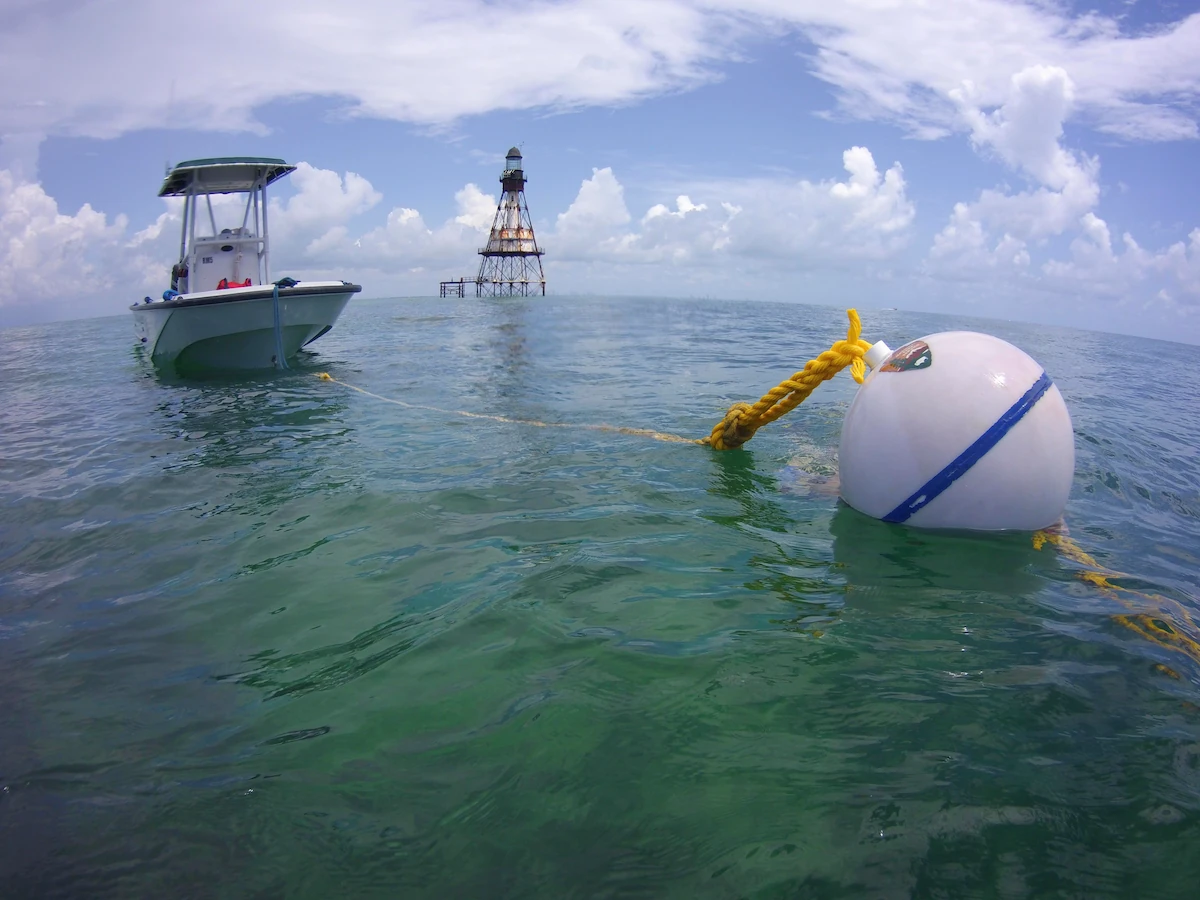
Source: National Park Service Florida
According to international standards, boat mooring systems must use white buoys with blue lines. However, color codes may vary by region.
In addition to buoys, a boat mooring system is also equipped with a pennant, a friction-resistant rope that connects the buoy to the bow of the boat.
3. Mooring Line
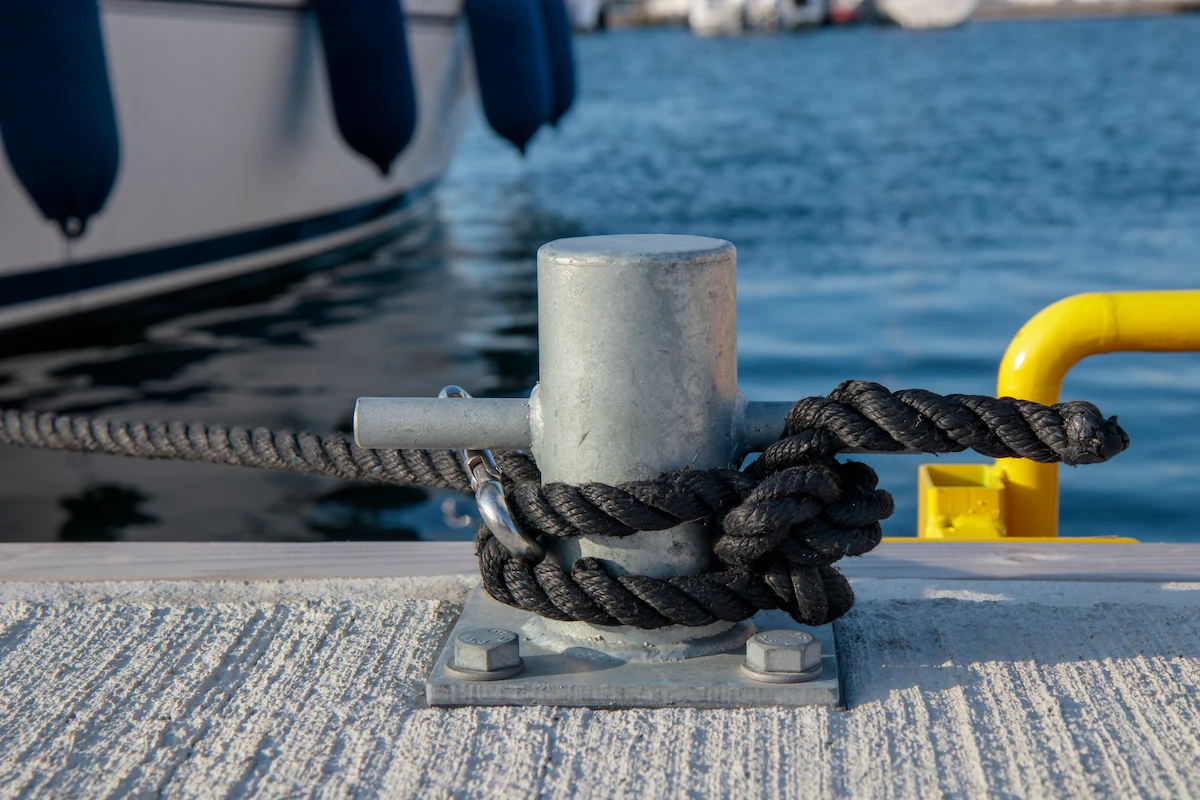
The mooring line is the main component of a boat's mooring system. In the past, sailors used ordinary ropes, but today many mooring lines are made of steel or high-quality synthetic materials.
Mooring lines function by transferring force from the boat's structure to the mooring line. The material and characteristics of the line must also be suited to the boat.
Large vessels generally use lines with high stiffness and strength due to their large mass and inertia, so the boat’s relative movement tends to be smaller in response to specific external forces.
Inertia is the natural tendency to maintain its state, whether at rest or moving in a straight, uniform path, and to resist changes in speed or direction.
Conversely, small vessels are more easily moved by waves and wind, so they often require ropes with higher elasticity to absorb shock loads and fluctuations in mooring forces.
4. Mooring Winch
The mooring winch is used to support the mooring rope and guide it as needed. Mooring ropes are typically operated using electro-hydraulic power.
Along with the winch, there are also hydraulic and electrical mechanisms that operate it. These mechanisms supply power to the winch.
5. Fenders
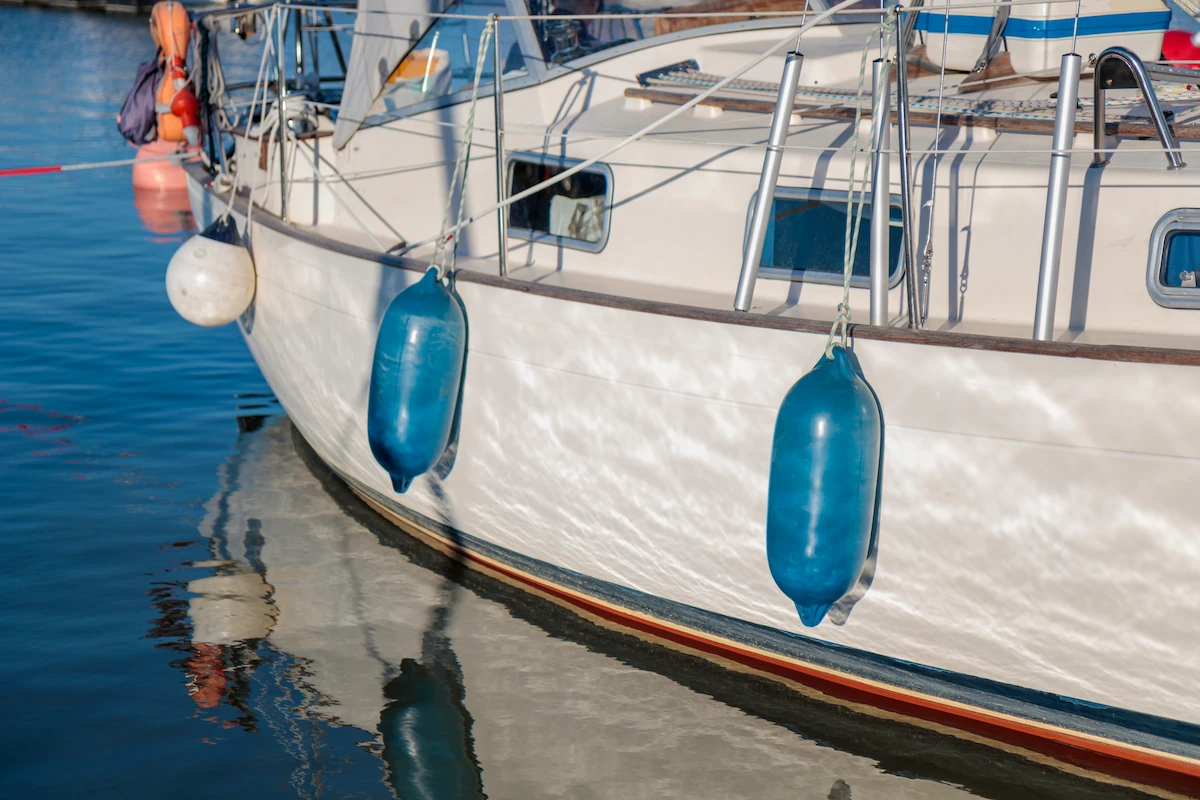
Fenders protect the sides of a boat from damage when it comes into contact with the dock. Even when securely moored, there is still a risk of collision with port structures because the boat tends to move with the current, including ocean waves.
In addition to protecting the boat, fenders also protect the port structures they come into contact with. Therefore, fenders are typically found not only on boats but also along the sides of docks.
6. Anchor Line
The anchor line connects the anchor to the buoy. This component can consist of a rope, a chain, or a combination of both.
Read also: Get to Know About Ship Docking: Process and Function
Boat Mooring Techniques
The captain and crew determine boat mooring techniques based on the conditions encountered. The methods are as follows:
1. Single Point Mooring
This technique is ideal when a vessel must moor at sea, where there is no physical port or pier. This technique requires a single mooring buoy to maintain stability.
Examples of its application include situations where a vessel must stop at an offshore structure or when bad weather prevents it from reaching port.
2. Ship-to-Ship Mooring
This advanced mooring technique involves two adjacent boats mooring together to transfer cargo. Thus, the mooring process and cargo handling take place in the open sea.
3. Multi-Buoy Mooring
Multi-buoy mooring is the most common boat mooring technique. This technique secures the boat to a buoy using multiple mooring lines. As a result, the boat remains very stable and does not drift.
4. Baltic Mooring
As the name suggests, this technique is used in the Baltic Sea. This is due to the strong winds in the Baltic Sea, which require a special technique for mooring boats.
Baltic mooring combines two elements: a standard mooring line at the stern of the boat and an anchor dropped some distance from the pier.
As the boat approaches the dock, the crew will drop the anchor offshore. Then, the mooring line at the stern is connected to the anchor chain. As a result, in windy weather, the boat does not easily drift away from the dock or collide with it.
5. Spider Mooring
Spider mooring provides maximum stability, with the mooring lines secured to anchors or mooring blocks embedded in the seabed. The network of mooring lines remains anchored at a central point, forming a spider-web-like configuration.
This mooring technique can be applied when the boat is at anchor or loading/unloading cargo. Thanks to the numerous lines securing the vessel to the anchors, the boat will not be easily swayed by the sea winds.
Port Services and Chemical Storage by Chandra Asri Group
The boat mooring process must be supported by a sturdy and reliable port structure so that vessels can operate safely and efficiently.
Regarding port services and chemical storage, Chandra Asri Group, through PT Redeco Petrolin Utama (RPU), operates two berths with a water depth of 10 meters for ships with a maximum deadweight tonnage (DWT) of 35,000 and a length overall (LoA) of 200 meters.
Additionally, RPU provides 72 tanks with a total capacity of 130,000 kiloliters, a centralized fueling station, a customer order service system for scheduling product pickups, and an international-standard security system.
So, entrust your company’s port services and chemical storage needs to Chandra Asri Group and RPU, #YourGrowthPartner!
Read also: Understanding a Berthing Plan: Definitions, Aims, and Factors
.png&w=3840&q=75)