01-04-2026
The Quiet Steps of Titin That Changed How Residents See Waste
By Chandra Asri Group Editorial Team
Change often begins with simple things at home — from separating household waste before disposal to collecting used cooking oil for further processing.
In the neighborhood where Titin lives, these small habits have gradually grown and spread from one household to another. Behind this transformation is a housewife who moves quietly and consistently — not with many words, but through real action and example.
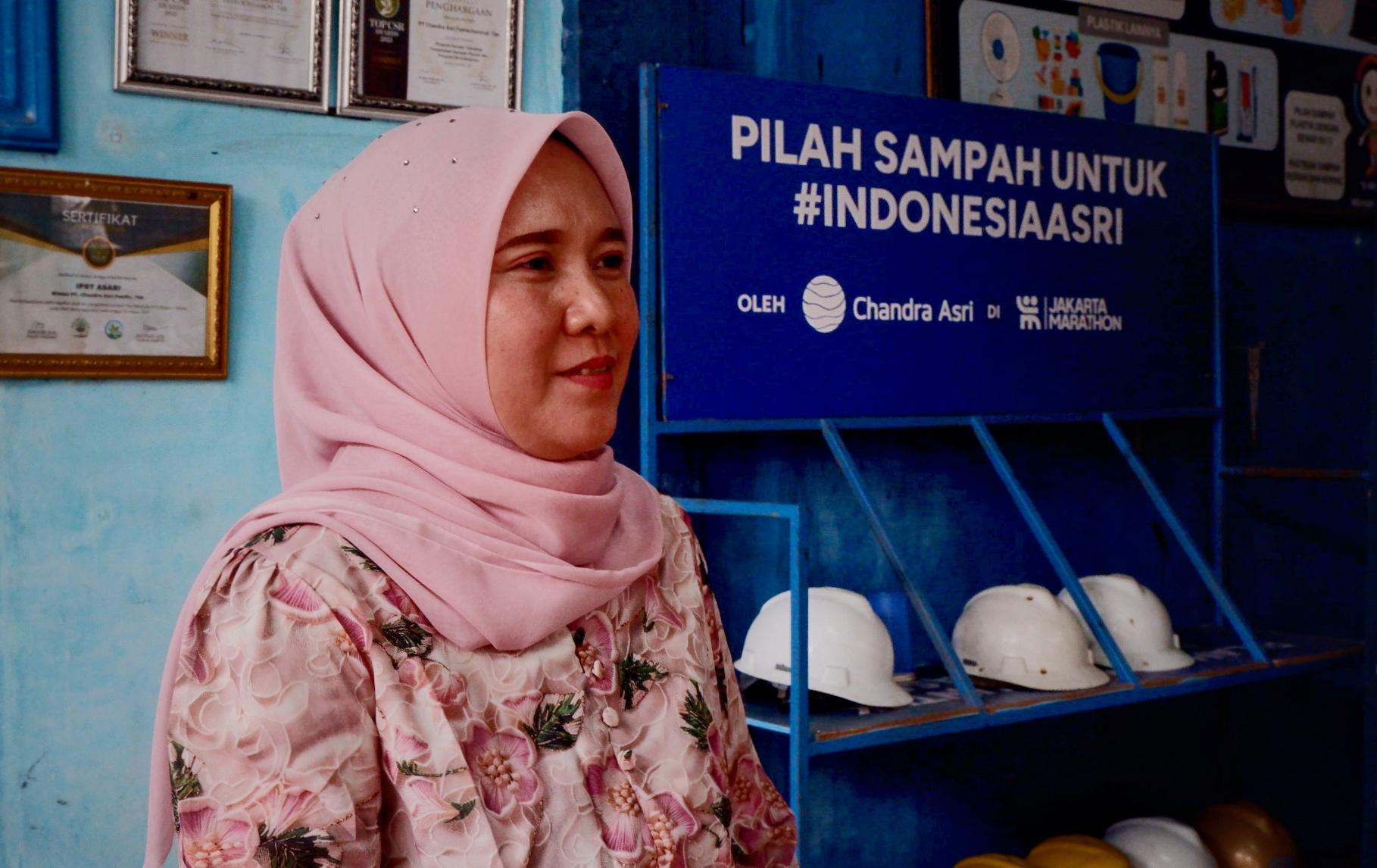
Her name is Wartini, a community volunteer at the Integrated Waste Management Facility (IPST) ASARI, a program facilitated by PT Chandra Asri Pacific Tbk (Chandra Asri Group). People around her know her better as Mrs. Titin. Her daily life is simple, much like other women in the community. She spends her time managing household responsibilities, interacting with neighbors, and actively participating in community activities. There is no distance between her and the people around her. It is through this closeness that her influence has grown.
“I am a housewife, and my daily activities are just like other housewives in general. I had already been collecting and sorting waste at home long before joining IPST ASARI,” Titin said at the beginning of her story.
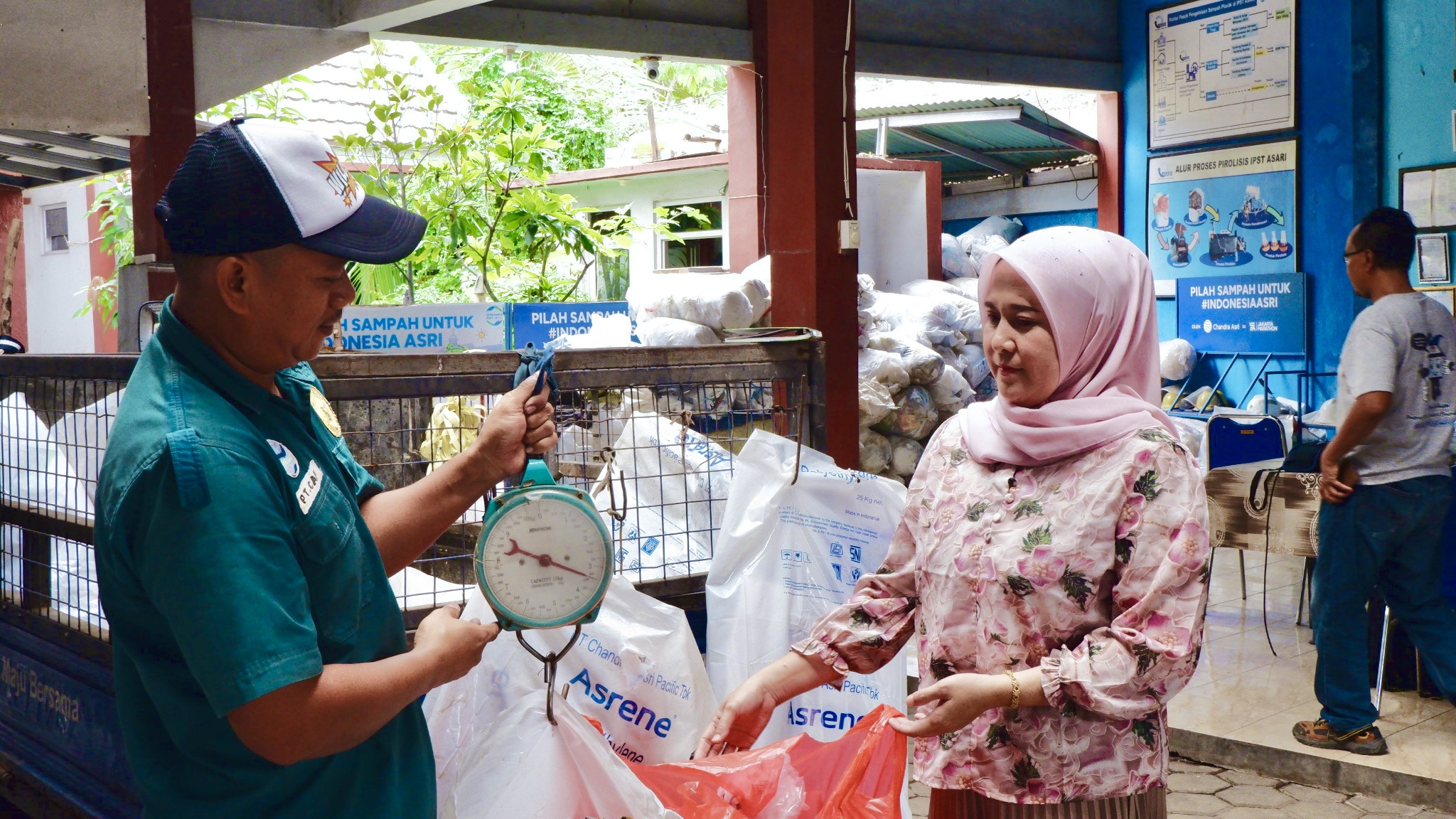
Her involvement with the IPST ASARI program strengthened her commitment even further. For Titin, the program is not merely about waste management, but also an effective way to change people’s behavior.
Through religious study gatherings at Majelis Taklim Babussalam, Titin began encouraging other women to participate in waste sorting. The education process was carried out gradually through simple approaches closely connected to their everyday lives.
“We frequently educate the women that there are many benefits from the habit of sorting waste. That’s what made them interested,” she explained.
Not only did Titin encourage others, but she also led by example. She believes change cannot happen through words alone.
“If we only spread the message without setting a direct example, it’s quite difficult. So I started with myself first,” Titin said.
From there, new habits slowly began to grow. Even after the religious gatherings, the sessions have now become a space where residents collect sorted waste, which is then picked up by the IPST ASARI team twice a week.
Titin admitted that changing people’s behavior toward waste sorting was not always easy. According to her, the biggest challenge was changing the mindset of residents who considered waste sorting troublesome.
“Changing behavior is not easy. Many people say it’s complicated to separate waste,” she revealed.
Even so, she never gave up. Through a gradual and consistent approach, changes slowly became visible. Today, most households have become accustomed to sorting their waste at home.
“Thank God, now every household is willing to sort their waste,” she said.
The transformation is striking compared to previous conditions, when household waste was simply thrown away without separation. For Titin, the impact of this change is very real. The environment has become cleaner, and residents feel helped because the sorted waste is regularly collected by the IPST ASARI team.
“The neighborhood has become cleaner and more comfortable, and we feel supported because there is a team that comes to collect the waste,” she said.
Of everything she has done, there is one thing that leaves the deepest impression on her: seeing changes in people’s behavior.
“I feel happy. Thank God, it means we succeeded in changing people’s behavior. I’m very proud,” Titin said.
Behind this achievement is an ongoing collaboration between the community, volunteers like Titin, and the support provided by Chandra Asri Group through IPST ASARI. Consistent education has become the key to ensuring that these changes continue and do not stop halfway.
“If the education stops, people may return to their old habits,” Titin said.
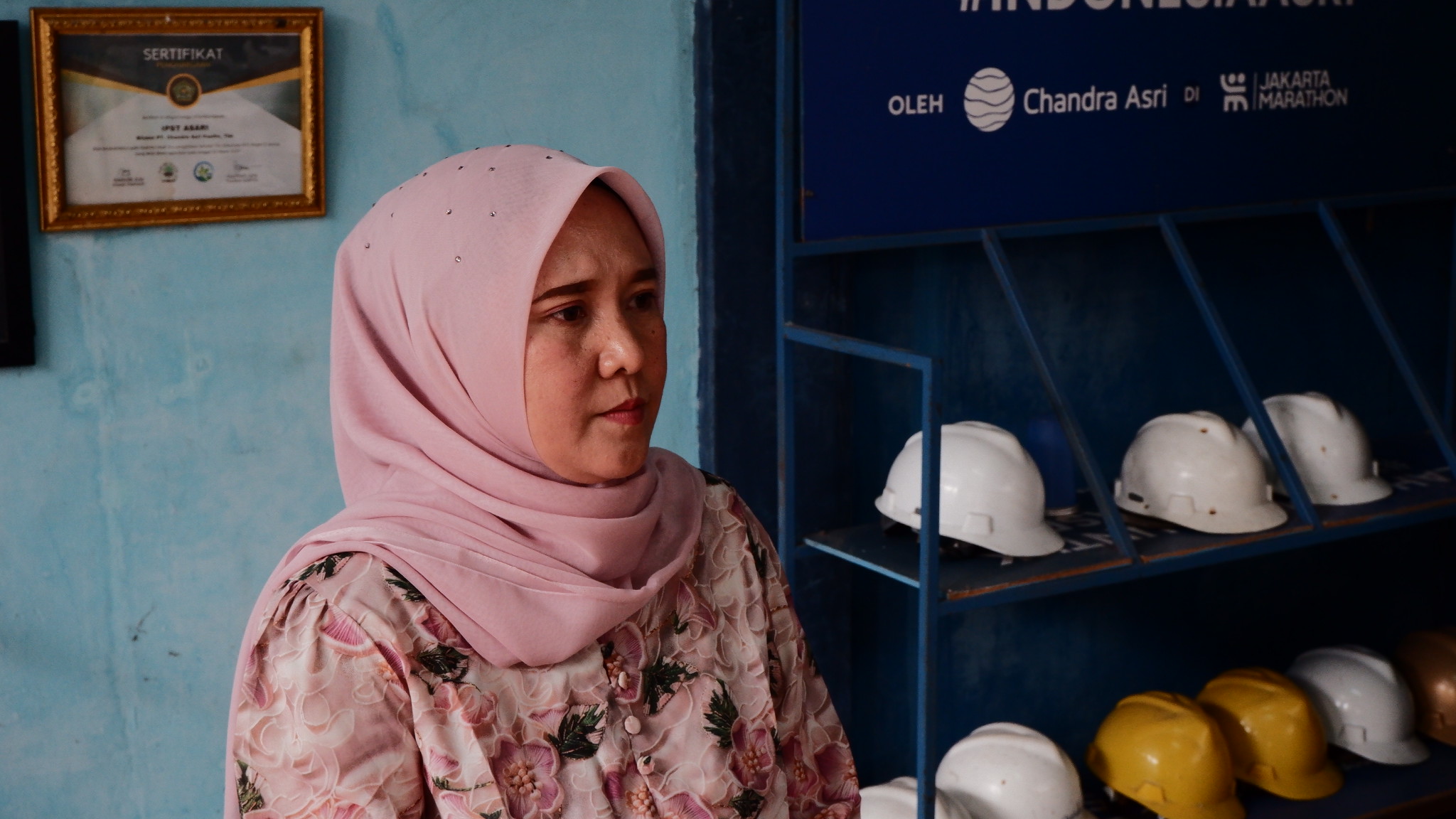
Chairman of IPST ASARI, Murad M. Yasin, believes that volunteers like Titin play a crucial role in building new habits within the community. According to him, behavioral change cannot happen instantly, but requires approaches that are close to residents’ everyday lives. This is why the involvement of community-level volunteers becomes an important bridge between the program and society.
“The changes we see today cannot be separated from the role of volunteers in the field. They are the ones who interact directly with residents every day, delivering education in simple and easily accepted ways,” he said.
Murad added that beyond managing plastic waste, IPST ASARI also focuses on building collective awareness so that waste sorting becomes part of people’s daily lives.
“The most important thing is maintaining consistency. Behavioral change takes time and continuous assistance. If the education stops, old habits usually return,” he added.
.png&w=3840&q=75)
Chandra Asri Group Holds Community Awareness 2026, Educating Panggung Rawi Residents on Gas Pipeline Safety
From Samangraya to the Industrial World: Arman’s Journey to Achieve His Dreams Through the PIPB Scholarship