.jpg&w=3840&q=75)
19-12-2025
Deden, Rangkai Asri, and Hope Taking Root in Patikang
“If it weren’t for Chandra Asri, I don’t know what would have happened to Lembur Mangrove.” Deden said this while gazing at the mangrove forest that has slowly begun to reclaim the muddy gaps beneath it. His voice was calm, yet filled with gratitude that was impossible to hide as if each word carried memories of a time when hope was nearly extinguished.
Few people know that before this transformation took place, Deden stood almost alone, facing countless challenges: waves of incoming waste, decaying trekking paths, and the gradual fading of community spirit. Today, Deden is recognized as the face of the revival of Lembur Mangrove Patikang.
Several years ago, the area was far from comfortable. Every morning, trash arrived like endless tides, plastic bottles, styrofoam, fragments of fishing nets all piling up around the mangrove roots. Visitors became scarce, and local residents began to give up on maintaining the ecotourism village.
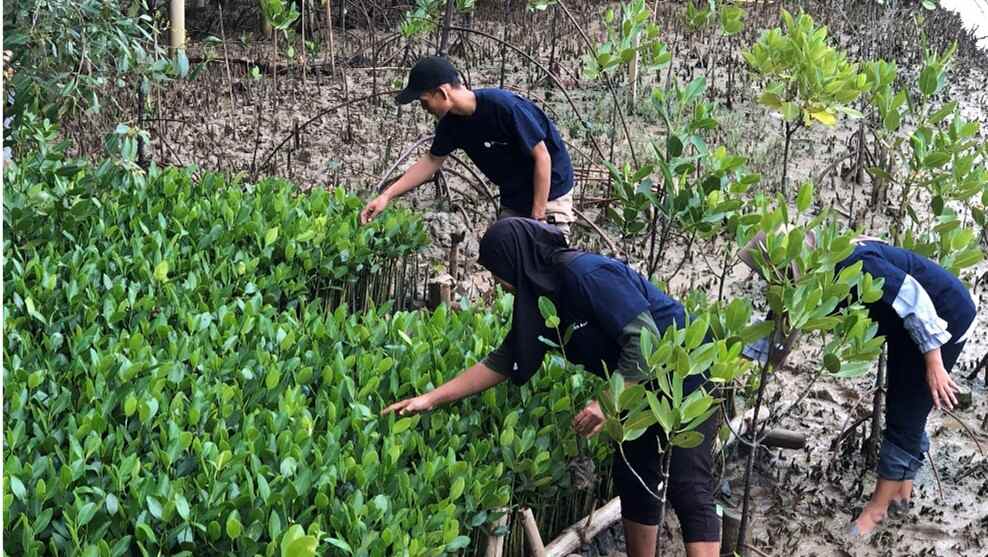
But not Deden. The middle-aged man continued sweeping the pathways by himself when others stopped moving forward. He kept planting mangroves, even though waves often washed away the seedlings. “So if not us, who else will protect this place?” Deden said. Behind his perseverance, he realized that passion alone was not enough. Lembur Mangrove Patikang needed a system, support, and tangible breakthroughs.
At that moment, PT Chandra Asri Pacific Tbk. (Chandra Asri Group) stepped in as a partner through the Rangkai Asri Program. As a leading energy, chemical, and infrastructure solutions company in Southeast Asia, Chandra Asri Group came not merely with assistance, but with a new, sustainability-based approach to managing an ecotourism village.
Deden still remembers the first day the Corporate Shared Value (CSV) team from Chandra Asri Group arrived. “They asked what the hardest problems were,” he recalled.
“I answered: waste and pathways that break easily.”
From those two issues, major changes began. Chandra Asri Group introduced eco-tracks made from recycled plastic pallets. The trekking paths that once deteriorated quickly were replaced with former industrial plastic pallets stronger, weather-resistant, and easy to clean.
“This is the first time I’ve seen tourists walk without fear,” Deden said with a smile.
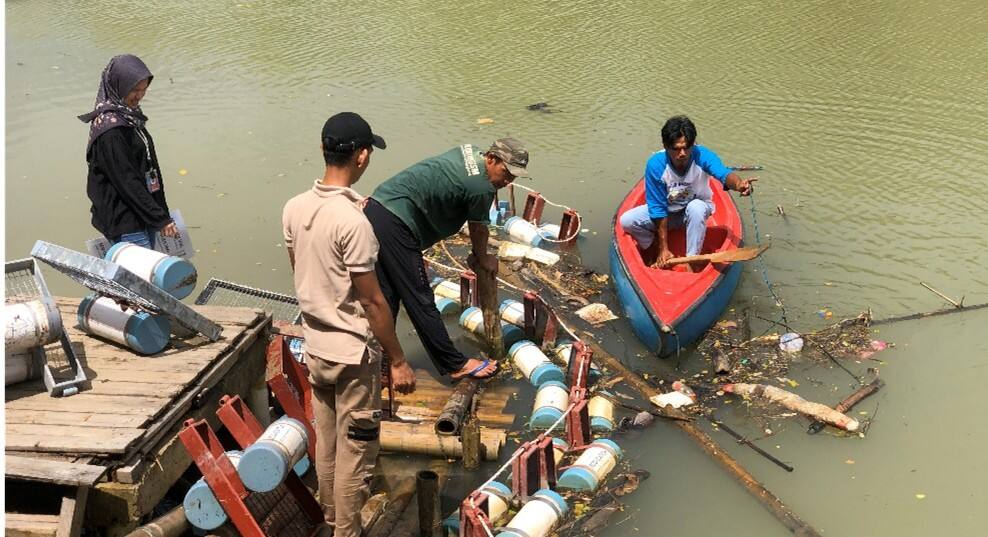
The initiative did not stop there. Chandra Asri Group also repurposed used operational pipes into effective waste traps, simple innovations with significant impact.
Every morning, Deden checks the devices, a small routine filled with meaning. “So much trash gets caught here. Without this, it would all end up in the mangroves,” he said while lifting pieces of waste trapped inside.
In Lembur Mangrove Patikang, plastic waste that was once considered worthless has now been transformed into boards and beams. These materials are used for educational facilities and tourism infrastructure. From problems, solutions are born.
Beyond protecting mangroves, Deden has become a mentor for local residents through the Waste Bank and the Lebak Buah Berseri Community Self-Help Group (KSM). He teaches them how to sort, collect, deposit, and process waste together with the village waste bank. Gradually, real change has taken shape. Waste no longer accumulates in the river, as it has been reduced starting from households. “People used to feel resigned. Now they feel proud,” he said.
The impact of this transformation is not only visible. Nature itself seems to tell a story. Biodiversity monitoring shows that mangrove cover has reached 78.5 percent classified as good. A total of 33 bird species have returned to the area, including protected species. Even footprints of the Asian small-clawed otter, a species listed in CITES Appendix I have appeared along the riverbanks, as if offering a quiet welcome home.
When the Community Moves Together
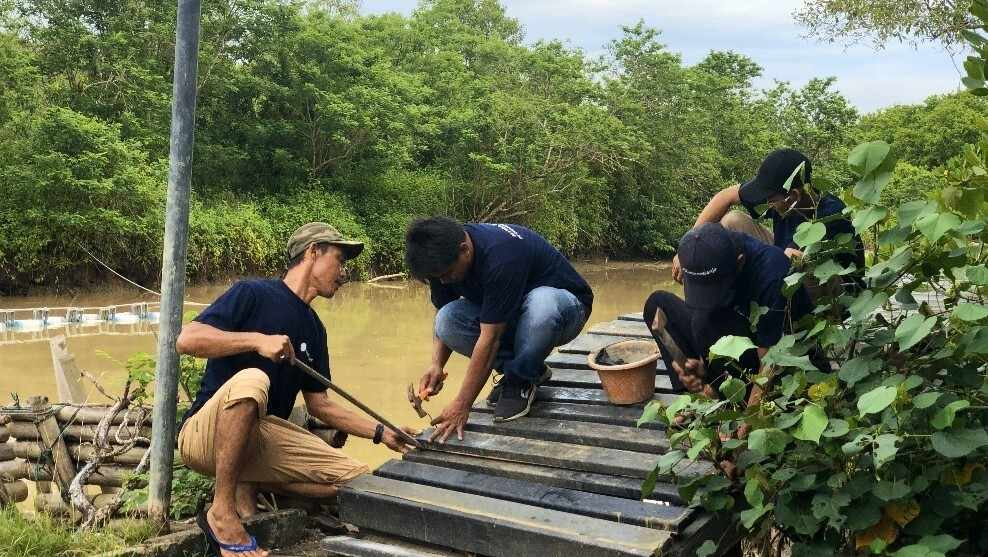
The presence of eco-tracks and waste traps has changed Patikang not only physically, but socially. Pokdarwis Putri Gundul, once weary and discouraged, has rediscovered its energy. Members now clean the paths together, guide visitors, and manage mangrove education spaces that are increasingly bustling with activity.
For Deden, the Rangkai Asri Program is not the finish line, but the beginning of a long journey. He dreams of more mangrove seedlings growing along the coast, ecotourism developing wisely, and communities becoming increasingly independent especially in waste management.
More than anything, his greatest hope is simple yet meaningful: that the children of Patikang can grow up believing their village has a future worth fighting for.
Deden, a Local Hero Proving That Change Can Begin with One Person
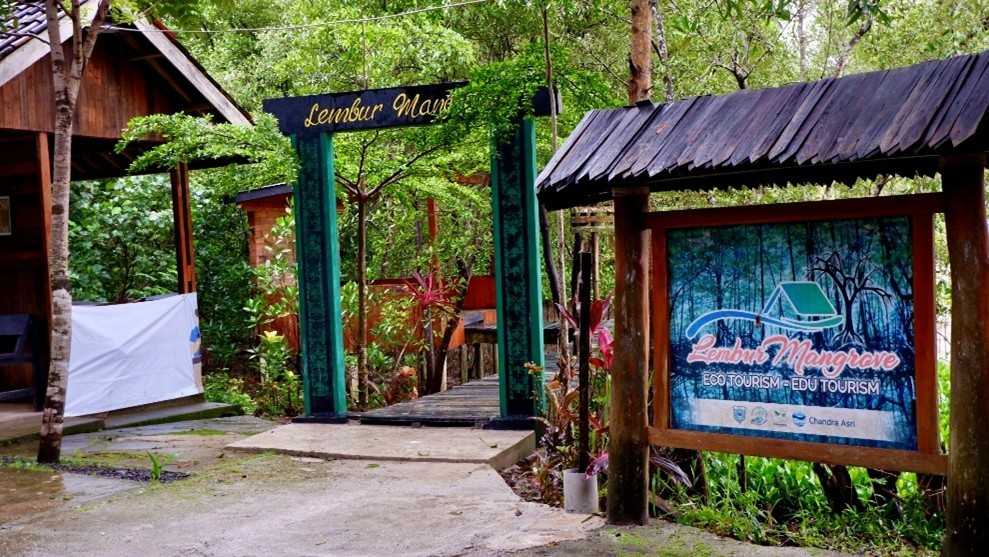
Patikang’s journey is a story of an ordinary man who chose to stay when many others left. He believes rivers can run clear again, mangroves can grow back, and small coastal villages can stand stronger if someone remains committed to protecting them.
In every eco-track walked upon, every mangrove seedling that survives, and every piece of waste stopped before reaching the river, there is always the trace of Deden’s footsteps.
A figure who brought Patikang back to life. A figure who turned hope into something that truly took root.
.png&w=3840&q=75)
-(1).jpg&w=3840&q=75)
Indonesia Asri Campaign and BEM UNTIRTA Encourage Waste Sorting Through Aksi Asri Operasi Semut in Serang
Minister of Environment Explores Chandra Asri Group’s Circular Economy Solutions at Invirotech 2026