

31-08-2026
UV Water Sterilizer: Find Out Its Role in Water Treatment
By Chandra Asri Group Editorial Team
A UV water sterilizer is a device used in water purification techniques to disinfect water. It is considered highly effective at eliminating microbiological contaminants from water.
This article explores the role of UV water sterilization in water treatment and its applications across various industries. Keep reading to find out more.
What Is a UV Water Sterilizer?
A UV water sterilizer is a device that uses a mercury ultraviolet (UV) lamp emitting at 253.7 nanometers. It is commonly used to disinfect drinking water.
Ultraviolet sterilization is considered one of the most effective disinfection methods because it can target and destroy microorganisms responsible for biological contamination in water. This method also does not alter the water’s characteristics, such as its pH or taste, and is easy to install, making it a practical choice for water disinfection.
In general, UV water sterilizers fall into industrial and commercial categories. For industrial water treatment, this device can be installed in wastewater treatment units, ultrafiltration systems, and reverse osmosis systems as an additional disinfection step.
On the other hand, commercial sterilizers are generally used by non-industrial businesses, such as car wash facilities, offices, hotels, and other establishments, to improve water quality.
Read also: Zero Liquid Discharge: Eco-Friendly Wastewater Solution
How Does a UV Water Sterilizer Work
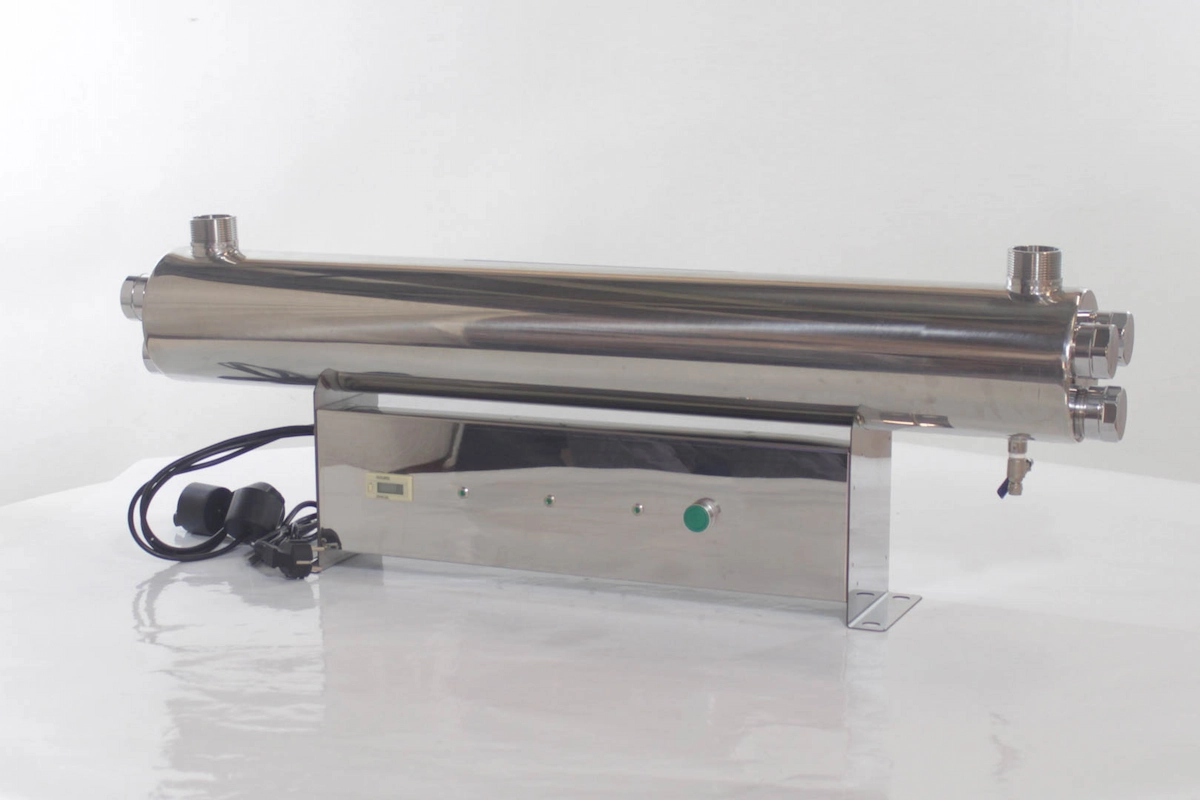
Source: Indotara Persada
This device uses a specialized lamp that emits ultraviolet light at a specific wavelength to disrupt microorganisms' DNA. This mechanism targets DNA because it plays a critical role in microbial reproduction and function. By destroying their DNA, microorganisms can no longer remain active, grow, or reproduce, preventing them from infecting other organisms.
A UV water sterilizer is a simple device, yet it provides highly effective disinfection. When the UV dose is properly maintained, microorganisms have very little chance of surviving exposure to ultraviolet light.
The device also has minimal risk of overheating, so no additional equipment is required to address this issue. In addition, UV disinfection does not require added chemicals, making it a more cost-effective option while minimizing the risk of chemical overdosing.
Advantages and Challenges of Using a UV Water Sterilizer
UV water sterilizers offer several benefits for clean water treatment processes, such as:
- Easy to maintain.
- Low energy consumption.
- Flexible installation and removal.
- Does not produce secondary pollution.
- Does not require additional chemicals for further disinfection.
- Does not pose a potential health hazard when used for drinking water treatment.
- Does not require a mixer.
- Does not produce odors in the water.
- Has a capacity of 40–2,500 gallons per minute (GPM).
- Can eliminate almost all types of biological organisms.
- Does not generate wastewater.
Despite these advantages, you also need to consider several challenges in using a UV water sterilizer, such as:
- Water needs to be pretreated through filtration or other methods to remove solids.
- The quartz sleeve needs regular cleaning to ensure proper performance.
- UV lamps are susceptible to declining output and therefore need to be replaced periodically. These lamps generally remain effective for only 12–18 months.
- UV water sterilizers also degrade over time, although the rate of decline is very low.
Read also: Ultrafiltration: How It Works & Its Difference with RO
UV Water Sterilizer Components
In general, a UV water sterilizer has four main components: the ultraviolet lamp, quartz sleeve, reactor chamber, and ballast. Here are the details of each:
- Ultraviolet lamp: This is the main component of a UV water sterilizer and disinfects the water. You can use various types of UV lamps, including standard, amalgam, and high-output lamps.
- Reactor chamber: This structure serves as the “housing” for the other UV water sterilizer components. Reactor chambers are typically made of stainless steel and are available in various sizes and shapes.
- Quartz sleeve: A cylindrical glass tube that protects the UV lamp from water without blocking its disinfection capabilities.
- Ballast: A system that regulates the electrical power supplied to the lamp.
Applications of UV Water Sterilizer
UV water sterilizers are used across a wide range of industries and businesses, such as:
- Wastewater treatment: This device can disinfect wastewater so it can be reused for other industrial processes.
- Food industry: UV sterilization helps ensure food products are safe for human consumption.
- Pharmaceutical industry: UV sterilization produces water safe for pharmaceutical formulation processes.
- Cosmetic industry: Water free from pathogens and microorganisms can help extend the shelf life of cosmetic products.
- Households: This device can disinfect water from wells or municipal sources, making it safer to drink.
- Laboratories: This device removes biological contaminants from water to prevent them from affecting laboratory test results.
Trust Chandra Asri Group for Your Industrial Water Treatment Needs!
Clean, safe water is essential to operational processes to ensure the products produced are safe and high quality. This is why disinfection systems, such as UV water sterilizers, play an important role in maintaining water quality before it is used.
For industrial water treatment, Chandra Asri Group, through its associate company PT Krakatau Tirta Industri (KTI), provides comprehensive water solutions, including wastewater treatment, clean water, and demineralized water treatment.
KTI manages the operation and maintenance of the Biotreatment Blast Furnace Wastewater Treatment Plant (WWTP) at the PT Krakatau Steel Complex, which treats wastewater biologically. KTI also operates the final wastewater treatment facility managed by PT Krakatau Blue Water, as well as a Water Recycle Plant (WRP) for treating wastewater from buildings.
Moreover, KTI operates the Krenceng and Cidanau Water Treatment Plants (WTPs) for clean water treatment, along with several Water Treatment Plants for demineralized water production.
As #YourGrowthPartner, Chandra Asri Group and KTI are committed to providing industrial water that meets environmental quality standards while enabling treated wastewater reuse. So, trust us to meet your industrial water supply needs!
Related Posts: What Is a Reverse Osmosis System? Uses and Advantages

Blow Molding: How It Works, Types, and Materials Used

Customs Clearance: Steps, Documents, and Inspections
