

05-11-2026
Blow Molding: How It Works, Types, and Materials Used
By Chandra Asri Group Editorial Team
Key Takeaways:
- Blow molding is one of the plastic molding processes commonly used in many industries.
- Several examples of blow molding products are drinking bottles, medicine bottles, medical equipment, and so on.
- Blow molding generally uses PET, polypropylene (PP), or polyethylene (PE) to produce final products.
Blow molding is one of the plastic molding methods typically used in industries, especially for producing containers and packaging. PET plastic is among the plastics used in blow molding for plastic bottles.
This article explains what blow molding is and how it works. To learn the information, read this article to the very end.
What Is Blow Molding?
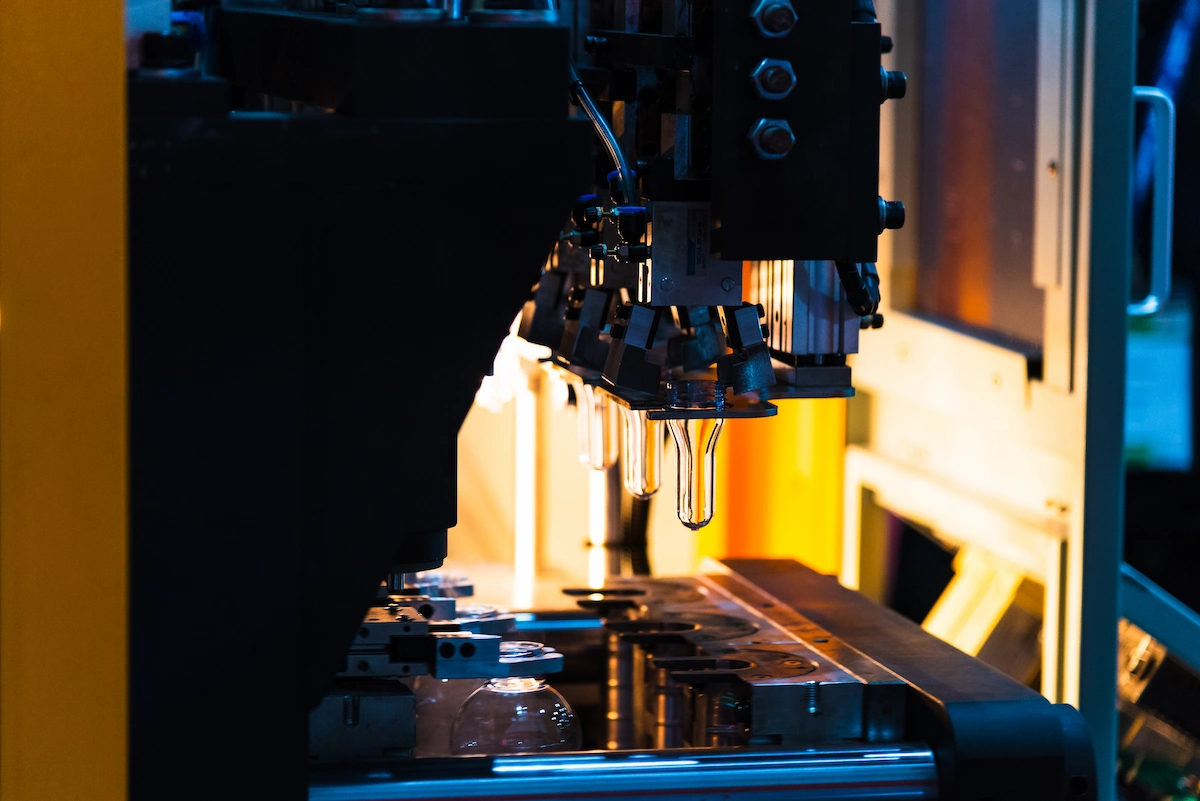
Blow molding is a manufacturing process that creates a hollow inside a plastic product. This method is widely used not only in the packaging industry for making plastic bottles but also in the automotive industry for making tanks and the agricultural industry for making irrigation components.
In general, blow molding utilizes heat to soften plastic, then shapes it into the mold using air pressure. This method is widely used due to its cost-effectiveness, especially for industries that make thousands of similar products, such as containers and tanks.
Commercial blow molding began in the 1930s, when bottle production developed. Yet, industries had not developed plastic raw materials, making the quality insufficient for markets.
This plastic molding process gained momentum when industries developed HDPE and LDPE, plastics that are strong and high-quality enough for blow molding.
Related Topics: What Is Polymerization? Types, Mechanism, and Examples
How Blow Molding Works
Fundamentally, blow molding works in five steps: heating the plastic materials, preforming, closing the mold, injecting compressed air, and trimming the final products. Here is the complete information:
1. Heating Plastic Material
First, plastic pellets, such as PET and HDPE, are fed into the extruder to be melted into a homogeneous material. This process uses a controlled temperature to melt the plastic optimally without losing its properties.
2. Plastic Preforming
The preforming process depends on the blow molding method. For example, in injection blow molding, preformed plastic is molded by injection in a shaped neck. Then, for extrusion blow molding, a parison will be extruded vertically between open molds.
3. Closing the Mold
After preforming the plastic, the mold will be closed and locked by leaving one top opening for air pressure insertion.
4. Inserting the Compressed Air
Air is blown into the plastic until it expands against the cold mold surface. As a result, the plastic cools and hardens more quickly, forming a hollow product. To ensure efficient cooling and consistent results, technicians can incorporate water cooling and multi-zone temperature control.
5. Discharging and Trimming the Final Product
Once hardened, the plastic product is removed from the mold, and its edges are trimmed to ensure a neat, consistent shape that meets established standards. In addition to trimming, the product may undergo other finishing processes, such as coloring, applying a special coating, labeling, or assembling it with other components.
Types of Blow Molding
The blow molding process is divided into several types tailored to product specifications and material types, such as extrusion blow molding, injection blow molding, and stretch blow molding.
1. Extrusion Blow Molding (EBM)
EBM is the most common, simplest, and most affordable type of blow molding compared to others. With this method, plastic pellets are fed into an extruder to form a hollow tube called a parison.
Next, a mold is closed around the parison. Then, compressed air is blown into the parison, causing the plastic to expand and completely fill the mold cavity. Once fully expanded, the plastic is cooled to solidify.
EBM often uses polyethylene and polypropylene plastics. Some products made using EBM include cleaning product bottles, milk jugs, and automotive tanks. This process has several limitations: it is not well-suited for making PET beverage bottles because they require higher strength and clarity, and the wall thickness may lack precision.
Uncover other topics: What Is Plastic Made of? Here Are the Materials & Process
2. Injection Blow Molding (IBM)
Unlike EBM, IBM uses preformed plastic created through an injection molding process. First, molten plastic is injected into a mold to create a preliminary shape (preform) and then cooled.
The still-warm, preformed plastic is then transferred, usually along with a core rod, to a blow mold. The preform is filled with compressed air until it expands to fill the mold.
IBM is suitable for producing small containers that require dimensional precision and a high-quality appearance, such as medicine bottles and cosmetic packaging. However, this process is less suitable for large containers and is less commonly used than EBM.
3. Stretch Blow Molding (SBM)
SBM adds a stretching stage to the IBM process. First, the preformed plastic is molded using injection molding, reheated, and stretched both parallel and perpendicular to the mold before being blown into the mold. This stretching process aligns the polymer chains, resulting in a clearer and stronger product.
The SBM process is commonly used in the production of PET plastics, including PET bottles for bottled drinking water, juice bottles, and carbonated beverage bottles. However, SBM is primarily used for PET and certain specialty plastics, making it less flexible for products other than bottles.
Types of Plastic Raw Materials for Blow Molding
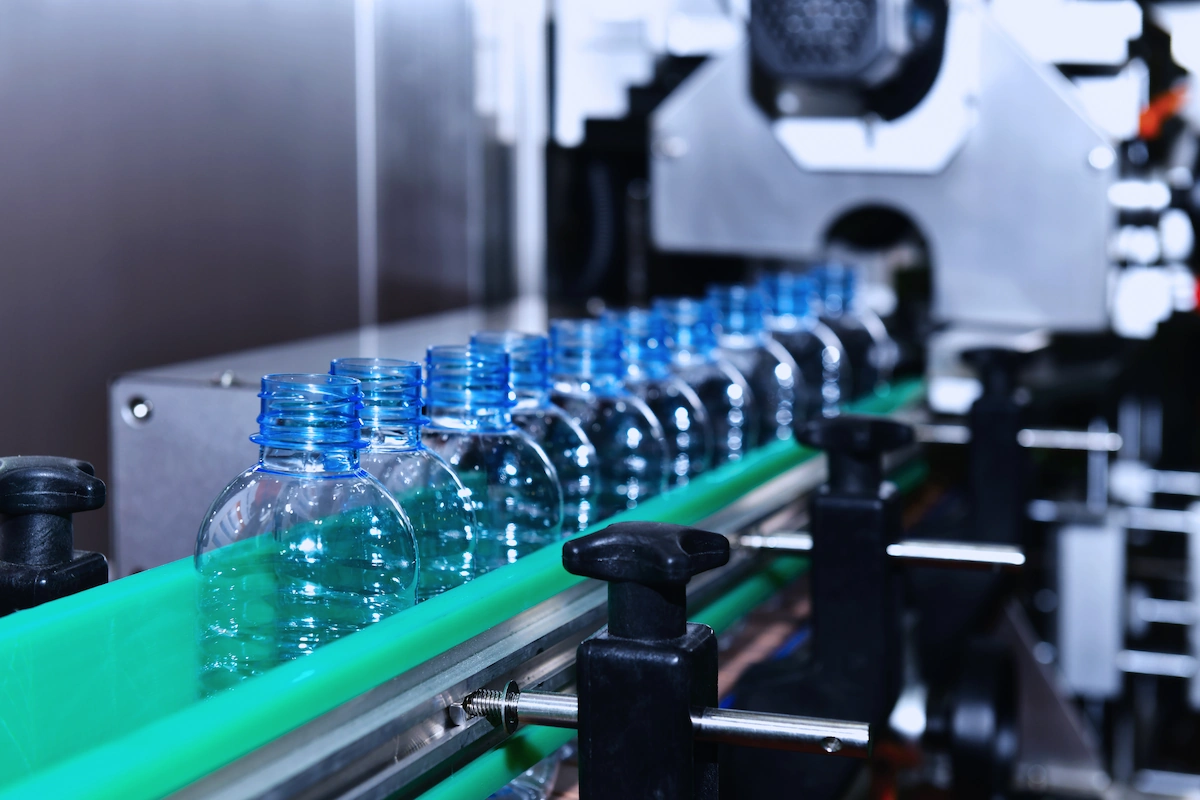
There are some types of plastics used in the blow molding process, from HDPE to PET. Below is the list:
- HDPE: Quite hard, easy to color, and translucent. This plastic is used for making tanks, industrial drums, beauty product bottles, and other items.
- LDPE: Softer than HDPE, easy to color, and translucent. This plastic is commonly used for making ship fenders and squeeze bottles.
- Polypropylene (PP): Translucent, moderate to high hardness, easy to color, and can be sterilized using an autoclave. PP is used to make food containers and tubes for automotive components.
- Polyethylene terephthalate (PET): Clear, quite hard, can withstand moisture well, and is easy to color. Generally, PET is used to make bottled water.
- Polyamide/nylon: Quite hard, strong, and durable. Nylon can be found in automotive tubes.
- Polyvinyl chloride (PVC): Clear, easy to color, and durable. PVC can be found in clear bottles for oil and medical tubes.
- Polycarbonate (PC): Quite hard, clear, impact-resistant, and easy to color. PCs can be found in large bottles, syringes, and containers.
Let Chandra Asri Group Handle Your Quality Plastic Needs!
Aside from paying attention to the proper molding methods for plastic products, you also need to ensure that the plastic raw materials used are high-quality and meet industry standards.
As a company specializing in Energy & Chemicals, Integrated Infrastructure, and Mobility Solutions, Chandra Asri Group provides premium plastic raw materials, such as linear-low-density polyethylene (LLDPE), metallocene LLDPE, HDPE, and polypropylene.
Also, Aster, a Singapore-based subsidiary of the Chandra Asri Group, supplies high-quality plastic raw materials, such as ethylene, HDPE, propylene, styrene, butadiene, and many more.
As #YourGrowthPartner, we are ready to help you meet your needs for premium plastic raw materials and other chemical materials to support efficient operational processes. Discuss your industry’s needs and get the best offer!
Read on: Understanding Thermoplastics, Their Characteristics, & Uses
Blow Molding: How It Works, Types, and Materials Used

Customs Clearance: Steps, Documents, and Inspections
