

31-08-2026
Underground Electrical Wire: Types, Components, & Advantages
By Chandra Asri Group Editorial Team
Have you ever wondered where electrical wires are located in urban, industrial, and densely populated areas? In addition to being suspended overhead, some wire installations can also be placed underground.
Underground electrical wires connect substations to customers and have become a key component of urban electricity distribution systems. So, why are electrical grids installed underground? Find out more information below.
What Are Underground Electrical Wires?
Underground power wires are products specifically designed for underground installation (direct burial, wire tunnels, or conduits) to transmit electrical power or communication signals.
Unlike overhead electrical wires, underground wires must adapt to soil conditions, withstand soil pressure and corrosion, and address issues caused by inefficient heat dissipation within the system.
Underground electrical wire systems are essential in urban areas because they supply power to residential areas, office buildings, industrial zones, public facilities, and economic hubs such as shopping malls and markets.
Components of Underground Electrical Wire
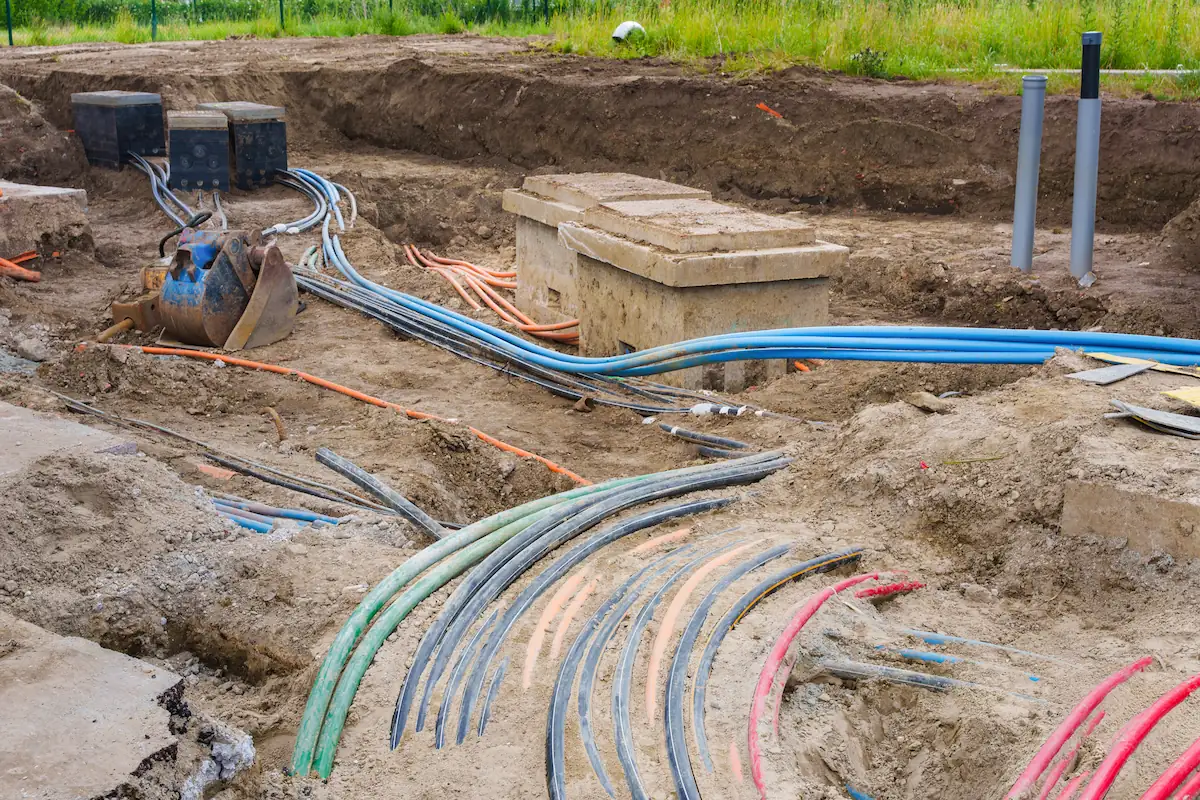
Underground electrical wires are designed with multiple layers that complement and protect one another. Here are some of their key components:
- Conductor: Made of high-purity copper or aluminum. This component forms the core of the transmission path. Smaller conductors are typically used for residential electricity distribution, while larger conductors are used for heavier loads.
- Conductor shield: Made of semiconductive polyolefin. This layer helps manage electric field concentrations caused by irregularities on the conductor surface while protecting the insulation layer.
- Insulation layer: Can be made of XLPE (cross-linked polyethylene), EPR (ethylene propylene rubber), or PVC (polyvinyl chloride). Each material offers its own advantages, such as resistance to heat, acids, and weather conditions.
- Insulation shield: Made of a semiconductive material that helps distribute the electric field evenly, ensures insulation stability, and conducts fault currents.
- Metallic shield: Serves as a grounding path and provides protection against fault currents. It typically consists of copper tape and copper wires.
- Separator layer: This layer can be made of nonwoven fabric or PVC tape. It protects the metallic shield, withstands pressure, and prevents water ingress.
- Water-blocking material: This component is important for medium- and high-voltage wires. It prevents water from entering the electrical components, which could lead to system failure.
- Armor layer: Designed to withstand mechanical stress and prevent damage caused by it. This layer can consist of steel wire armor, steel tape armor, or aluminum wire armor, each offering its own advantages.
- Outer sheath: The outermost protective layer, made of PVC, polyethylene, or low-smoke zero-halogen (LSZH) material.
Read also: Power Plants: Definition, Types, and Examples in Indonesia
Types of Underground Electrical Wire
Underground electrical wires are categorized by the number of conductors, voltage level, and the method used to install them underground. Here are the details:
1. Based on the Number of Conductors
Based on the number of main conductors, underground electrical wires are divided into several types:
- Single-core wire: This wire has only one main conductor. It is generally used to transmit electricity over long distances. It is lightweight, flexible, and can carry only one main power flow.
- Three-core wire: This wire has three main conductors, and it is commonly used in large electrical systems, such as factories. This type of wire is more robust and can carry three power flows simultaneously.
- Multicore wire: This type of wire contains four or more main conductors. It suits complex electrical systems.
2. Based on Voltage Level
Underground electrical wires are divided into low-, medium-, and high-voltage wires. The details are as follows:
- Low-voltage (LV) wires: These wires can carry electrical power at voltages of up to 1 kV. You can find them in homes, retail stores, and other places around us.
- Medium-voltage (MV) wires: These wires can transmit electricity between 1 kV and 35 kV. MV wires connect power plants to high-rise buildings in city centers and industrial areas.
- High-voltage (HV) wires: These wires can transmit electricity from 36 kV to 150 kV, or even higher. HV wires carry very large amounts of electrical energy over very long distances.
3. Based on Installation Method
There are several ways to “bury” wires underground, such as:
- Direct burial: Technicians dig a trench, place the wire directly into the ground, and then cover it with soil. This method is more affordable, but when a wire is damaged, technicians must trace the wire route to locate the fault.
- Tunnel installation: Wires are installed in underground tunnels. This method is commonly found beneath city centers and makes it easier for technicians to perform routine maintenance.
- Wire duct installation: Wires are installed inside long concrete ducts and placed underground. This type of installation is easy to access and inspect, allowing repairs to be carried out more efficiently.
Advantages and Disadvantages of Underground Electrical Wire
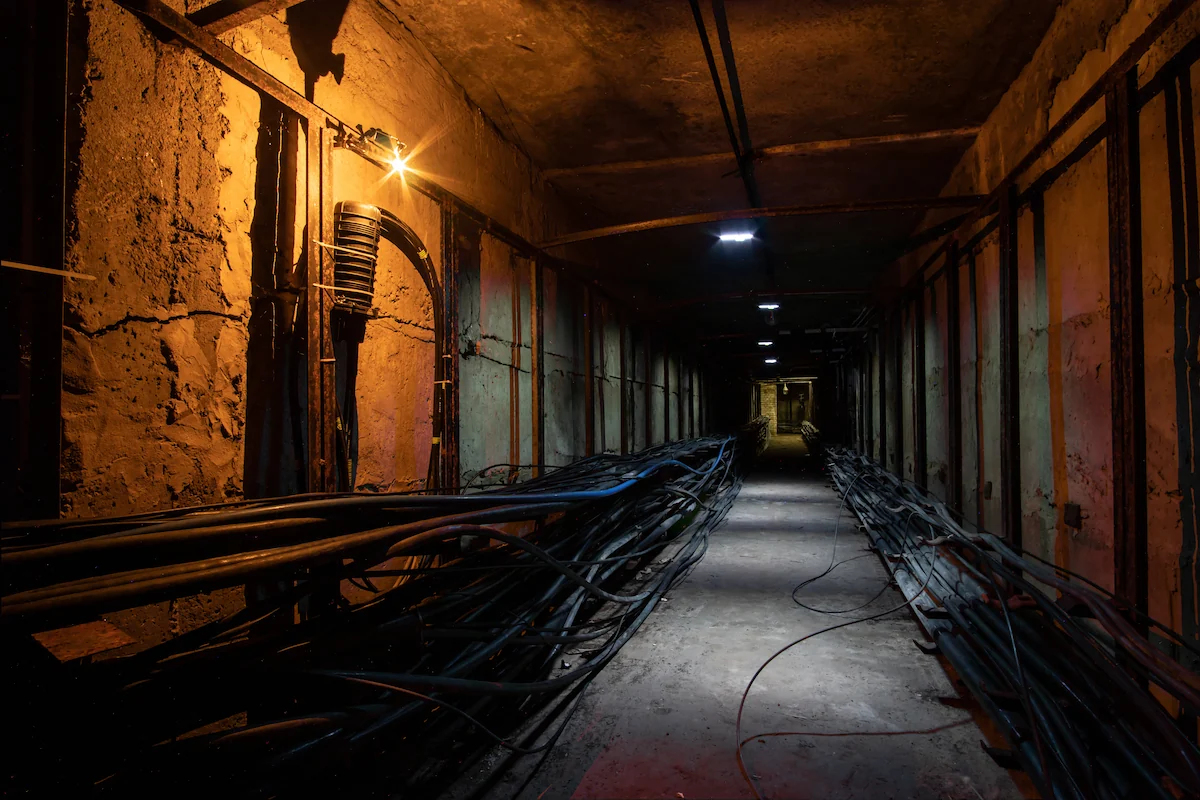
Underground electrical grids have several advantages and disadvantages that should be considered, such as:
Advantages of underground electrical grids:
- Improve aesthetics because the wires are buried underground.
- Resistant to weather conditions such as lightning, rain, and strong winds.
- More reliable because they have minimal contact with people and animals and are better protected from falling trees.
- Produce less magnetic radiation.
- Do not require cutting down trees for wire installation.
Disadvantages of underground electrical grids:
- Higher initial installation costs because they require specialized equipment and skilled technicians.
- More difficult to maintain due to limited underground access.
- Wire repairs take longer.
More to explore: Captive Power Plant: Definition, Types, and Benefits
Differences Between Underground and Overhead Electrical Wires
When discussing underground electrical wire installations, you may compare them with overhead electrical wires. So, what are the differences between the two? Here are the details:
| Overhead Electrical Wire | Underground Electrical Wire | |
| Installation cost | Lower. | Higher. |
| Reliability | More susceptible to power outages caused by bad weather, but easier to repair because the wires can be seen directly. These wires can also be repaired or replaced immediately in an emergency. | Minimal risk of power outages, but more difficult to repair. These wires are highly reliable and less exposed to environmental threats. |
| Appearance | Poles and wires are visible. | Wires and grids are hidden underground. Kabel dan jaringan tersembunyi di bawah tanah. |
| Maintenance | Tree branches need trimming so they do not obstruct the wire grid. | Requires minimal maintenance. |
| Safety | Poses a greater risk of endangering the public. | Minimal risk of public contact. |
| Applications | Suitable for rural areas because they provide easier access to electricity. However, overhead electrical wires can also be used in urban areas. | Suitable for urban areas and smart cities that prioritize aesthetics. |
Chandra Asri Group, Your Reliable Electricity Services Provider for Industry
An electrical power grid is one of the key infrastructures in the industrial sector because it supports day-to-day operations. Therefore, a reliable electricity supply must be maintained under all conditions.
Chandra Asri Group, as an energy, chemical, and infrastructure solutions company, provides electricity services for industrial customers through its subsidiary, PT Krakatau Chandra Energi (KCE).
This business line covers operation and maintenance (O&M), engineering, procurement, and construction (EPC), as well as transformer and electric motor repair and overhaul services. We provide testing services, substation electrical power installation, heavy equipment and testing equipment rentals, and more.
KCE has served more than 200 industrial customers and over 1,500 residential customers, providing a reliable electricity supply.
So, make sure your company's operational electricity needs are met with Chandra Asri Group, #YourGrowthPartner!
You May Also Like: Electrical Blackout: Causes, Effects, & How to Deal with It

Blow Molding: How It Works, Types, and Materials Used

Customs Clearance: Steps, Documents, and Inspections
