

31-08-2026
Off-Grid Solar Panel System & the Difference to On-Grid System
By Chandra Asri Group Editorial Team
Solar power plants (SPP) are a renewable breakthrough that has gained much popularity, especially in supporting energy diversification and resilience. This power plant is classified into several types based on your needs; among them is an off-grid solar panel system.
An off-grid solar panel system is often compared to the on-grid one. Yet, both have differences in features and mechanisms. This article explains the off-grid solar power plant scheme and its distinction from an on-grid scheme. So, read the complete article below!
What Is an Off-Grid Solar Panel System?
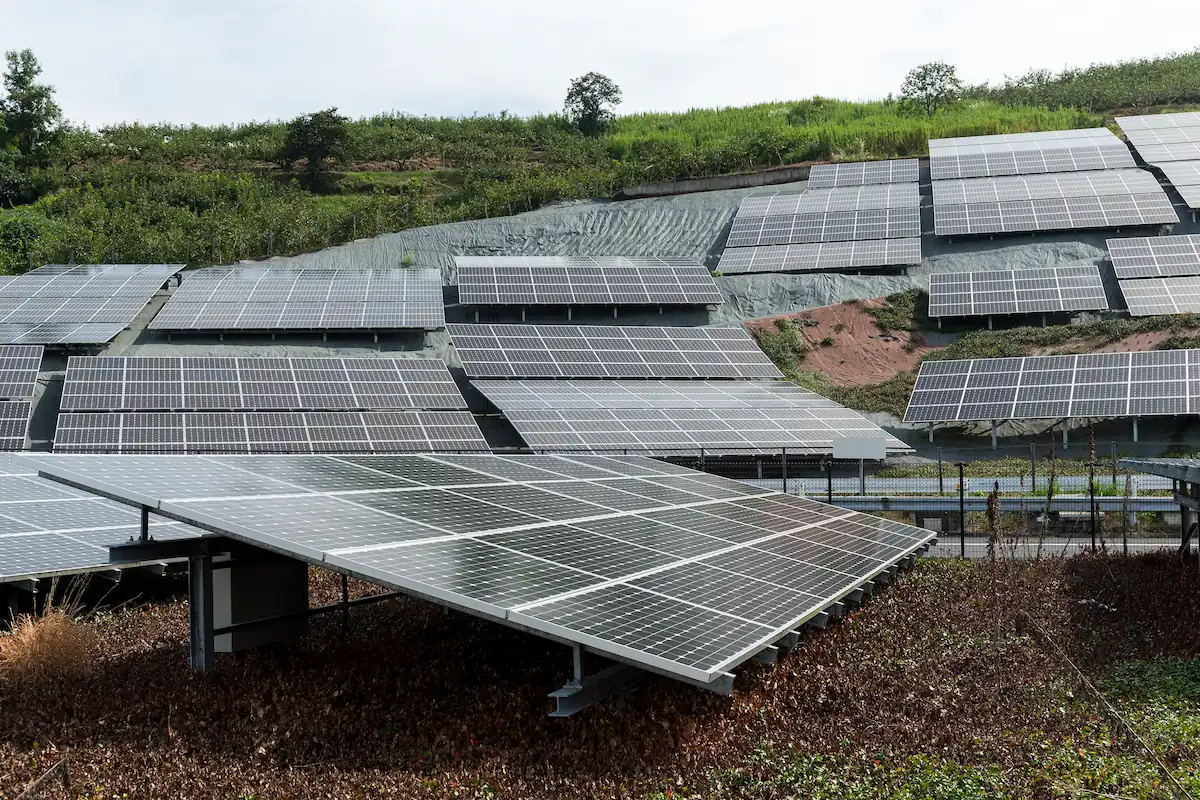
An off-grid solar panel system operates without a conventional grid. This system relies on a battery to store the electricity for later use according to your needs.
This type of power plant is ideal for remote areas where the conventional grid is not available. It is also suitable for an independent energy scheme since it can be used continuously as long as it has power, regardless of the weather conditions at the moment.
Since it relies on a battery, this solar panel can withstand power outages as long as the battery power remains. To work optimally, you need a high-quality battery and advanced solar panel installation.
In addition, despite being more independent, the stored energy is still limited and can run out. Therefore, you must monitor the power consumption.
Discover more: Chandra Asri Group's Annual Reports
Components of an Off-Grid Solar Panel System
An off-grid solar panel system has several components, such as:
1. Solar Panels
Solar panels are the most important component in a solar power plant. They capture sunlight and convert it into direct current. In this solar power system, the electricity can be used immediately or stored in a battery.
Solar panels come in several types, such as monocrystalline and polycrystalline. Monocrystalline panels are made from a single silicon crystal, making them more efficient. In contrast, polycrystalline panels contain multiple silicon crystals, making them more affordable but less efficient.
As for installation, you can choose between rooftop or ground-mounted systems, depending on the amount of sunlight exposure and the available land. If you have a large plot of land, you can install solar panels on the ground. However, for limited space, a rooftop installation is more sufficient.
2. Battery
Batteries are also an important component in off-grid solar power systems. They serve to store excess energy from solar panels to be used when sunlight is insufficient, such as at night.
There are several types of batteries commonly used in these power systems: lithium batteries and lead-acid batteries, which are further divided into flooded and AGM batteries. Lithium batteries can be stored without ventilation, are more durable, require minimal maintenance, and are safe to use.
Flooded batteries are a more economical option compared to lithium batteries, but their electrolyte levels must be checked frequently. Meanwhile, AGM batteries are more affordable than lithium batteries but more expensive than flooded batteries. AGM batteries require minimal maintenance but have a shorter lifespan.
3. Power Charging Control
It controls the electricity flow from the solar panel to the batteries and vice versa. In simple words, power charging control prevents overcharging, allowing the battery to work efficiently and last longer.
4. Inverter
The inverter converts direct current into alternating current for household use. An off-grid solar power system can have a backup generator in addition to the primary parts listed above. This system is designed to operate day and night. However, there are times when weather conditions are unfavorable, resulting in insufficient stored electrical energy. If this happens, you can rely on the backup generator to ensure that your building or home remains powered.
Worth reading: 12 Types of Power Plants for Alternative & Renewable Energy
Differences Between On-Grid and Off-Grid Solar Panel Systems
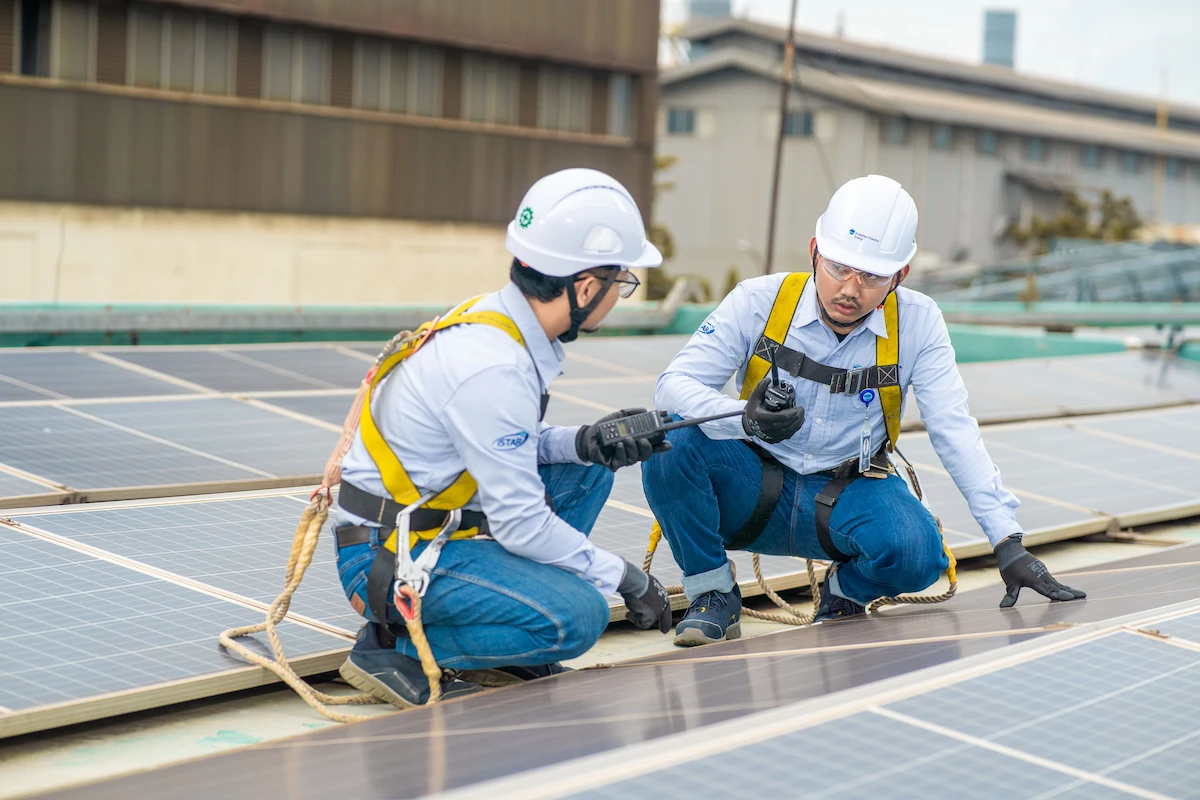
Before deciding on the right solar panel system for you, it is important to know the differences between on-grid and off-grid solar panel systems. Below is the information:
| On-Grid Solar Panel System | Off-Grid Solar Panel System | |
| Ability to access energy | Relying on solar energy and conventional grids. | Relying completely on solar energy and storing it in batteries. |
| Power outage | When there is no sunlight or the conventional power grid is unavailable, this solar power plant will have difficulty generating electricity, making it prone to outages. | Can withstand the power outage impact as long as the stored energy is sufficient. |
| Electricity bills | Despite using an on-grid system, you still need to pay the bills because the grid is still connected. | You do not need to pay the bills because of full reliance on the solar panels. |
| Usage cost | You can save on electricity costs by utilizing two power sources. The initial investment is also more affordable since it does not require batteries. So, you can immediately save on electricity costs from both sources at once. | You do not have to pay electricity bills, but the initial investment for installing a solar power system is quite significant because it requires advanced technology. Even so, these power systems require little maintenance, making them a sound long-term investment. |
| Location | Ideal for areas with great access to the conventional grid, such as urban areas. | Ideal for remote areas that are difficult to access the conventional grid. |
| Needs | When you need backup electricity. | When you need a reliable electricity source for various conditions that is low-maintenance and can operate all day long. |
| Energy efficiency | You can use the solar panel only when needed because it relies on the conventional grid. | You must pay attention to your energy consumption to maintain energy availability, since it relies heavily on solar energy and stored power. |
On-Grid and Off-Grid Solar Panel Systems Solution from Chandra Asri Group
Solar power systems are one form of renewable energy that continues to be promoted by the government, particularly to achieve energy independence and resilience. To decide between an off-grid or on-grid solar power system, you should consider your needs and infrastructure accessibility.
Chandra Asri Group, as a leading energy solutions provider in Southeast Asia, offers solar power system installation through its subsidiary, PT Krakatau Chandra Energi (KCE), which provides four solar power system options: on-grid, on-grid with a battery backup system, off-grid, and hybrid.
As #YourGrowthPartner, we are committed to providing the best services and products tailored to your industry’s needs. So, do not hesitate to entrust your company’s new and renewable energy needs to us!
Read also: What Is Clean Energy? Benefits, Types, and Examples

Blow Molding: How It Works, Types, and Materials Used

Customs Clearance: Steps, Documents, and Inspections
