

28-08-2026
China's Renewable Energy: What Can We Learn from Its Plans?
By Chandra Asri Group Editorial Team
China remains one of the world’s largest consumers of non-renewable energy. Yet, it is simultaneously emerging as a global leader in renewable energy development. This highlights the complexity of balancing economic growth with a cleaner energy transition.
This article reveals how China steadily shifts toward renewable energy, along with the challenges and strategies. Read this article completely to learn thoroughly.
An Overview of Electricity Consumption in China
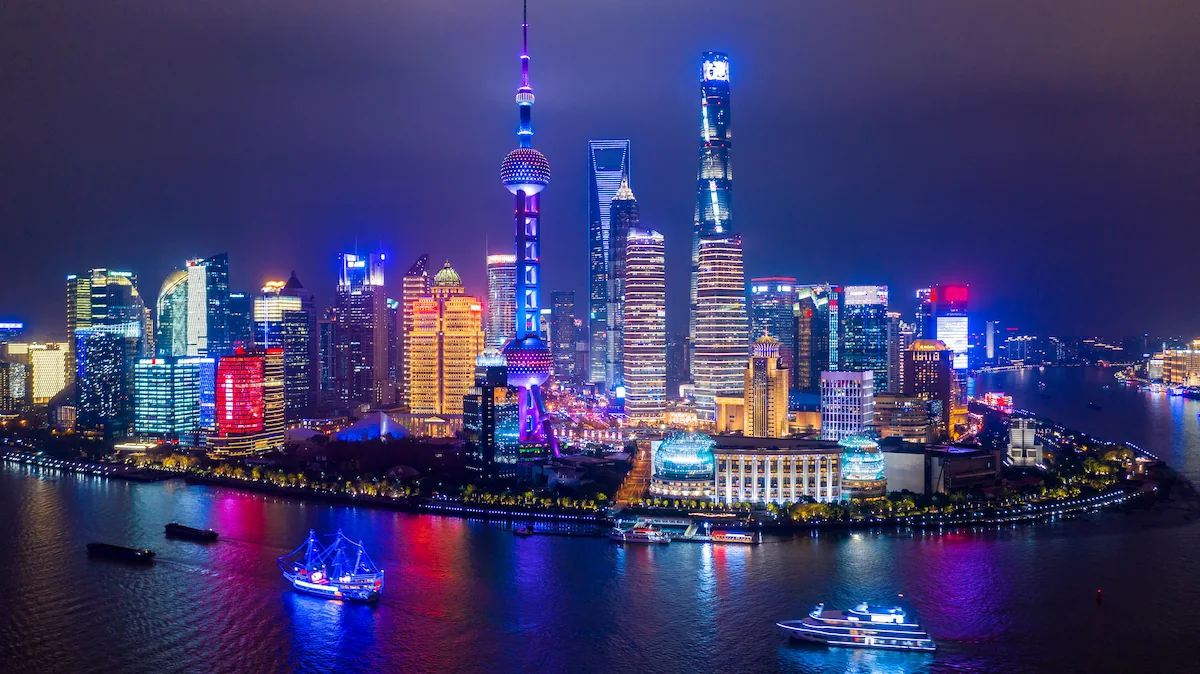
Before we talk about China’s renewable energy, let’s take a look at its electricity consumption. According to Our World in Data, China generated 10,583.36 TWh of electricity annually in 2025. Worth noting, most of the energy use (electricity, industry, and heating) in China came from non-renewable energies, such as coal, oil, and gas, with coal as the largest energy source. Yet, the share of coal was declining from the previous years, which were 59.24% in 2023, 58.09% in 2024, and 56.87% in 2025.
Despite having a decline in coal consumption for overall energy use, consumption remained high. It is important to note that coal and other non-renewable energies contribute to greenhouse gas emissions, and China is among the major global contributors.
The International Energy Agency (IEA) reported that carbon emissions (from fuel combustion) grew 262% between 2000 and 2023. The emissions reached 11,129.838 MtCO2 in 2023, increasing from 2022, which was 10,620 MtCO2.
Nevertheless, the good news is that China is also undergoing rapid and massive energy transitions to renewables. This move is crucial to reduce carbon emissions and reliance on fossil fuels.
Read also: Indonesia's Renewable Energy Potential and Challenges
China’s Progress Towards Renewable Energy
China’s transition to renewable energy is guided by its target to achieve carbon neutrality by 2060. The transition sees promising and positive results. In the first half of 2026, China’s renewable energy accounted for 40% of its electricity sources. Specifically, China generated up to 2 trillion kilowatt-hours of renewable electricity, increasing 9% year-on-year.
In 2025, renewable energy accounted for 60% of total installed power generation capacity as the use of solar and wind power increased in the country, according to the State Council of the People’s Republic of China. The country also added over 430 gigawatts of solar and wind power capacity, escalating the total installed renewable energy in China to more than 1,800 gigawatts.
Moreover, China generated 4 trillion kilowatt-hours of renewable electricity in 2025, surpassing the European Union (EU)’s 27 member states’ consumption combined (3.8 trillion kilowatt-hours).
The change in China's energy mix indicates a significant shift in both market expectations and the country's electricity supply.
Then, how about China’s renewable energy percentage? Ember Energy, in its review, stated that power generation from clean sources (led by wind and solar) fulfilled 84% of China’s electricity demand growth in 2024. In addition, the demand growth improved in the first half of 2025 and cut the use of fossil fuels by 2%. Ember Energy also added that the Chinese solar manufacturing capacity is projected to reach 1,255 GW in 2030.
Furthermore, China's energy-related fossil fuel demand is expected to start declining shortly due to the rapid electrification of the country's economy and the exponential growth of wind and solar power, which are challenging fossil fuels. As one of the major contributors to global carbon emissions, this decline could also help trigger a fall in global emissions.
China’s 5-Year Plan for Renewable Energy Development
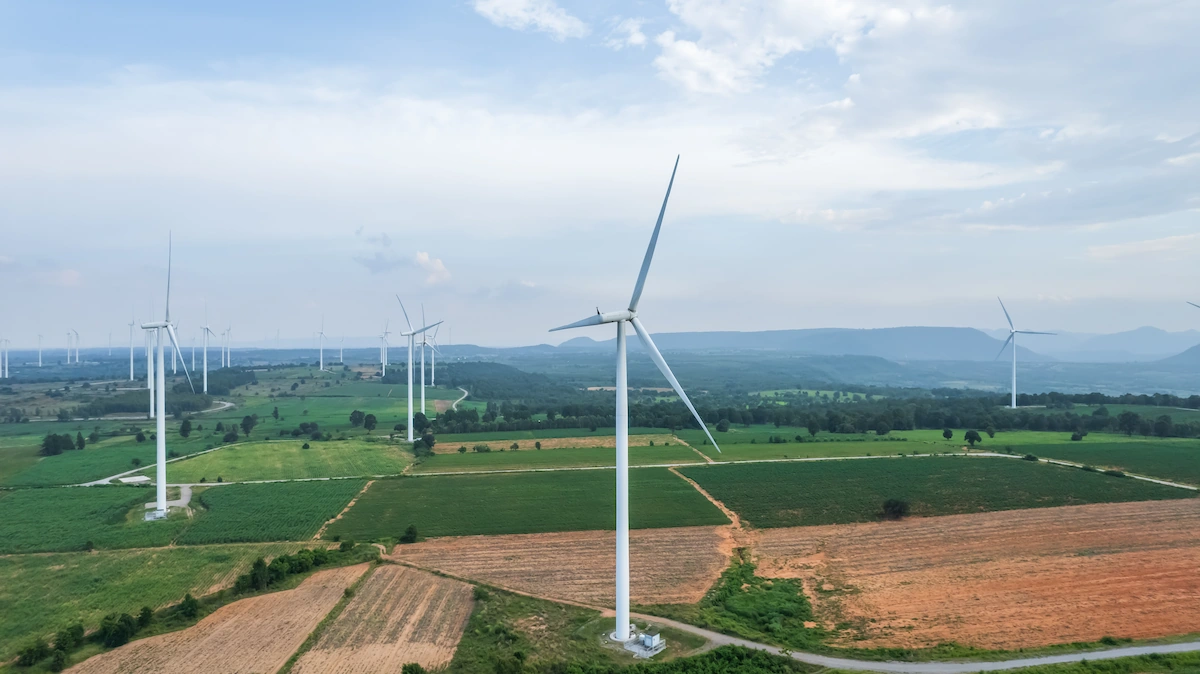
China’s 15th Five-Year Plan (2026–2030) for Renewable Energy Development was officially released in July 2026. This plan also includes the renewable energy development blueprint. During this period, China's renewable energy industry will move into a new phase of development that will include scale expansion, quality enhancement, and dependable substitution.
In general, the 15th Five-Year Plan targets several developments in renewable energy, such as:
- Expected renewables consumption to be approximately 1.8 billion tonnes of standard coal equivalent by 2030.
- The total installed renewable power generation capacity will reach around 3.5 billion kilowatts (kW), producing about 6 trillion kilowatt-hours (kWh) of power annually by 2030.
- Wind and solar power alone are expected to generate over 4 trillion kWh annually, with their combined installed capacity surpassing 2.8 billion kW by 2030.
- In comparison to 2025, the overall amount of renewable energy used for non-power uses will increase 2.5 times, or around 150 million tons of regular coal by 2030.
- There will be an additional 300 million kW of dependable peak power capacity from renewable sources during 2026–2030.
- Between 2026 and 2030, about 100 million kW of newly started offshore wind power projects will be introduced nationwide.
- Conventional hydropower installed capacity is expected to reach approximately 410 million kW by 2030.
- Targeting 400,000 kW of marine energy capacity, 15 million kW of installed solar thermal power capacity, and about 160 million kW of pumped storage power capacity by 2030.
- By 2030, the electricity generation mix will feature “half non-fossil fuels, nearly half renewable energy, and 30% new energy sources," noting that renewable energy is a subset of non-fossil sources and these categories overlap rather than sum to 100%.
Explore more: An Overview of Vietnam's Renewable Energy Transitions
Challenges and Solutions in China’s Renewable Energy Development
The development of renewable energy in China may seem seamless. Yet, behind that, China also faces several challenges. Here are some obstacles that China experiences during energy transformation:
- Cutting-edge system operation: Because renewable resources are concentrated in northwestern China, while demand circles on the eastern coast, long-distance transmission and stronger grid interconnection are required.
- Market influence: Electricity value is dependent on several markets, including capacity, versatility, and ecological value in addition to energy itself. Mechanisms that are insufficient or out-of-alignment may deter investment or fail to properly acknowledge clean energy.
- Economic issues: Grids, storage, and backup capacity demand more investment even as the cost of producing solar and wind power continues to decline.
To address those challenges, China moves with these approaches:
- Upgrading and transforming the systems: China builds gigawatt-scale solar and wind bases in resource-rich regions as well as distributes power generation in industrial parks and cities. Additionally, China also pushes flexible coal plant operations, develops pumped-storage facilities, supports grid forecasting, and leverages artificial intelligence tools.
- Introducing policies: China issues policies and frameworks for rising business models, ensuring the equitable contribution of new firms to the stability of the system.
- Facilitating integrated national power market: China seeks to eliminate barriers across provinces and make it easier for new, green energy to be consumed across them. Green energies and certificate trade are growing to draw investment in clean energy, and renewables now completely participate in market-driven transactions.
What Can We Learn from China’s Renewable Energy Development?
Despite having a large consumption of non-renewable energies, China also hustles to achieve its clean energy transition. To ensure that the transition runs well, it integrates a lot of elements, including planning, innovation, technologies, policies, and markets.
It can be said that decarbonization can coexist with increased quality of life, employment growth, and industrial upgrading. China’s progressive move towards clean energy and net-zero emissions is significant for the world, especially Southeast Asia, which has rising demands for energy and electricity.
Below are some lessons we can learn from China’s renewable energy headway:
- Investing in innovation and technology.
- Creating effective markets that acknowledge flexibility, capacity, and environmental efficiency.
- Planning strategic and long-term grids, as power grids are the foundation of renewable energy development.
- Targeting clear goals and coordinated progress towards sustainable development.
How Aster, as a Renewable Energy Solution, Supports Southeast Asian Countries
China has opened the door to an avant-garde clean energy transition, showing that sustainability can harmonize with energy infrastructure development. This is a big hint for Southeast Asian countries wanting to accelerate their renewable energy transition. Certainly, to make this a reality, a reliable renewable energy solutions partner is required.
Aster, as #YourGrowthPartner and a member of Chandra Asri Group based in Singapore, offers energy solutions in green technologies and solar panel innovations. Aster also covers a variety of industry needs, including energy, engineering, fuels, petrochemicals, ports and terminals, specialty goods, and sustainable solutions.
It is never too late to start transitioning to clean energy. Get started now with Aster and Chandra Asri Group!
You may also like: Renewable Energy in Australia: Consumption and Challenges

Blow Molding: How It Works, Types, and Materials Used

Customs Clearance: Steps, Documents, and Inspections
